

























































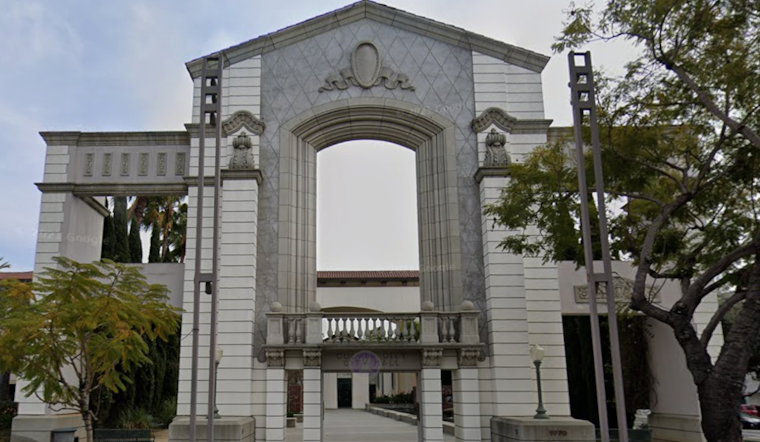
Culver City is drafting new zoning rules that would ban autonomous vehicle fleet facilities from residential neighborhoods, downtown, and areas near hospitals and fire stations, as city officials try to get ahead of a wave of robotaxi infrastructure before it lands on their streets. The proposed regulations would apply to any operation supporting three or more autonomous vehicles, covering everything from charging and cleaning to light maintenance, software servicing, storage, and administrative work. The Culver City Council is expected to take up the framework at a public hearing on September 14.
The push comes directly out of what happened just a few miles away in Santa Monica, where city officials cited the impacts experienced there while developing Culver City's proposed rules, according to MyNewsLA.com. Santa Monica sued Waymo on July 27, alleging that around-the-clock charging operations at two facilities on Broadway constituted a public nuisance, after residents complained about noise, lights and traffic tied to the sites. Those Broadway facilities, it turns out, are operated by Voltera Power, an electric vehicle infrastructure company headquartered right in Culver City, according to the Los Angeles Times, which reported that Santa Monica officials said they were initially unaware the site would service a 56-car fleet 24 hours a day.
A Courtroom Back-and-Forth Over Overnight Noise
A Los Angeles County Superior Court judge granted Santa Monica's request for a preliminary injunction on July 27, barring Waymo from operating its Broadway charging facilities between 11 p.m. and 6 a.m. after finding that the overnight noise, lighting and traffic likely amounted to a public nuisance, according to a statement from the City of Santa Monica. Nearby residents testified that reverse-beeping, humming and worker conversations were disrupting their sleep overnight. Santa Monica officials had already adopted emergency zoning regulations governing autonomous vehicle fleet facilities that same month in response to the complaints.
That win for Santa Monica did not last long. On August 14, the California Second District Court of Appeal issued a temporary stay halting enforcement of the overnight injunction, allowing Waymo to resume 24-hour operations at its Broadway sites while its appeal is evaluated, the city said in a follow-up statement. The stay paused enforcement of the order without overturning the trial court's underlying factual findings on public nuisance, leaving the legal fight very much unresolved.
Culver City's Own Moratorium Attempt Fell Short
Culver City tried to buy itself breathing room before any of this reached its own borders. On August 10, the Culver City Council considered an interim urgency ordinance that would have imposed a 45-day moratorium on building permits for autonomous vehicle fleet facilities, according to Culver City Crossroads. The measure failed after it couldn't secure the required four-fifths supermajority, because Council Member Dan O'Brien recused himself since Waymo is a member of the local chamber of commerce. City staff had wanted the moratorium specifically to buy time to draft comprehensive standards before AV companies could establish facilities in the city.
Without that pause in hand, city planners are instead racing to write permanent zoning language from scratch. Culver City's zoning code was last updated on October 9, 2024, and it contains no land-use definitions or development standards addressing autonomous vehicle fleet servicing or charging facilities at all, per the city's own August 20 meeting summary. Staff noted that inquiries from AV companies had already begun arriving before any land-use category for them even existed.
What the Proposed Rules Would Actually Require
Under the draft framework, autonomous vehicle fleet facilities would be prohibited in residential zones, in downtown Culver City, and within 100 feet of residential zones generally. They would also be barred from locating next to hospitals, fire stations, police stations and other public safety facilities, while being permitted in certain mixed-use zones instead.
Operators would have to prevent vehicle queuing, staging and idling from blocking streets, bus stops, accessible facilities and emergency access routes. The rules would also require operators to publicly post a 24-hour emergency contact who could respond to problems at the site, keep at least one employee present whenever a facility is operating, and use screening, landscaping and other measures to cut down on noise and light bleeding into neighboring properties. Towing, loading, deliveries, repairs, vacuuming and other disruptive activities would be limited during nighttime and early-morning hours, and the proposal would set new requirements for how vehicles enter, exit, circulate and park on-site.
The framework does carve out some flexibility: it would establish an administrative review process letting operators propose alternatives to certain site-design or operating requirements, so long as those alternatives provide an equivalent level of protection for public health and safety and preserve emergency access. Notably, facilities used only for vehicle charging are not covered by state law or the Culver City code as currently proposed. Residents can submit comments through the city's website ahead of the September 14 hearing, and the public will also be able to address the council directly that day.
Cities Can't Ban Robotaxis, So They're Zoning the Garages
The reason Culver City is reaching for zoning tools rather than trying to restrict AVs on the road comes down to who actually has jurisdiction. In California, authority over driverless vehicle traffic operations and commercial passenger service rests with state agencies, specifically the DMV and the California Public Utilities Commission, leaving municipalities to regulate physical fleet facilities through local land-use, zoning and noise ordinances, according to the Southern California Law Review. Because cities cannot ban AVs from driving on public roads, zoning controls over charging and maintenance hubs remain their primary lever.
That state-versus-local divide has only gotten sharper as Waymo's footprint grows. In August, the California Public Utilities Commission approved Waymo to expand commercial driverless ride-hailing service across 18 California counties, increasing its approved service territory nearly tenfold, from roughly 5,800 to 47,500 square miles, as Hoodline reported. Separately, Assembly Bill 1777 and updated DMV regulations that took effect July 1 now let law enforcement officers issue traffic noncompliance notices directly to AV manufacturers and allow local emergency officials to issue electronic geofencing do-not-enter directives during public safety incidents, per the California Department of Motor Vehicles.
Southern California cities broadly are grappling with the growth of autonomous vehicle operations and the facilities that support them, and Culver City's proposed rules are intended to address the potential effects of around-the-clock fleet operations on nearby neighborhoods, businesses, streets and emergency services, according to the city. The council also approved a separate one-year pilot program on August 10 allowing semi-autonomous personal delivery devices to carry food and small items on city sidewalks, following discussions with neighboring Westside cities about pedestrian safety, according to the Culver Crescent. Public anxiety over driverless operations on the Westside has simmered since January, when the National Highway Traffic Safety Administration opened a preliminary investigation into Waymo after a robotaxi struck a child near a Santa Monica elementary school, causing minor injuries, in a case Hoodline covered as the School Shock investigation.



