

























































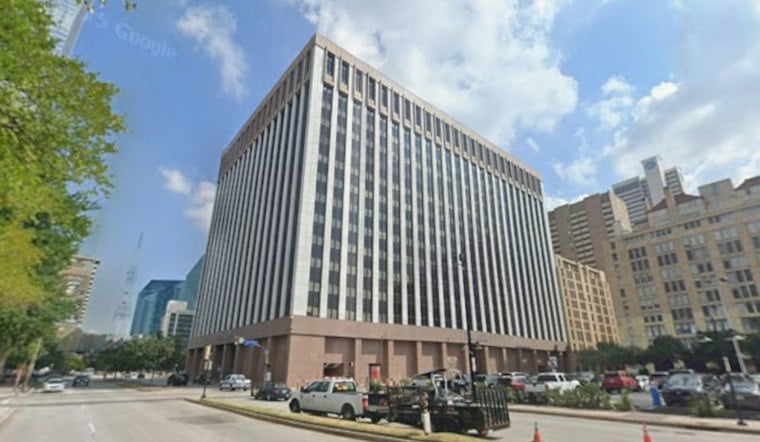
A Dallas man who prosecutors say built a sprawling marijuana trafficking network stretching from Oklahoma grow houses to Texas buyers was sentenced Wednesday to 60 months in federal prison. Dian Huang Jiang, also known as “Danny Jiang,” admitted to leading a large-scale distribution operation that at its peak moved up to 1,000 pounds of marijuana in a single day.
U.S. District Judge Sam A. Lindsay handed down the sentence in federal district court in Dallas, according to the U.S. Department of Justice. Jiang had pleaded guilty to conspiracy to use interstate facilities in aid of racketeering, and as reported by FOX 4 News, his network operated from at least January 2020 until August 2023, requiring buyers to purchase between 20 and 300 pounds of marijuana per transaction.
How the Interstate Pipeline Worked
Federal court records reviewed by PacerMonitor show Jiang pleaded guilty under a superseding information to conspiracy to use interstate facilities in aid of racketeering enterprises, charged under 18 U.S.C. § 1952(a)(1) and (3) and 18 U.S.C. § 371 — the federal Travel Act, which targets the use of interstate channels like phones and banking to facilitate illegal activity rather than standard drug possession statutes. According to the Department of Justice, Jiang routinely coordinated bulk marijuana deliveries and pricing over cellular phone and directed buyers to drop off large sums of cash at designated locations across state lines. FOX 4 reports his enterprise included multiple residences across Oklahoma and Texas, and that his network moved marijuana from Oklahoma to buyers throughout Texas.
The Homeland Security Task Force unraveled the operation by tracking those cellular communications and cash drops, the Justice Department said. Federal agents seized more than $2.8 million from bank accounts tied to Jiang's operation on August 8, 2023, and Jiang now faces forfeiture of several properties connected to the enterprise, per FOX 4's reporting.
Millions Wired Overseas to China
Prosecutors say Jiang acquired multi-ton quantities of marijuana and wired a substantial share of the proceeds overseas to the People's Republic of China — mirroring FOX 4's report that Jiang sent some of the marijuana-sale profits to China. U.S. Attorney Ryan Raybould said Jiang built “a sprawling multistate drug enterprise that pushed thousands of kilograms of marijuana and funneled millions of dollars through criminal channels,” according to FOX 4's account of the case, adding that drug traffickers exploiting interstate networks will face federal prosecution.
DEA Dallas said it will continue working with law enforcement partners to dismantle similar networks and prevent drug proceeds from strengthening criminal organizations, FOX 4 reported. Joseph B. Tucker said marijuana traffickers do not get a free pass simply because marijuana laws vary from state to state, and that Jiang moved large quantities of marijuana across state lines while supplying dangerous criminals, according to the same report.
Because Jiang pleaded guilty to a Travel Act violation rather than a straight narcotics distribution charge, his 60-month sentence represents the statutory maximum for that offense. Non-violent Travel Act violations under 18 U.S.C. § 1952 cap out at five years in prison, per the Cornell Law School Legal Information Institute, meaning Jiang received the longest term available under the specific count to which he pleaded guilty. The statute establishes federal jurisdiction whenever interstate commerce facilities — phones, wires, banks — are used to promote illegal activity under state law.
Oklahoma's Legal Marijuana Boom Fueled a Black Market
The case is the latest to expose how Oklahoma's rapid expansion of legal cannabis has become a launching pad for interstate trafficking into Texas. Oklahoma legalized commercial medical marijuana in June 2018 through State Question 788 without requiring specific qualifying medical conditions, according to the Marijuana Policy Project, and the resulting surge in cultivation licenses has become a target for black-market diversion into neighboring states, state regulators and law enforcement say.
Investigative reporting by ProPublica found that Chinese organized crime networks capitalized on Oklahoma's cannabis expansion starting around 2020, using platforms like WeChat to crowdfund grow operations and move illicit profits back to China and across state lines. That systemic pattern echoes the international wire transfers described in Jiang's case. Separately, a February 2026 statewide crackdown dubbed Operation Blunt Force led Oklahoma authorities to indict 19 defendants tied to the Hao Chen Organization, which the Oklahoma Attorney General's Office said ran a $1.5 billion black-market marijuana enterprise built on fraudulent straw ownership schemes to ship cannabis out of state.
A Contrast With Dallas's Own Marijuana Politics
Jiang's sentencing lands amid ongoing friction between local marijuana reform and state and federal enforcement priorities. Dallas voters approved Proposition R in November 2024 to decriminalize possession of up to four ounces of marijuana, though the city paused enforcement in July 2025 after state court rulings upheld Texas drug statutes, as Hoodline previously reported.
Federal court dockets indicate the investigation into Jiang first surfaced publicly in August 2023, when magistrate judges in Oklahoma and Texas signed sealed criminal filings and arrest warrants, coinciding with the $2.8 million bank seizure, according to PacerMonitor records. The case originated in Oklahoma's Western District Court before being transferred to North Texas. It follows a string of similar federal takedowns in the region, including a Dallas drug and gun ring whose 13 defendants were collectively hit with 915 months in prison earlier this year, and an Oklahoma raid that netted more than 7,000 plants and five arrests in late August.





