

























































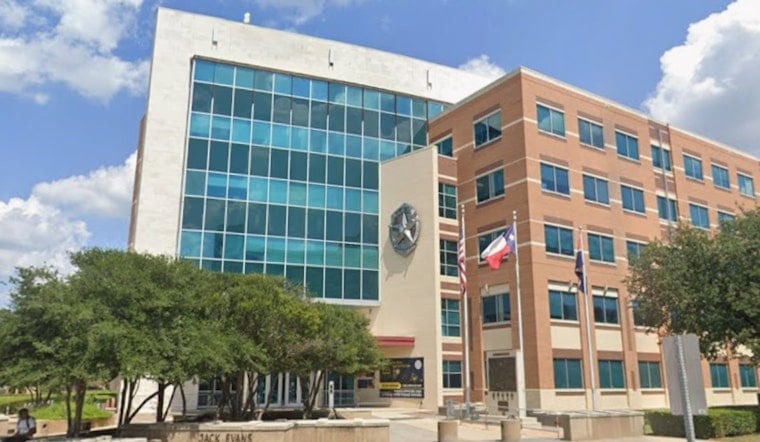
A Dallas police officer assigned to the South-Central Patrol Division has been arrested on a charge of unauthorized release of body-worn camera recording, a Class A misdemeanor under state law. Officer Ronald Maillet Jr., badge number 11597, turned himself in on a warrant from the Dallas County Sheriff's Office and has been placed on administrative leave pending an internal investigation.
According to DPD Beat, Maillet has worked for the Dallas Police Department since October 2018 and is assigned to a division that patrols South Dallas neighborhoods bounded by State Highway 67, Interstates 35E and 45, the Trinity River, and the city limits of Lancaster and DeSoto, according to the Dallas Police Department. The South-Central Patrol Division operates out of a substation at 1999 E. Camp Wisdom Road, covering high-density residential and commercial sectors in the southern part of the county.
What the Charge Actually Covers
Under Texas Occupations Code § 1701.659, enacted by the Texas Legislature in 2015 under Senate Bill 158, a peace officer or law enforcement employee commits an offense by releasing a body-worn camera recording without official department permission, per Justia Law. A related statute, Texas Occupations Code § 1701.660, generally bars the public release of body-camera footage tied to deadly force incidents or pending criminal and internal disciplinary investigations until those proceedings conclude, according to the City of Temple, Texas. It remains unclear which specific incident or recording Maillet allegedly released, or to whom.
A Class A misdemeanor conviction in Texas carries potential penalties of up to one year in county jail, a fine of up to $4,000, or both, according to FindLaw. That classification sits just below state jail felonies as the most serious misdemeanor tier under Texas criminal law.
Administrative Leave and What Comes Next
Maillet remains on administrative leave pending the outcome of an internal investigation, per the department's account relayed through DPD Beat. Under Dallas Police Department General Orders 501.00 and 513.00, officers on leave undergo formal Internal Affairs Division investigations that can end in summary or formal corrective action, including suspension or termination by the Chief of Police.
Those probes do not always move quickly. A 2024 internal review by DPD's Constitutional Policing Unit found that between 2018 and 2023, only 68% of Internal Affairs Control Number Investigations met the department's standard 90-working-day completion timeline, with subsequent administrative reviews taking a median of 76 calendar days. The City of Dallas also created the Office of Community Police Oversight in April 2019 under Ordinance No. 31192 to independently review civilian complaints and monitor Internal Affairs investigations involving DPD officers.
Part of a Broader Pattern This Year
Maillet's arrest lands amid a string of DPD officers surrendering on warrants or facing charges in 2026. Hoodline previously reported that Senior Corporal Joshua Gonzalez turned himself in on an evading arrest warrant in April, another officer was arrested on a felony solicitation charge in June, and Robert Huynh surrendered on assault and oppression charges in July, with all three placed on administrative leave pending internal probes.
Body cameras have become standard equipment for Texas law enforcement since the 2015 legislation took effect, with academic research published in 2022 finding that 85% of surveyed Texas agencies deploy the devices and 95% equip more than three-quarters of their force under state guidelines mandating strict data access protocols. Officially, the Dallas Police Department's Special Investigations Unit is the body tasked with reviewing and publicly releasing relevant body-camera and surveillance footage following critical incidents like officer-involved shootings, and it does so only after consulting with the Dallas County District Attorney's Office — a formal process that stands in contrast to the unauthorized release Maillet is now accused of.





