

























































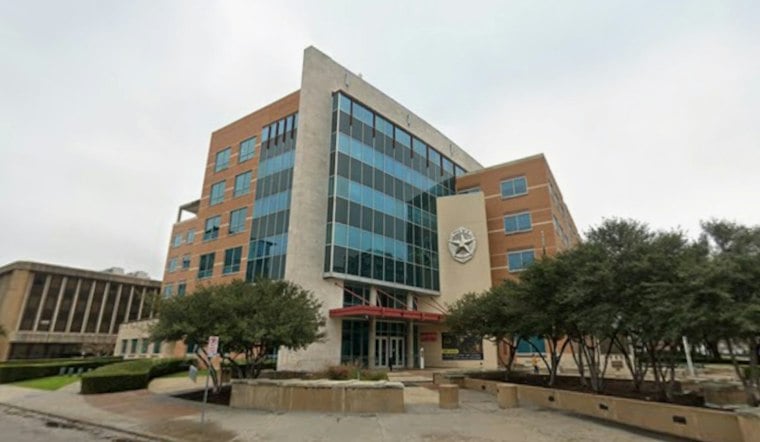
Dallas Police confirmed this week that a technical issue disrupted the city's text-to-911 service, though officials say voice calls into 911 were not affected and that any messages received during the outage have since been identified and addressed. The department is now working to determine what caused the breakdown and to prevent it from happening again.
According to the Dallas Police Dept, the issue struck the text-to-911 system specifically, leaving voice-based emergency calls untouched. The department said it is working with technical partners to pin down the root cause and says its account is monitored around the clock, advising residents to call 911 directly for emergencies rather than relying on text. The department has not said how many people attempted to text 911 during the outage window.
The Dallas Police Department was recently made aware of a technical issue impacting the text to 9-1-1 service. Messages received during this period have been identified and addressed accordingly.
— Dallas Police Dept (@DallasPD) September 11, 2026
This technical issue impacted individuals utilizing the text to 9-1-1 service and… pic.twitter.com/2M6Q3VgUGM
A Service Built for Those Who Can't Call
The City of Dallas rolled out text-to-911 in March 2019, giving residents in dangerous situations, or those with hearing or speech impairments, a way to reach dispatchers without speaking on the phone, according to the City of Dallas. The North Central Texas Emergency Communications District, which coordinates 911 service across 14 counties surrounding Dallas-Fort Worth for roughly two million residents, was actually the first authority in Texas to launch text-to-911 back in 2013, per NCT9-1-1.
Public safety officials have long cautioned that texting 911 should be a last resort. The guiding principle from NCT9-1-1 is straightforward: call if you can, text if you can't, since voice calls give dispatchers faster and more accurate location tracking along with background audio that a text simply cannot provide.
Federal Rules Exist for Exactly This Scenario
Federal regulators anticipated outages like this one. FCC rules require wireless carriers and text messaging providers to automatically send a bounce-back text urging users to place a voice call whenever text-to-911 becomes unavailable or unsupported, according to the Federal Communications Commission. Separately, FCC rules require covered 911 service providers to immediately notify public safety answering points of outages that could affect 911 delivery, and to submit annual reliability certifications covering backup power and circuit diversity at central offices.
The dossier does not indicate whether bounce-back texts were triggered by wireless carriers during this particular outage, and that detail remains unconfirmed.
Dallas Has Been Here Before
This is not the first time Dallas's emergency communications infrastructure has buckled under technical strain. In March 2017, tens of thousands of abandoned calls originating from T-Mobile devices flooded the city's 911 queue, pushing hold times past 30 minutes and contributing to the death of a 6-month-old infant, according to EMS1. The city responded by adding extra call takers while T-Mobile dispatched network engineers to fix the underlying routing problem.
More recently, a ransomware attack on City of Dallas servers in May 2023 knocked the police department's Computer-Aided Dispatch system offline entirely, forcing 911 call takers to manually record details and dispatch officers over police radio, as reported by FOX 4 DFW. That attack, tied to the Royal ransomware group, disrupted city courts and websites for weeks.
Response Times Already Under Scrutiny
The text outage lands amid broader concerns about Dallas Police's emergency response capacity. Officials told the Dallas City Council in August that while Priority 1 life-threatening calls averaged 8.62 minutes in fiscal year 2026, lower-priority Priority 2 calls still averaged more than 66 minutes, according to KERA News. The department has faced sustained pressure from city leaders over dispatch delays and staffing levels, and it has expanded civilian recruitment for its 911 Communications Center to address the bottleneck, per Dallas Weekly.
For non-emergency reports, Dallas Police continue to direct residents toward 3-1-1 or the city's online Dallas On-Line Reporting System, keeping 911 phone and text lines reserved for active life-safety emergencies. Hoodline has previously reported on turmoil inside the department's 911 communications division and on budget strain tied to overtime costs as the department stretches its resources, as per Hoodline.





