

























































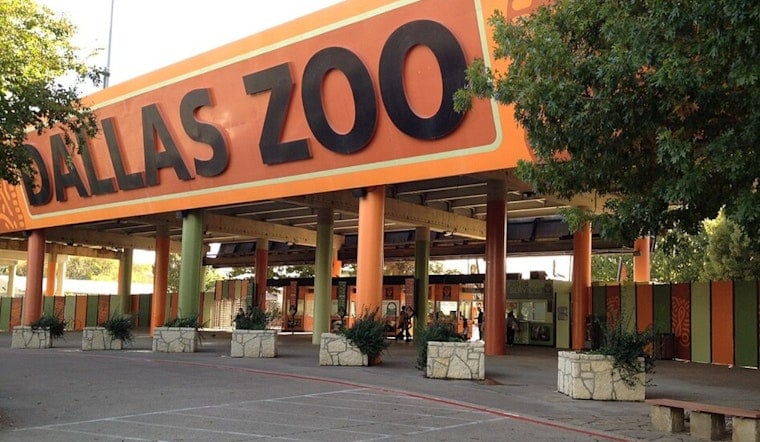
A 23-year-old gorilla at the Dallas Zoo named Asha suffered a miscarriage this summer that led her care team to bring human doctors into the operating room, a rare cross-species collaboration that uncovered a second, unrelated health scare before she made a full recovery. Zoo staff already knew Asha was pregnant when her care team began noticing symptoms rarely seen in primates, prompting an emergency surgical response involving surgeons, anesthesiologists, and OB-GYNs from around North Texas.
According to NBC 5 Dallas-Fort Worth, the Dallas Zoo consulted animal experts around the country and ultimately invited human doctors into the operating room after Asha developed a large amount of fluid buildup in her abdomen. Doctors performing the surgery observed what looked like a fetus in Asha's abdomen but could not find a heartbeat, confirming the miscarriage that prompted the operation. The 230-pound western lowland gorilla was born December 4, 2002, at the Gladys Porter Zoo in Brownsville, transferred to the Cincinnati Zoo in 2011, and moved to the Dallas Zoo in 2020, according to Dewar Wildlife.
A Second Discovery Mid-Surgery
Once inside, the surgical team found something unexpected: both of Asha's ovaries were full of large cystic masses, which doctors removed during the same procedure. Keith Zdrojewski, the Dallas Zoo's senior mammal curator, said the care team already knew Asha was pregnant before the complications set in, per the same NBC 5 report. Following the surgery, Asha was found to be cancer-free, according to the station's account of the operation.
The July 2026 procedure drew on a team that included surgeons, anesthesiologists, and human OB-GYNs, working alongside Dallas Zoo veterinarian Dr. Anne Burgdorf-Moisuk, as detailed in a report from The Dallas Morning News. Board-certified OB-GYN Dr. Jamie Erwin, who performed the C-section, said gorilla anatomy is essentially the same as human anatomy, and she has embraced her role as what amounts to a gorilla OB-GYN.
A Familiar Face From Fort Worth
This was not Erwin's first gorilla delivery. She led an emergency C-section on January 5, 2024, at the Fort Worth Zoo to deliver baby gorilla Jameela from mother Sekani, who was suffering from preeclampsia, a case that Hoodline previously covered. Jameela was the first gorilla born via cesarean section in the zoo's 115-year history, per CBC News. Erwin has now performed C-sections on gorillas twice.
When Fort Worth Zoo gorillas failed to accept Jameela for maternal care or surrogacy, she was relocated to the Cleveland Metroparks Zoo, where Erwin reunited with her in May, according to CBS News Texas. The episode illustrates how accredited zoos collaborate to place infants with surrogate troops when maternal bonding fails.
Recovery And Return To The Troop
Asha spent a couple of weeks recovering after the surgery and has since returned to her habitat at the Dallas Zoo, reuniting with her troop. NBC 5's Allie Spillyards, who reported the story for broadcast before it was converted with AI assistance into a digital article and edited by an NBC 5 journalist, described Asha as now healthy and happy. She lives in a family troop that includes silverback Marcus, females Shanta and Megan, and younger offspring Saambili and Mbani, according to background compiled on Wikipedia.
Why Major Surgeries Are So Rare
Cases like Asha's remain unusual in zoo medicine. A survey published by the AZA Gorilla Species Survival Plan found that cesarean sections occurred in only 3 percent, or six cases, of 193 recorded captive western lowland gorilla births between 1996 and 2016, according to the Gorilla SSP. The Association of Zoos and Aquariums manages captive gorilla populations through that same Species Survival Plan, evaluating genetic histories across roughly 230 accredited institutions to recommend breeding pairs like Asha's, as explained by Zoo Atlanta.
The stakes behind such careful breeding recommendations are steep. The International Union for Conservation of Nature classifies western lowland gorillas as Critically Endangered, recording a 19.4 percent population decline between 2003 and 2013 alongside ongoing annual losses of 2.7 percent, according to the World Land Trust. The species also receives the highest tier of international commercial protection under CITES Appendix I, per the New England Primate Conservancy.
Cross-species medical partnerships like the one that helped Asha are becoming part of a broader national pattern. In July, wildlife care specialists at the San Diego Zoo Safari Park partnered with UC San Diego Health head and neck surgeons to perform what was reported as the world's first mastoidectomy skull surgery on a 12-year-old gorilla named Mizani, according to PR Newswire. For now, Dallas Zoo staff say Asha is back with Marcus, Shanta, Megan, and the rest of her family troop, recovered from an ordeal that turned two rare diagnoses into one successful outcome.





