

























































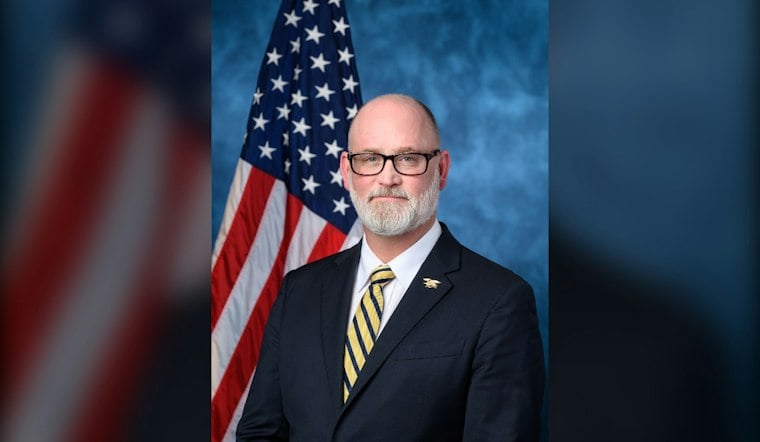
Data centers have become an unexpected flashpoint in Wisconsin's 3rd Congressional District, where Republican U.S. Rep. Derrick Van Orden and Democrat Rebecca Cooke are each trying to tie the other to an industry that has become a focus of debate. Both campaigns, along with outside spending groups, have spent recent weeks tying their opponent to pro-data-center policies, tax breaks and industry cash ahead of the November election.
Rival Campaigns Trade Data-Center Attacks
The influence of voter opposition to data-center development on November's elections has begun to show, according to the Wisconsin Examiner, which reports that Van Orden's campaign has highlighted Cooke's past work with the Wisconsin Technology Council and the think tank Third Way — both organizations that have supported data-center projects. Cooke's campaign, meanwhile, has run ads criticizing Van Orden for accepting campaign contributions from people and organizations tied to the data-center industry while he voted for the One Big Beautiful Bill Act, which included tax breaks that data-center developers have used over the past year.
The Democratic-aligned House Majority PAC has piled on with its own ad branding the two-term congressman “Data Center Derrick.” Per WisPolitics, the ad accuses Van Orden of supporting tax breaks for the data-center industry and accepting campaign contributions tied to it.
Data-Center Development Enters The Debate
Data-center development has become a subject of debate in the race.
The debate over data-center development extends beyond the 3rd District.
Menomonie Becomes A Cautionary Tale
Nowhere has that concern taken more concrete form than in Menomonie, where a $1.6 billion data-center proposal targeted 320 acres of farmland on the edge of town, according to Reasons to Be Cheerful. Mayor Randy Knaack announced at a September 22, 2025 city council meeting that he had notified the developer, Balloonist, that the city would not be moving forward with a development agreement — a decision that came after a Facebook group called Stop the Menomonie Data Center, made up of residents and allies opposing the project, grew to more than 10,000 members.
Menomonie City Council later voted for additional regulations following public outcry over the proposal's secrecy and scale, according to Reasons to Be Cheerful. The episode has become something of a case study for the broader statewide debate: Wisconsin now has more than $57 billion worth of proposed data-center projects, including at least five hyperscale facilities proposed or under construction, the same Reasons to Be Cheerful report notes.
Data-Center Debate Beyond The 3rd District
The fight isn't confined to the congressional race. In Wisconsin's governor's contest, Republican Tom Tiffany has run ads criticizing Democrat David Crowley — branding him “Data Center David” — for his previous statements of support for data-center projects, the Wisconsin Examiner reports.
The pattern extends nationally. NPR describes the opposition as a real grassroots movement of ordinary people across the political spectrum, reporting that roughly two-thirds of Americans oppose new data-center construction in their communities. A Data Center Opposition Report cited by NPR estimates that about 640,000 people are now active in the anti-data-center movement, with 220 new groups forming in just the three months from June through August. Similar organizing is underway in Minnesota, Pennsylvania and Indiana, while in Loudoun County, Virginia, the issue has even split fellow Democrats, according to NPR.
Tax Breaks Enter The Data-Center Debate
The financial stakes behind the political fight are also drawing scrutiny elsewhere. The Wall Street Journal reports that some governments once eager to attract data centers with incentives have started requiring developers to prove their facilities actually benefit local communities. In Ohio, a data-center sales-tax exemption ballooned to more than $1.5 billion in a single year — more than ten times the state's original estimate — prompting Republican Gov. Mike DeWine to pause new applications for the exemption in May after voter outrage over its cost, per the Journal. The same report notes that companies including Amazon, Meta and Google now face the possibility of losing decades-long tax exemptions amid the broader backlash against their facilities.
Back in Wisconsin's 3rd District, Van Orden and Cooke are fighting over data-center development, each casting the other as too cozy with an industry.





