

























































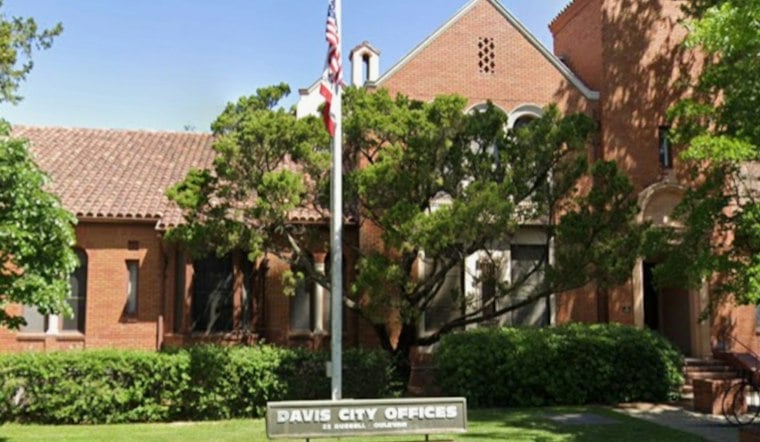
The Davis City Council is set to decide whether a 374-acre farmland conservation plan meets city standards, a vote that will take place one day after ballots are sent to Davis voters weighing whether to approve the 1,250-unit Willowgrove housing project. The project, appearing on the November ballot as Measure W, would rise on 234 acres north of Covell Boulevard and include detached homes, townhomes, and apartments alongside a community park with sports fields, a garden, and retail space for a cafe or coffee shop.
The Davis City Council approved the Willowgrove project in May, but under the city's Measure J/R/D policy, any development that converts open or agricultural land to urban use still requires direct voter approval, according to The Sacramento Bee. Ballots will be sent to Davis voters one day before the council's decision on the farmland plan, the paper reports. A separate city ordinance requires developers to permanently preserve two acres of agricultural land for every acre they develop for urban use, and Willowgrove's developers have proposed satisfying that requirement with 374 acres owned by Bullseye Farms.
What the Farmland Deal Involves
If the city council accepts the proposal, the 374 acres would be placed into a conservation easement requiring the land to remain farmland permanently, with the Yolo Land Trust listed as a co-owner responsible for enforcing the easement. A staff report found that the proposed land meets all requirements of Davis' agricultural mitigation plan, and the property is classified as prime farmland sitting less than one mile from the city's northwest limit. An appraisal found the land comparable to the Willowgrove site itself in value, water availability, and soil quality, per the Bee's reporting.
The Davis Open Space and Habitat Commission voted unanimously to support the mitigation plan, but with specific conditions. The commission recommended including the portion of the Bullseye Farms property closest to existing protected lands in the easement where possible, while excluding the southeast portion — the section farthest from other protected acreage. It also recommended allowing habitat restoration in the property's northwestern portion, which sits near Dry Slough.
A Farm With Deep Local Roots
Bullseye Farms is owned by the Beeman family, which has farmed in Yolo County for more than 150 years and currently grows sunflowers, cucumbers, tomatoes, and alfalfa on the property. The farm supports local conservation efforts and organizations including the Yolo Land Trust, the Center for Land-Based Learning, the Community Alliance for Family Farmers, the California Climate and Agricultural Network, and UC Davis.
The Yolo Land Trust, which was established in 1988 to permanently protect agricultural and working lands in the county, already holds 78 conservation easements protecting 13,037 total farmland acres across Yolo County, according to the Yolo Land Trust. That total includes 22 easements covering 3,533 acres established specifically in partnership with the City of Davis. Separately, the trust holds 41 conservation easements covering more than 5,600 acres acquired specifically to satisfy city and county agricultural mitigation mandates, reflecting a policy framework that requires developers converting farmland to permanently preserve agricultural land elsewhere in the county, per the Yolo Land Trust.
Proponents Point to Affordability Numbers
Beyond the farmland trade, Measure W supporters have emphasized the housing components of the Willowgrove proposal itself. According to Davis Vanguard, the project includes 250 deed-restricted affordable homes, 288 middle-income units, and at least 20 units set aside specifically for individuals with intellectual and developmental disabilities. Proponents argue the mix helps address a housing shortfall, while public debate over Measure W centers on whether the project truly fulfills state housing requirements and local needs.
The Vanguard also details additional infrastructure tied to the project, including a 17-acre community park with a 9,500-square-foot gymnasium, athletic fields, pickleball courts, and more than 70 acres of trails and greenbelts. Developers have also pledged $11 million toward traffic upgrades along East Covell Boulevard, the Mace Corridor, and nearby freeway interchanges — commitments the outlet notes are typical of developers seeking Measure J/R/D approval, who often pair housing proposals with extensive community infrastructure.
A History of Ballot-Box Rejections
Development proposals requiring Measure J/R/D approval have often failed at the ballot box, and Willowgrove's backers are campaigning against that backdrop. In June, Davis voters rejected Measure V, a proposal for the 1,800-unit, 498-acre Village Farms development, by a margin of just 276 votes, according to the Sacramento Bee's earlier reporting. That measure had support from city leaders and a campaign that raised $760,000, yet still came up short.
The State Mandate Behind the Push
Under California's 6th Cycle Regional Housing Needs Allocation covering 2021 through 2029, Davis must plan for 2,075 total new housing units, including 930 designated for lower-income households.
Whether Willowgrove ultimately breaks Davis' pattern of rejecting peripheral development now rests with voters, who will decide Measure W's fate in November regardless of how the city council rules on the farmland conservation plan.





