

























































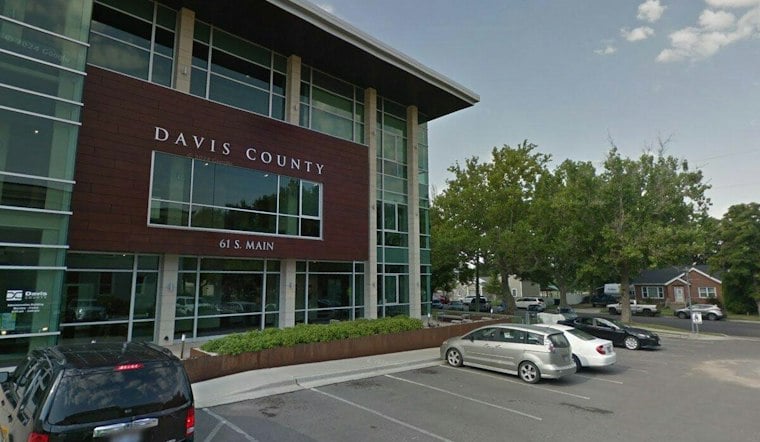
Davis County commissioners voted unanimously to approve a 0.2% local option sales tax hike, a move that will raise the overall sales tax rate in most of the county's cities from 7.25% to 7.45% starting January 1, 2027. The increase is projected to generate an estimated $15.98 million in new tax revenue annually, with officials directing the money mainly toward transportation and public safety expenses.
The vote, reported by KSL News, raises rates in 12 of Davis County's 15 cities. Fruit Heights, Sunset and West Point will see a smaller jump, from 7.15% to 7.35%, according to the outlet. The tax is authorized under Utah Code § 59-12-2220, sometimes called the “fifth fifth” local option sales tax, which specifically exempts groceries and food ingredients from the increase, as the Standard-Examiner has reported.
For an average family of four, the hike translates to roughly $128 in added annual expenses, per the KSL report. Under the new structure, Davis County will initially keep 75% of the revenue, or about $11.99 million a year, while the county's cities split the remaining $3.99 million annually. That split shifts on October 1, 2029, when the county's share drops to half the total, or about $7.99 million annually, with FrontRunner expenses in the county receiving about $4 million a year from that point forward.
Why Davis County Felt Pressure to Act
Weber County, a neighboring second-class county, approved the same 0.2% local option tax in June 2026 with an effective date of October 1, 2026, using it to fund emergency services and road maintenance as an alternative to raising property taxes, according to KSL TV. Under Utah's statutory rules governing second-class counties, Weber's move triggered a three-year timeline for Davis County to adopt the same tax before statutory distribution structures change, the Standard-Examiner reported. Salt Lake County had already implemented its own version of the tax effective July 1, 2025, according to the Utah State Tax Commission, making Davis County one of the last major Wasatch Front counties to act.
Before this vote, Davis County already maintained four separate local option transportation sales taxes totaling 1.05%, which support municipal transit and road projects, per the Standard-Examiner's reporting. Recent state legislative amendments expanded what counties can use the new 0.2% tax for, adding public safety funding alongside transportation infrastructure — a change the Davis Journal reports Davis and Weber counties worked with the Legislature to advance.
A New Justice Center Drives Public Safety Costs
That expanded flexibility matters because Davis County expects its share of a new regional justice center to run around $31 million, with the facility's total estimated construction cost pegged at $172.1 million, according to KSL News. County Attorney Troy Rawlings supported the tax increase, telling KSL that his office needs adequate infrastructure, facilities and technology, and that moving to a new justice center space is not a choice the county will ultimately have. Attorney functions are currently spread across four separate locations, per the outlet's reporting.
Commissioner John Crofts, who voted for the hike, said the county must keep dangerous criminals off the street. Commissioner Bob Stevenson said the sales tax increase will help the county and cities avoid additional tax increases down the road. Bountiful speaker Ron Mortensen opposed the measure, saying officials should protect citizens rather than fleece them.
Cities Weigh In as Money Gets Divided Up
Fourteen to fifteen municipal governments across Davis County submitted formal letters supporting the countywide tax, including Centerville, whose city council voted in September to endorse the measure in order to capture an estimated $232,000 to $238,000 in annual transportation funds, according to the Davis Journal. Per KSL's figures, Centerville is projected to receive $232,797 annually, while Layton stands to gain the most among cities at $974,760 a year. Bountiful is expected to receive $442,254, Clearfield $299,466, and Farmington $328,451, with smaller cities like Sunset ($41,004) and South Weber ($69,277) receiving considerably less.
Municipal leaders viewed the sales tax share as essential revenue that lets them avoid raising city property taxes, the Davis Journal notes. That framing lands amid broader fiscal strain across the county: Woods Cross approved a 46.86% municipal property tax increase in August, as Hoodline previously reported. Davis County itself already approved a 14.9% property tax hike in December 2025, which generates around $6 million annually, according to KSL's reporting.
Lingering Debate Over Transit Equity
During public work sessions in August, county leaders discussed transportation issues, the Standard-Examiner reported. Local officials also called for internal circulation transit options rather than relying solely on regional commuter lines.
Under the new tax structure, Davis County may spend revenue from the remaining 0.1% share however it chooses until October 1, 2029, after which that portion will be split between FrontRunner expenses and certain county transit expenses. A separate 0.05% share held by the county may go toward transportation or public safety expenses, while cities' own 0.05% share is restricted to certain transportation costs. Public financial presentations delivered to county officials in August estimated the overall 0.2% increase translates to roughly $41.62 per person annually in added consumer spending.



