

























































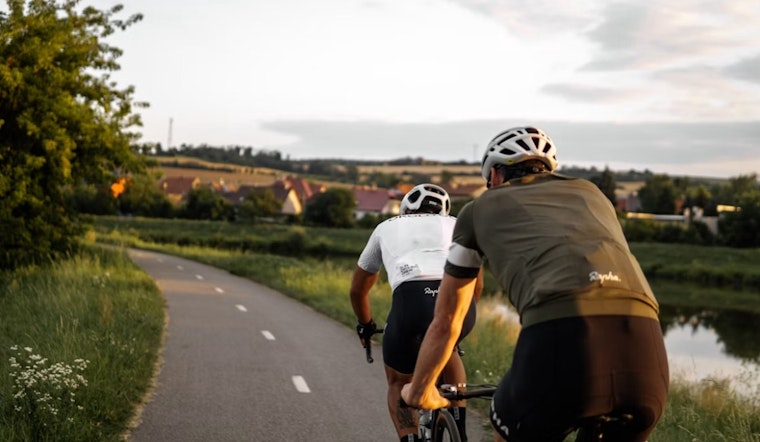
Joe Bolger, a 67-year-old former Army Ranger from Dayton, Ohio, is about to spend a week on a bicycle seat, pedaling up to 80 miles a day across Kansas and Missouri as part of a cross-country relay to raise $1 million for cancer research. Bolger is a prostate cancer survivor himself, and he's making the 240-mile leg from Topeka to St. Louis this year as captain of a Bristol Myers Squibb team called Endure for a Cure, riding in honor of his father and his mother-in-law, both of whom he lost to cancer.
Bolger's ride is part of Coast 2 Coast 4 Cancer, a relay that stretches from Cannon Beach, Oregon, to Long Branch, New Jersey, and involves more than 100 riders this year, according to Military.com. The event is now in its 13th year, and the 2026 team is aiming to raise $1 million for the V Foundation for Cancer Research. Bolger isn't new to this: he rode the relay once before, in 2019, cycling from Salt Lake City to Denver.
This time, getting a seat on the team wasn't guaranteed. Riders have to submit written essays and commit to five months of intensive training just to be considered, and Bolger applied for the 2026 ride with just an hour to spare before the deadline — without telling his wife first, per the same Military.com account. “I submitted my application, and I was chosen,” Bolger said, according to the outlet.
A Diagnosis That Started With a Referral
Bolger was diagnosed with prostate cancer in 2016 after his doctor referred him to a specialist, who suggested a biopsy. Doctors took 12 prostate samples, and the results showed cancer. His urologist recommended removing the prostate entirely, and Bolger went through with the surgery, spending one night in the hospital before leaving the next day, per Military.com's reporting.
He rides now, he said, because sitting still wasn't an option while watching people he loved fight the same disease. “My dad and mother-in-law were struggling, and I just wanted to do something rather than just kind of sitting on the sidelines,” Bolger said. His mother-in-law died in 2020; his father died in 2024. Bolger has said his father would be proud of the awareness and money he's helped raise since.
From Ranger School to the Sales Floor
Before Bristol Myers Squibb, Bolger served in the Army from 1977 to 1981, first in the Army Signal Corps and later with the 1st Ranger Battalion, stationed at Fort Stewart before moving with colleagues to Hunter Army Airfield in Savannah. He attended Ranger School, jump school, the John F. Kennedy School of Underwater Operations in Key West, Florida, and trained in the jungles of Panama, the Mojave Desert, and the arctic conditions of northern Minnesota, earning the Ranger Combat Action Badge along the way. He later earned an undergraduate degree from Ohio State University and joined Bristol Myers Squibb in 2017 as a sales representative.
Bolger now also serves as a site coordinator for Veterans Day events at the Dayton VA, work that connects him to a population disproportionately affected by the disease he survived. Department of Veterans Affairs data released in 2024 shows roughly 15,000 men are diagnosed and treated for prostate cancer annually across VA medical facilities, making it one of the most common cancers among male veterans, according to TriWest Healthcare Alliance. A study published in JAMA and covered by Oncology Nursing News found that active surveillance rates for low-risk prostate cancer within the VA system rose from 27% in 2005 to 93% in 2024, reflecting a significant shift in how the disease is managed within veteran care.
Training Through Flats and Downpours
Endure for a Cure began training in April, with riders logging miles every week to prepare for the physical demands of the relay. Bristol Myers Squibb riders have completed four-hour rides at roughly 15 miles per hour, put in 60-mile days on Saturdays, and covered 45 miles on other days. Along the way, Bolger's wife, who is also participating in the ride, got three flat tires over the last four training rides, and the group has weathered three torrential downpours, Military.com reported.
The training hasn't been just physical preparation — it's also personal. Bolger has a friend currently battling lymphoma who is in remission but takes medication for life, a reminder of how varied and ongoing cancer treatment can be even after a diagnosis is considered under control.
Where the Money Goes
Coast 2 Coast 4 Cancer began in 2014 when Bristol Myers Squibb oncology employees launched the ride, and the V Foundation for Cancer Research became the U.S. relay's designated beneficiary in 2018. Since then, the ride has raised more than $11.6 million for the organization, according to the V Foundation for Cancer Research. Worldwide, Coast 2 Coast 4 Cancer has raised more than $21 million. Last year's 12th annual ride alone brought in over $1.35 million, boosted by a $500,000 corporate matching grant from Bristol Myers Squibb.
The V Foundation, founded in 1993 by former North Carolina State basketball coach Jim Valvano and ESPN, directs 100% of direct public donations straight to cancer research grants, covering its own administrative costs through a separate endowment. The organization has awarded more than $458 million in competitive research grants nationwide through 2025, as Hoodline has previously reported. In 2023, the Coast 2 Coast 4 Cancer partnership between Bristol Myers Squibb and the V Foundation won a Silver Halo Award in the Best Employee Engagement Category from Engage for Good.
This year's campaign has grown well beyond a single American relay. Bristol Myers Squibb expanded Coast 2 Coast 4 Cancer in 2026 to span four global regions — Europe, the United States, Asia Pacific, and Latin America — involving more than 325 employees cycling nearly 6,000 miles combined, with the U.S. segment running from September 10 to October 7. Bolger's 240-mile stretch from Topeka to St. Louis is just one piece of that much larger effort.
A Disease That Touches Millions
The scale of Bolger's cause is reflected in national figures. The American Cancer Society estimates roughly 333,830 new prostate cancer cases will be diagnosed in the United States in 2026, along with about 36,320 deaths, making it the second-leading cause of cancer death among American men. Approximately 1 in 8 American men will be diagnosed with prostate cancer during their lifetime, and about 6 in 10 cases are found in men age 65 and older — a bracket Bolger, at 67, now falls squarely within.





