

























































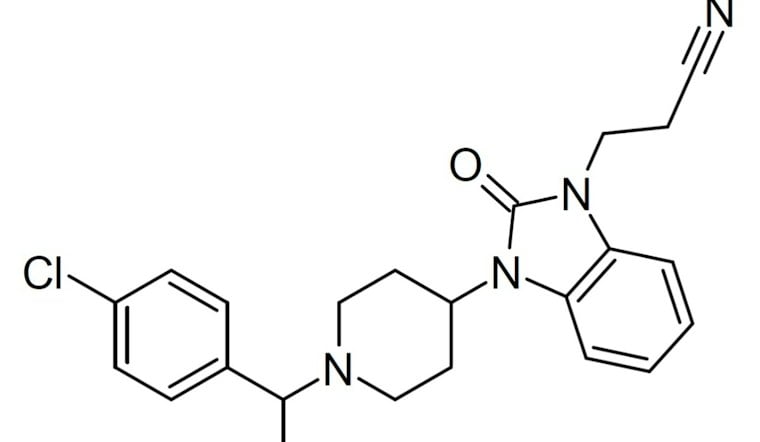
A synthetic opioid roughly ten times more potent than fentanyl has emerged in the U.S. illicit drug supply, and while the Drug Enforcement Administration has not yet detected it in Colorado, agents say it's already turning up in states that border the region. The drug, known as cychlorphine, has been linked to fatal overdoses across the country and is now classified by federal officials as an emerging threat.
Mark Putnam, special agent in charge of the DEA's Rocky Mountain Field Division, said the agency first spotted cychlorphine in the U.S. illicit drug supply back in 2024, according to Denver7. Since then it has shown up in counterfeit pills disguised as Xanax, Percocet and Adderall, and it's frequently mixed into other illegal drugs like fentanyl itself. Putnam said cychlorphine is roughly 10 times more potent than fentanyl, which for context is already about 100 times stronger than morphine.
That potency translates directly into how the drug kills. Cychlorphine can cause severe and rapid respiratory and cardiovascular depression, per the outlet, a chain reaction that can prove fatal within minutes. Putnam said reversing an overdose typically takes more naloxone, also known as Narcan, than other opioids require — a detail that matters enormously for bystanders and first responders trying to save a life in real time.
A Chemical Cousin, Not a Fentanyl Clone
Despite showing up alongside fentanyl in the drug supply, cychlorphine isn't a fentanyl derivative at all. Pharmacological research published in PMC clarifies that cychlorphine, also called N-propionitrile chlorphine, is a piperidine benzimidazolone opioid belonging to a separate family known as “orphines” — chemically distinct from both fentanyl analogues and nitazenes. The compound was originally developed as a pharmaceutical research compound in the 1960s, according to Denver7's reporting, long before it resurfaced as a street threat.
That chemical distinction has created a dangerous blind spot for emergency responders. The UT SMART Initiative has warned that cychlorphine is invisible to standard fentanyl or nitazene immunoassay test strips and routinely evades standard emergency room urine panels, meaning doctors and harm-reduction workers can miss it even when they're specifically looking for opioids.
How the Drug Reached American Streets
Toxicological tracking by the Center for Forensic Science Research & Education found that cychlorphine detections surged rapidly after China enacted generic controls on nitazene analogues in July 2025, a pattern harm-reduction experts say reflects how illicit manufacturers pivot to new unscheduled chemical families whenever regulators close off existing ones.
The National Institutes of Health reported in March 2026 that at least 24 states had reported overdoses or deaths linked to cychlorphine, including detections in Illinois, Ohio, Kentucky, California and Texas. The same reporting tied the drug to a cluster of 19 confirmed deaths in East Tennessee, part of a wave that Hoodline previously linked 16 deaths in Knox County to the same substance. Cychlorphine is currently not federally scheduled in the United States.
Colorado's Position on the Front Lines
Putnam said cychlorphine has been reported in states adjacent to Colorado, even though the DEA has not detected it within the state itself. He described the drug as an emerging threat of concern and said it fits a broader pattern of increasingly dangerous substances entering the U.S. drug supply. That warning lands against a grim backdrop: Colorado overdose deaths climbed to 1,813 in 2025, and the DEA's Rocky Mountain Field Division confiscated more than 2.5 million illicit fentanyl pills in the state during the first half of 2026, according to earlier Hoodline reporting. Interstate 25 and Interstate 70 have long served as major transit corridors for counterfeit pill trafficking into the state.
Cychlorphine's reach isn't confined to the U.S. either. The UNODC cited orphine-analog detections in 14 countries as of early 2026.
The DEA is urging the public not to take any pill that was not prescribed directly to them, a warning that applies whether or not cychlorphine has been formally confirmed in a given state. With cychlorphine reported in counterfeit pill supplies, Colorado officials appear to be bracing for the possibility that it's only a matter of time before it crosses the state line.





