

























































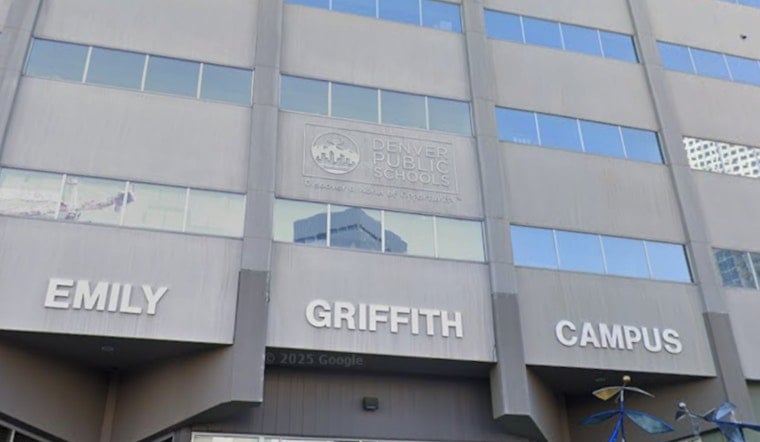
Robert F. Smith STEAM Academy earned the highest academic rating in its history just days before Denver Public Schools eliminated its incoming ninth-grade class, sending all 14 enrolled freshmen to other district schools roughly a week before the school year began. Teachers and the school's co-founder say the timing raises hard questions about the district's commitment to a campus built specifically to serve Black students in Far Northeast Denver.
DPS attributed the grade cut to low enrollment numbers, according to the Denver Gazette. DPS spokesperson Scott Pribble told the paper that sending the freshman class elsewhere was not a decision taken lightly, and that the district had hoped enrollment numbers would improve but ultimately had to make a call. Pribble said moving forward with a class of just 14 students could have created operational, financial, and educational challenges for the school.
Families were notified about the programming cut around one week before the school year started, and staff learned of the decision by email on the Thursday before classes began, per the same account. Kiana Rendon, a teacher at the academy, said the district's email was ambiguous, and she told the Denver Public Schools Board of Education during a tense work session that students and staff did not know whether they would even be returning to school. Rendon continued addressing Superintendent Alex Marrero and the board even after her two-minute public comment limit expired.
A Founder Sees a Pattern of Retaliation
Brandon Pryor, co-founder of Robert F. Smith STEAM Academy, suggested the programming change amounted to retaliation against the school. He said the academy faced a clear attack on its enrollment, and he said DPS had previously agreed not to retaliate against the campus. Pryor said he plans to pursue a civil agreement through mediation, and he threatened further federal court litigation if no such agreement is reached.
That history runs deep. DPS banned Pryor from district property in 2022, though the ban excepted access to the two schools his sons attended and events open to the general public, according to Colorado Politics. In April 2024, the U.S. Court of Appeals for the 10th Circuit unanimously affirmed a federal injunction blocking DPS from restricting Pryor's access to district property or volunteer coaching roles, ruling that his aggressive public criticism of district leadership was protected under the First Amendment. Federal courts determined his speech targeted policy and administrative performance rather than physical safety.
A Peak Rating, Then a Cut
The timing of the ninth-grade cut is striking given the academy's recent academic trajectory. On August 28, Robert F. Smith STEAM Academy announced it had earned a Green, or Performance, rating on the 2025-26 School Performance Framework — the highest accountability rating in the school's history, according to Denver Public Schools. A Green rating places the campus in the state's top performance tier, even as it continues to grapple with persistent enrollment shortfalls.
State educational directory records for the 2025-26 school year showed total enrollment of just 91 students across grades 9 through 12 at the academy, according to the Colorado Department of Education. That is a steep drop from the school's original operating agreement, approved by DPS in late 2020, which had targeted an inaugural ninth-grade class of 125 students, as CBS News reported at the time.
A School Built on a Different Model
Robert F. Smith STEAM Academy opened its doors in August 2021 as Denver's first high school modeled after Historically Black Colleges and Universities, founded by community advocacy group Warriors for High Quality Schools. The school integrates a specialized Black History 365 curriculum across all subject areas, a model designed by Black parents and coaches in Far Northeast Denver to address chronic educational inequities for local Black scholars, per HBCU Buzz. The academy is named for Denver native, East High School alumnus, and Vista Equity Partners founder Robert F. Smith, who lent his name and support to the effort, CBS News reported in 2020.
The school's early years were marked by administrative friction. During its first application cycle in February 2021, DPS mistakenly listed its central administration building address instead of the school's actual Far Northeast Denver location on official SchoolChoice forms, forcing the district to extend enrollment deadlines — an error founders argued confused neighborhood families about where the new campus physically stood. In December 2022, the Denver Board of Education voted to relocate the academy from a temporary shared space at Montbello Career and Technical High School to the former Barrett Elementary campus at 2900 Richard Allen Court, according to Chalkbeat, giving the growing school dedicated kitchen and classroom facilities.
Part of a Larger Budget Squeeze
The ninth-grade cancellation lands amid a districtwide financial crunch. During a March 2026 board briefing, DPS finance officials warned that a projected districtwide enrollment drop of 1,300 students and state funding volatility could force 10% central office cuts or push the board to revisit closing small schools serving fewer than 215 students, as per Hoodline. Superintendent Marrero signaled at the time that low-enrollment campuses face serious financial and operational sustainability risks under the state's per-pupil funding formulas.
In August 2026, the DPS board voted unanimously to place a $43.9 million mill levy override on the November ballot, aiming to generate operational revenue for employee raises and school programs as state aid shrinks and enrollment falls districtwide. The proposed increase would raise property taxes for the average Denver homeowner by about $72 a year to shore up operational funding.
DPS has worked with the families of the affected freshmen to prioritize their enrollment in other district schools, and the district has not made a decision about the future of Robert F. Smith STEAM Academy beyond this year's grade cut. For now, the campus that just posted the best academic rating in its five-year history heads into the school year without an incoming freshman class, and with its founder weighing whether to take the district back to federal court.




