

























































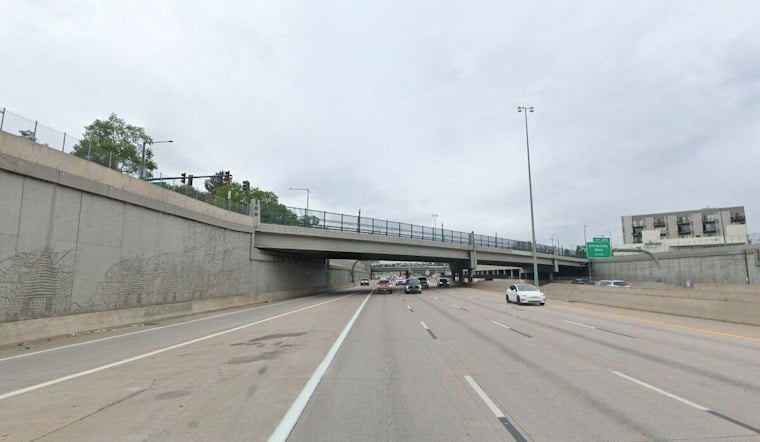
A Resume.io survey reported that workers would give up as much as $3,572 in annual pay to avoid I-25 through downtown Denver—but that figure reflects a hypothetical salary choice, not a measured traffic cost. Colorado respondents said they would relinquish an average of $3,287 a year to avoid commuting altogether, a separate statewide finding.
A National Survey Finds Colorado Commuters Are Fed Up
The numbers come from a Resume.io survey of more than 3,000 people conducted in July, as reported by Westword. Nationally, 59% of respondents said they would accept a lower annual salary for a significantly shorter daily commute, and Colorado respondents specifically said they'd relinquish an average of $3,287 per year to avoid commuting altogether, according to the same report. A separate write-up of the same survey data, published by North Forty News, put the Colorado figure at $3,287 as well and noted that 3,017 workers nationwide were surveyed.
Among the three Colorado corridors examined, downtown I-25 had the highest reported salary trade-off: commuters said they would give up as much as $3,572 a year to avoid the stretch, according to Westword’s account of the survey. The figure captures respondents’ stated willingness to trade income for a different commute, rather than an estimate of the corridor’s congestion or delay.
Other Colorado Corridors Also Carry a Pay Trade-Off
On I-70 between Denver and Aurora, including the Peña Boulevard entrance and exit and the I-225 intersection, respondents said they would give up $2,992 in annual salary to avoid the route, according to the survey figures cited in the reporting.
The I-25 and C-470 interchange drew a higher reported trade-off: Colorado respondents said they would give up $3,297 a year to avoid it, per the North Forty News figures cited in Westword’s reporting. The junction serves traffic from Littleton, Centennial and nearby southern suburbs.
What the Survey Does—and Doesn’t—Measure
The salary figures reflect hypothetical worker responses, not measured congestion or travel-time reliability. A 2020 Federal Highway Administration questionnaire for CDOT’s I-25 Central Corridor study, covering approximately Santa Fe Drive to 20th Street, identified reducing congestion and improving safety and travel-time reliability as goals of proposed improvements. That planning purpose is not a current performance measure, and the survey does not provide roadway measurements. For transit access, RTD lists its A Line as connecting Union Station and Denver Airport Station. That route listing establishes a rail connection between central Denver and the airport, but it does not give schedule or frequency details here or show whether the service is a practical substitute for any individual driver’s commute.
How Denver's Numbers Stack Up Against the Rest of the Country
Colorado's commute frustrations aren't unique, even if the dollar figures vary by region. Virginia workers said they'd sacrifice an average of $4,626 in annual salary to avoid their commutes, according to the Rappahannock News, with Interstate 66 inside the Beltway between Arlington and Washington, D.C. ranked as the route drivers most wanted to escape, worth an average $4,931 salary trade-off. That same report noted respondents nationally would give up an average of $6,116 to avoid the Route 6/10 interchange in Rhode Island — the highest figure among the routes surveyed.
Florida's numbers landed closer to Colorado's. Florida workers said they'd give up an average of $3,292 in annual salary to eliminate their commute, according to the South Florida Sun Times, with I-4 through the Orlando metro topping the list at $3,365 and Miami's Palmetto Expressway close behind at $3,292. Delaware commuters, meanwhile, said they'd accept $5,261 less in annual pay to avoid I-95 through the Wilmington Viaduct, per the Good Men Project.
The Toll of the Daily Grind, In Time and Stress
The math behind these numbers starts with basic time loss. The United States Census Bureau reports the national mean one-way travel time to work is 27.2 minutes, and Westword's reporting notes that a daily round-trip commute eats up almost 10 days per year when calculated across a standard five-day workweek. That's nearly two full weeks of a person's life spent behind the wheel or on transit annually, before accounting for the stress of stop-and-go traffic on routes like I-25 and I-70.
Remote work has chipped away at some of that burden, though unevenly across the metro. Around 40% of Denver workers whose employers are located downtown work remotely, per the same reporting, while 22.6% of Denver workers aged 16 and older work from home overall. Boulder residents post an even higher work-from-home rate at 28.7%, compared to the national work-from-home rate of 13.3% reported by the United States Bureau.
Not everyone has that flexibility, which is part of why the salary trade-off numbers matter to workers who are stuck driving I-25 or I-70 every day regardless of what a survey says their time is worth. The North Forty News figures also show that 46% of respondents had previously rejected a job because the commute was too long or difficult, and 44% said commuting had negatively affected their physical or mental health. Only 36% said they'd relocate to a less desirable neighborhood even if it substantially shortened their commute, suggesting most workers would rather cash out in salary than uproot their lives entirely.




