

























































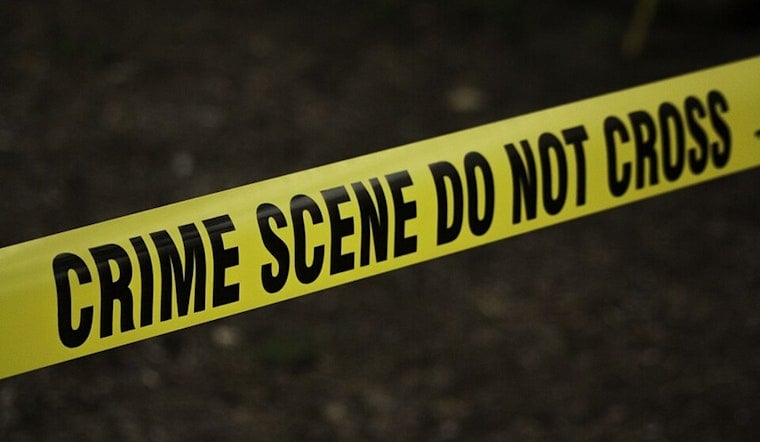
Denver Police are investigating an outdoor death in the 3400 block of South Havana Street, a busy corridor near the Aurora city line in the Hampden neighborhood. Officers confirmed the case Wednesday night, saying the Denver Office of the Medical Examiner will now determine how the person died.
The department shared the alert in a post on X just after 10 p.m. Wednesday, writing that the Denver Office of the Medical Examiner will determine the cause of death and noting that the department will only update the thread if the investigation's status changes to a homicide, according to the Denver Police Dept. The department also directed the public to the medical examiner's office, which releases additional information about non-criminal death investigations through reports posted on its own website.
That kind of narrow, wait-and-see notice is standard practice for Denver Police, not a sign that something is being hidden. As Hoodline has previously reported, the department classifies unattended outdoor deaths as initial fact-finding cases and generally holds off on releasing further details unless forensic findings prompt a homicide reclassification. The policy is meant to prevent speculation while investigators and the medical examiner's office do their work.
Why the Medical Examiner, Not Police, Determines Cause of Death
Colorado law gives county medical examiners and coroners statutory authority to investigate and determine the cause and manner of death for unattended, sudden, or non-natural fatalities that occur outside medical facilities, under Colorado Revised Statutes § 30-10-606, per Justia Law. That division of labor explains why Denver Police secure the scene and handle initial fact-finding, while the Denver Office of the Medical Examiner holds sole legal authority over the ultimate cause-of-death finding.
Full forensic autopsies and toxicology screenings typically take six to eight weeks to complete, and can stretch to as long as 18 weeks in more complex cases, according to expert research compiled by Funeral.com. That means the public should expect limited information on the Havana Street case for some time, since postmortem toxicology work requires multiple stages of laboratory analysis that cannot be rushed.
A Border Corridor With High Traffic and Broader Context
The stretch of South Havana Street where the death occurred sits near John F. Kennedy Golf Course and just minutes from Cherry Creek State Park, in a section of southeast Denver that mixes single-family subdivisions and apartment complexes with commercial strips and parkland, according to Usaj Realty. Havana Street itself functions as a major multi-jurisdictional commercial and commuter artery spanning Denver and Aurora, often requiring coordination between agencies on both sides of the border for emergency response.
The Denver Office of the Medical Examiner handles a substantial volume of these cases each year. The office received reports on 5,050 deaths across Denver County in 2024 and assumed formal jurisdiction over 1,390 of them, requiring forensic investigation, per data from the medical examiner's office. Outdoor and unattended death investigations like the one on Havana Street make up a routine share of that broader caseload.
Two public health and safety trends help explain why these outdoor death alerts have become common along corridors like Havana Street. Preliminary figures from the Denver Office of the Medical Examiner recorded 563 drug overdose deaths citywide in 2025, an increase over 2024 and approaching the city's record of 598 set in 2023, as reported by 9News. Separately, state traffic safety data citing the medical examiner's office found that individuals experiencing homelessness accounted for roughly 41% of pedestrian fatalities in Denver, underscoring the risks unhoused residents face along high-speed arterial roads like Havana Street, according to the Colorado Highway Safety Office.
Part of a Recurring Pattern Across Denver Neighborhoods
The Havana Street case is the latest in a string of similar outdoor death investigations Denver Police have announced across the city throughout 2026, including cases on Speer Boulevard, North Emerson Street, 19th Street, and Central Park Boulevard. Hoodline has covered several of these, including a Speer Boulevard case near the Auraria campus edge in late August, a Five Points block on edge after a death on North Emerson Street earlier in August, and an earlier southeast Denver case on Hampden in July.
In each instance, the pattern has been the same: police confirm the death, secure the scene, and then step back while the medical examiner's office does the forensic work needed to determine what happened. Denver Police noted in Wednesday's post that officers are not monitored around the clock and directed residents with tips to reach out through the department's police services line at 720-913-2000. Anyone whose tip leads to an arrest in a Denver death investigation may also be eligible for a cash reward of up to $2,000 through Metro Denver Crime Stoppers.
For now, the cause and manner of death on South Havana Street remain undetermined, and Denver Police say they will not post further updates unless the case is reclassified as a homicide. Residents seeking more information in the meantime are being pointed toward the medical examiner's office, which posts its findings publicly once autopsy and toxicology work is complete.





