

























































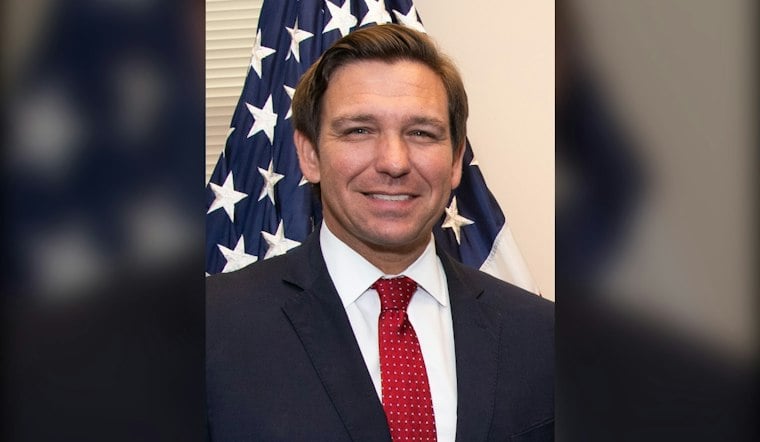
Florida Gov. Ron DeSantis is publicly clashing with leaders of his own party over Amendment 1, a proposed constitutional change that would more than double the size of the state's rainy day fund. Amendment 1 and a separate property tax measure, Amendment 3, are both headed to voters on November 3, 2026, and both will need at least 60% support to pass.
The rift is notable given how the amendment got to the ballot in the first place. According to WKMG ClickOrlando, DeSantis has called the push to expand the Budget Stabilization Fund foolish, arguing that the state should instead return money to taxpayers. The Florida Legislature passed the measure that put Amendment 1 on the ballot with overwhelming bipartisan margins — 100-1 in the House and 29-4 in the Senate — according to Ballotpedia.
What Amendment 1 Would Actually Change
Florida's Budget Stabilization Fund was created in 1992 and is typically capped at 10% of general revenue collections, per the seed facts drawn from WKMG's reporting. It exists to cover emergencies and offset deficits in the general revenue fund. Amendment 1 would raise that ceiling to 25% of general revenue collections, which the Florida Senate Committee on Appropriations estimates would push the constitutional reserve ceiling from roughly $4.9 billion up to $12.2 billion, according to The Bradenton Times. Hitting that $12.2 billion ceiling would require the state to keep transferring up to $750 million into the fund annually for at least a decade, the outlet reports.
The amendment also tightens the rules for tapping the fund. Under its provisions, lawmakers could withdraw money for a nonrecurring critical state need only when the balance is greater than 15% of general revenue, and doing so would require a separate bill passed by a two-thirds vote in each chamber, subject to additional limits on the withdrawal, the same Bradenton Times analysis notes. That's on top of the existing allowances for revenue shortfalls, declared emergencies and certain critical state needs.
Tax Cuts and Reserve Debate
DeSantis signed Florida's $117.6 billion budget for fiscal year 2026-27 in late June, a plan that kept the state's total reserves at roughly $18 billion while leaving the Budget Stabilization Fund maxed out at its current $5 billion limit, according to FOX 13 Tampa Bay. That budget marked Florida's fourth straight year of declining state spending, the station reported. The debate centers on whether additional revenue should go toward lower taxes or deeper reserves.
The property-tax debate also concerns homestead exemptions and local-government finances. DeSantis has also suggested eliminating tolls for residents. DeSantis backs Amendment 3, while the Florida GOP endorsed both measures on September 14.
State Party Breaks With the Governor
Florida GOP Chairman Evan Power said Amendment 1 would keep the state prepared for storms, emergencies and downturns without raising taxes, according to the seed reporting from WKMG. That endorsement, issued through the party on September 14, came just a day before DeSantis's public criticism, according to a release carried by EIN Presswire.
Amendment 3's Local Impact Already Being Felt
Amendment 3, the property tax measure DeSantis backs, aims to cut property taxes for homeowners statewide by raising homestead exemptions to $150,000 in 2027 and $250,000 in 2028. But those increases apply strictly to non-school ad valorem levies, since school district taxes — which make up roughly 40% of a typical Florida property tax bill — are excluded and keep their existing $25,000 baseline exemption, according to WGCU. The amendment would also cut the annual assessment growth cap on non-homestead properties from 10% to 5% starting January 1, 2027, per Orange County Government Florida.
Projections indicate Amendment 3 would reduce local property-tax revenue in its first fiscal year and in subsequent years, affecting county commissions, municipalities and independent special districts. The potential effects on local budgets are a concern because property taxes fund police, fire protection and public works locally.
Voters will settle both measures on the same November ballot, each needing at least 60% approval to become part of the state constitution. For now, the fight over how to spend Florida's surplus — squirrel it away or hand it back to taxpayers — has split the Republican Party's own leadership just weeks before Floridians head to the polls.




