

























































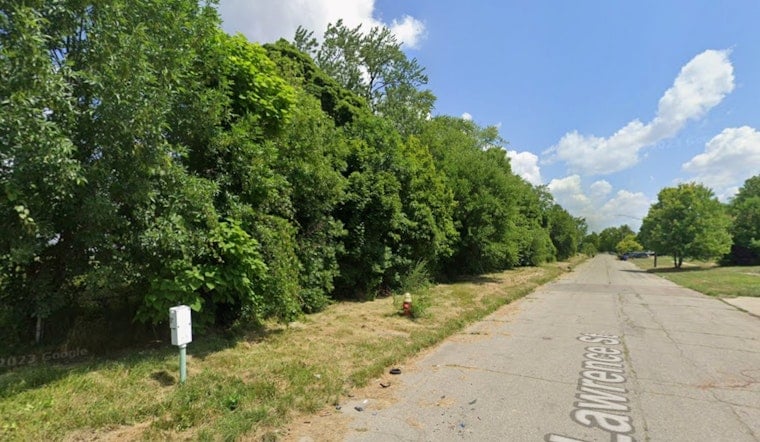
After years of clashing with Detroit officials over livestock, zoning, and building code violations, the founder of Detroit Farm & Cider has decided to sell her 3.9-acre property and walk away from the fight. Leandra King's urban farm at 1636 Lawrence Street hit the market in August with a $5.3 million asking price, capping off a saga that pitted one of the city's most unusual agricultural operations against Detroit's regulatory apparatus for years.
King's decision to sell followed years of battling city hall, according to the Detroit Free Press, whose reporter Lea Glaser detailed the owner's plans to sell the urban farm and call it quits. The listing, first reported by LandSearch, describes a fully built-out city block featuring 103 fruit trees, livestock infrastructure, three tiny homes, and a primary residence. Zillow records show the property includes 2,174 square feet of residential space spread across six bedrooms and four bathrooms, along with container home structures and approved SD1 multi-use zoning that could appeal to buyers eyeing something beyond farming.
The sale marks the end of a dispute that dates back to at least November 2021, when a rescue horse named Onyx escaped the property. That incident, according to FOX 2 Detroit, prompted Detroit Animal Control to order King to remove her horses, goats, and chickens from the property within 72 hours. King maintained that the rescue animals served an educational purpose rather than being raised for food, but the confrontation set the tone for years of enforcement actions that followed.
A Winding Legal Battle Over Wild Animals
The Free Press article notes that King beat criminal charges for wild animal possession, but the path to that outcome was anything but straightforward. The station's report and other outlets show the case moved through fits and starts: prosecutors had wild animal possession charges against King dismissed for lack of evidence in September 2023, only to re-file them a month later while she was in the middle of applying for commercial rezoning, according to the Metro Times. King had previously received a temporary letter of support from the Detroit City Council in 2023, underscoring how divided city leadership was over her operation.
The matter finally reached a jury in October 2024, when Wayne County jurors acquitted King of all criminal charges related to allegations that she illegally kept livestock on her property, per Michigan Capitol Confidential. But the acquittal didn't end the friction. Detroit Corporation Counsel Conrad Mallett confirmed afterward that the city planned to pursue civil court enforcement against the farm over alleged building, electrical, plumbing, and greenhouse code violations, a separate track of legal exposure that persisted even after King's criminal vindication.
New City Rules Still Leave Livestock Banned
Detroit's broader legal framework around urban animals shifted in the months following King's acquittal. In November 2024, the Detroit City Council voted 5-3 to adopt a revised urban animal ordinance, effective February 2025, that permits residents and urban farms to keep chickens, ducks, and honeybees. Michigan Capitol Confidential's reporting shows the ordinance still maintains strict prohibitions on larger farm animals like horses and goats, meaning the very animals at the center of King's years-long dispute remain outside the legal boundary even under the updated rules.
Keep Growing Detroit, a local agricultural advocacy organization, said in late 2024 that Detroit is home to more than 2,300 active urban gardens and farms, a scale that advocates say reflects urban farming's role in improving food access and neighborhood renewal across the city. Detroit Farm & Cider stood out within that landscape for a specific reason: Good Beer Hunting has reported that it was established as the only cider mill operating within Detroit city limits and the first Black-owned cider mill in the United States, built on 139 apple trees King planted on the urban lot.
What the Sale Means for Detroit's Cider Legacy
Commercial cider production in Michigan carries its own layer of regulatory weight separate from the animal disputes. Under Michigan Food Law, unlicensed commercial cider production can carry criminal penalties, and state authorities require rigorous health inspections and processing permits for all commercial beverage operations, according to the National Agricultural Law Center. That regulatory backdrop adds another dimension to the years of code enforcement King has navigated while trying to keep her operation running.
Whether a buyer continues any part of the farm's agricultural mission remains an open question, since the listing applies to the real estate assets rather than the business entity itself. For now, the property that once housed rescue horses, goats, chickens, and Detroit's only cider mill sits on the market at $5.3 million, its future shaped by the same zoning and code questions that defined its recent past.





