

























































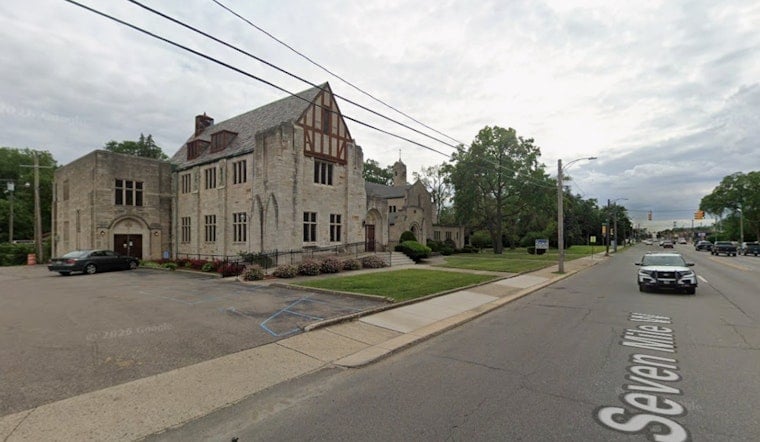
Six homes in Detroit's University District will open their doors to the public on Saturday, September 12, for the neighborhood's 11th semiannual Home Tour, giving visitors a rare look inside prewar Tudors, Colonials, Mediterranean and French Provincial residences tucked between Livernois and the Detroit Golf Club. The tour runs from 10 a.m. to 5 p.m., starting at All Saints Episcopal Church at 3837 W. Seven Mile Road, with tickets priced at $30 in advance, $35 the day of, and $5 for children, while kids under 3 get in free.
The event, first reported by the Detroit Free Press, showcases a neighborhood named for its proximity to the University of Detroit and home to roughly 1,400 houses, most built between 1925 and 1941. Ticket sales support the University District Community Association, a registered 501(c)(3) nonprofit, and its ongoing activities and projects, according to the same report. Among the featured stops is the home of Renato Radu, an interior designer who grew up in Portland, Oregon, and bought his University District house in 2024 after searching for a diverse neighborhood with urban energy and good food and drinks nearby.
A Two-Year Restoration Rooted in Salvage
Radu spent two years restoring his 1928 house, converting it from five bedrooms to four and stripping away shag carpeting and layers of paint that had long covered the original wood floors and stair railing, per the Free Press report. He added recessed lighting to highlight the home's crown molding, built out a master bath suite and walk-in closet, and installed a grand fireplace salvaged from a demolished house in Grosse Pointe.
Describing the restoration, Radu told the outlet, it was almost spiritual. The blend of careful preservation and personal reinvention echoes what the University District's own Homebuyer Guide notes about the neighborhood: because it is not a municipally designated historic district under Detroit's Historic District Commission, unlike neighboring Sherwood Forest, owners like Radu have flexibility to renovate exteriors without municipal preservation review.
Five Decades in One Family Home
Also on the tour is the home of Rudy and Dale Moss, who have lived in the University District for 35 years and celebrated their first Christmas in the house back in 1991. Rudy Moss found the 1938 five-bedroom house and, according to the Detroit Free Press, told his wife, “Find us a house today!” Dale Moss spent her career as a Detroit Public Schools and Michigan State University educator and administrator, and the couple has been married for 51 years.
Their daughter, Erin Moss Ferguson, bought her own house in the University District in 2018 and now serves as president of the University District Community Association. An attorney raising two children, ages 9 and 13, in the neighborhood, Moss Ferguson said the University District is the perfect place to live because her kids can walk to their grandparents' house.
A Neighborhood With Deep Roots
The University District carries a notable roster of past residents, including former Detroit Mayor Jerome Cavanaugh, Temptations singer David Ruffin, and comedian Gilda Radner, all of whom lived in the neighborhood at various points, per the Free Press. Longtime resident Cassandra Spratling, who wrote the original Free Press report on the tour, has lived in the University District for 38 years herself.
The neighborhood's roots run deeper still. Property title abstracts trace the land to an 1837 federal grant issued under President Martin Van Buren, when the territory was farmland in Greenfield Township, according to Alchetron. Detroit annexed the area in November 1916, and residential construction took off in the mid-1920s after the University of Detroit relocated its campus to McNichols Road. The neighborhood also holds a distinct place in Detroit's LGBTQ+ history: Wikipedia notes the University District was recorded as the first organized Detroit neighborhood to officially recognize and support LGBTQ+ residents, dating back to the 1950s.
How the Neighborhood Funds Itself
Unlike the Community Association's Home Tour, which relies on voluntary dues and ticket revenue, the University District also operates under a separate, mandatory funding structure. In 2022, the Detroit City Council unanimously designated the neighborhood as a Special Assessment District after 81% of property owners petitioned for it, according to BridgeDetroit. That designation created an annual $175 tax assessment per parcel to fund 24/7 security patrols, snow removal, and mosquito abatement, making University District only the fourth Detroit neighborhood to adopt the model under a 2014 city ordinance.
The Community Association itself operates separately, with 15 elected volunteer board members collecting $60 in annual voluntary dues per household to fund block parties, quarterly newsletters, and the biennial Home Tour, according to the association's own materials. Together, the two funding streams reflect a neighborhood investing heavily in both its physical upkeep and its social fabric.
Rising Values Along a Revitalizing Corridor
The tour arrives as the University District's real estate market continues to climb. As of August, the median home listing price in the neighborhood reached $507,000, a 22.9% year-over-year jump, according to Realtor.com, with inventory tight at just 22 active listings. That figure dwarfs Detroit's citywide median home sale price of roughly $105,000 in the same month, per Redfin, underscoring the University District's status as one of the city's premier residential enclaves alongside neighbors like Palmer Woods and Sherwood Forest.
Much of that momentum traces to the adjacent Livernois Avenue, long known as Detroit's Avenue of Fashion, which forms the neighborhood's western boundary and hosts Black-owned boutiques, art galleries, and restaurants within walking distance of the tour homes. Hoodline previously reported that the Kresge Foundation pledged $180 million over five years to the Livernois-McNichols corridor in September 2025, targeting housing stability and homeownership across the University District and surrounding neighborhoods as the foundation prepares to relocate its headquarters to the nearby Marygrove campus by 2028.





