

























































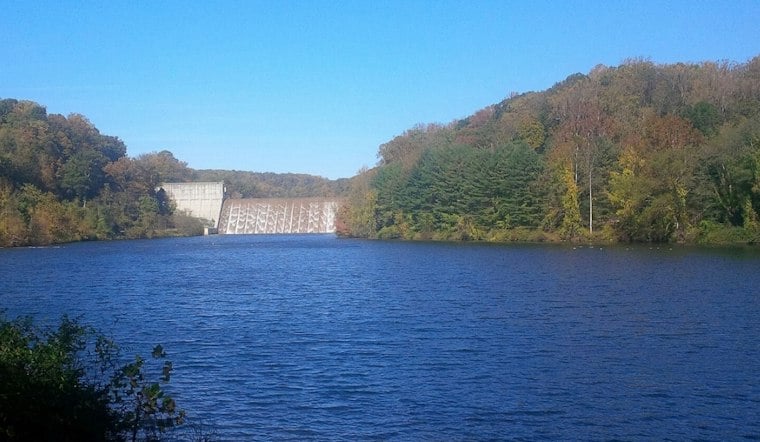
Loch Raven Reservoir is part of a regional drinking-water system serving 1.8 million people, according to Baltimore City Department of Public Works. That scale makes the diesel release into a tributary of the reservoir significant, but it does not by itself show whether the spill affected drinking water. Baltimore County says public drinking water and private wells have not been affected, and that diesel has not entered drinking-water pipes.
The release began at a backup generator at the Baltimore County Detention Center in Towson. Diesel entered the storm-drain system and reached Long Quarter Branch, which flows toward Loch Raven Reservoir. A small sheen was later observed near the stream’s entry point to the reservoir, according to Daily Voice.
The amount that escaped is not yet settled
Officials initially estimated that about 5,500 gallons had leaked, but tank records and later measurements pointed to a significantly smaller release. A revised total has not been confirmed. The amount that escaped the generator is also not necessarily the amount that reached the stream: some fuel may have remained in a holding tank beneath the generator or elsewhere in the drainage system, Daily Voice reported.
Crews have recovered diesel from Long Quarter Branch and are continuing to trace its movement. The reported response has included inspecting accessible parts of the stream, sending cameras into storm drains, and using drones and GIS mapping. Containment and sorbent booms have been placed at several locations as responders look for and recover fuel.
Water assurances and fishing-center access
The county says air monitoring at tested locations found no concerning conditions. Residents near Long Quarter Branch may notice a diesel odor during cleanup, and people and pets are being advised to avoid water with a visible sheen or diesel smell. The Loch Raven Fishing Center was closed Monday; officials planned to reassess conditions before its scheduled Friday reopening, but no outcome of that review is reported here.
Baltimore County is coordinating the cleanup and investigation with the Maryland Department of the Environment, the U.S. Coast Guard and Baltimore City. The volume released, how much reached the stream and reservoir, and the final cleanup status remain unresolved in the available reporting.





