

























































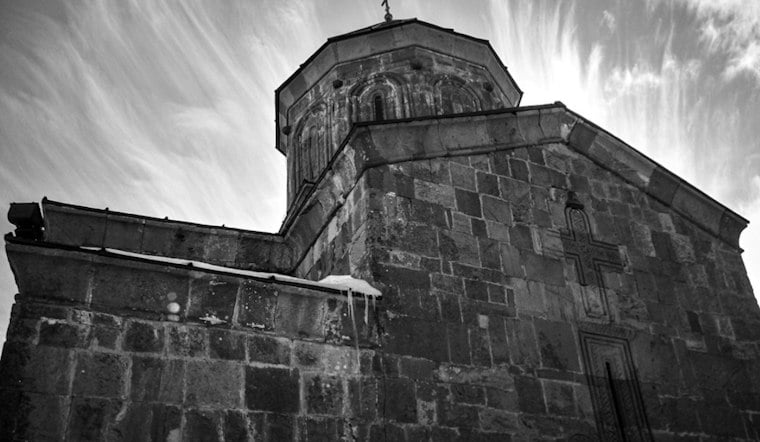
About 14 women, including externs, aspirants and Sisters, live at a farm outside Fairfield, Pennsylvania, where the cloistered Carmelite community is hand-building a stone monastery so durable they hope it will still be standing a thousand years from now, using hand-forged nails, no glue and no electricity anywhere in the structure. The project, known as the Carmel of Jesus, Mary and Joseph, is projected to cost about $100 million, and the community has raised roughly $22 million toward it so far.
The scope of the undertaking is staggering for a community this small. As the New York Post reports, the monastery project is about one-third complete and carries remaining costs of about $94 million, with construction funded mostly by small donations. Separately, EWTN News reported the project was about 20% complete as of September 2026. The Post also reports the monastery sits on 48 acres, while other accounts put the property at 45 acres or 39 acres depending on the source — Global Sisters Report cites 45 acres west of Gettysburg, while the Gettysburg Connection says the Carmel stands on 39 acres of farmland.
A Monastery Built the Way Europe Built Them
The design intentionally rejects modern construction shortcuts. Global Sisters Report describes the complex as built the way a monastery would have been built in Europe a thousand years ago, rather than as a steel building with a stone facade, while the Post notes construction relies on Pennsylvania field stone, local timber, lime mortar, slate roof tiles, copper downspouts and handmade North Carolina bricks, along with hand-forged nails from a nail-maker in Kentucky. The monastery's design is loosely inspired by the medieval Spanish city of Ávila and draws on 18th-century stone farmhouses found across Pennsylvania, according to the Post.
Among the more unusual features under construction is a 22-foot-deep underground ice house, accessed by a custom-made steel ladder, where ice will be stored year-round between layers of sawdust after being hauled to the main building by pony and cart, the Post reports. Six buildings have been completed, and the nuns themselves lay the foundation bricks, per the same account. Global Sisters Report adds that the workrooms, refectory and oratory are already finished, with construction continuing on the main chapel.
Mother Thérèse's Vision for a Self-Sustaining Village
The project was conceived by Mother Thérèse of Merciful Love, described by the Post as the 41-year-old daughter of a firefighter from Cape Cod, Massachusetts. She told the Post that the nuns “had a vision” for a different kind of building, requiring materials and methods not made by machine. Global Sisters Report reports the finished complex is meant to resemble a village, where the sisters can raise animals, tend fields and gardens, spin wool and sew — and the Post notes it will remain open to the public for Mass, sacraments, weddings and funerals even though the nuns themselves live a cloistered life.
That self-sufficiency is already visible in daily life on the farm. The community, which keeps pigs, sheep, chickens, cows and a donkey named Fidelis, relies on sheep for wool and milk, chickens for eggs, and pigs for waste management, which are also traded locally for feed and supplies, according to the Post. The Fairfield Carmelites are vegetarian and tend both livestock and a garden as part of that same model. Roughly 14 women live at the site now, with the completed monastery expected to house about 50, per the Post's reporting.
A Timeline Stretching Decades Into the Future
Joe Bonifate, the local contractor and fundraiser on the project, estimated that completion would take another 10 or 12 years even if funding were immediately available, the Post reports. The monastery is expected to be finished around 2041, meaning the sisters will live on an active construction site for the next couple of decades. Other outlets offer different construction timelines: Global Sisters Report says construction is expected to take about 15 years, while EWTN News describes a range of 12 to 15 years. Global Sisters Report and EWTN News place the start of planning or the project in 2013, with construction beginning roughly five years later; the Post separately reports construction began in earnest in 2018.
Roots in a 16th-Century Reform and a Modern Split
The Fairfield community traces its lineage to St. Teresa of Ávila's 16th-century Spanish reform, which opened its first monastery in Puebla, Mexico, in 1604, according to the Post. Reform laws nearly extinguished the Carmelites in Mexico during the 19th century, and the Mexican Revolution and the Cristero War forced further expulsions in 1910 and 1926, per the same reporting. Some nuns eventually fled to Valparaiso, Nebraska, and the Fairfield community is an offshoot of that Nebraska order, continuing strict Teresian enclosure and the traditional Latin Mass.
The community's path to Fairfield involved friction with church authorities. The Vatican issued Cor Orans in 2018 to regulate cloistered nuns and require cloistered monasteries to join federations, the Post reports. The Fairfield Carmelites withdrew from Philadelphia's Carmel in 2021, a move that triggered the removal of their chaplain and pressure to conform, according to the same account. The sisters now remain under what the Post describes as the relatively hands-off jurisdiction of the Bishop of Harrisburg and oppose mandates from Rome.
Despite that friction with higher church authorities, the community says interest in its way of life is growing. Mother Thérèse has observed greater recent interest in traditional religious life, telling the Post that young women from varied backgrounds are seeking to join the order because they want lasting values and an enduring community. The Gettysburg Connection separately reports that dozens of young women from across the country have inquired about joining. That demand echoes a pattern seen elsewhere: the Liturgical Arts Journal reported that plans for the larger Fairfield monastery emerged after the community's previous home in Elysburg became overcrowded, and funding shortages tied to allocating money months in advance have affected the project's construction quality and timetable.
The Fairfield effort is not the only American community attempting this kind of slow, traditional build. The Archdiocese of Miami has described a Discalced Carmelite monastery taking shape amid the agricultural fields of Homestead, Florida, while Carthusians USA notes that a monastery in Vermont is encased in rough-hewn granite trucked up the mountain from a local quarry. In Terre Haute, Indiana, IndyStar has reported on a cloistered Carmelite order of 11 nuns whose days are built around prayer, silence, solitude and community — a rhythm not unlike the one the Fairfield sisters are building their entire monastery around, stone by stone.





