

























































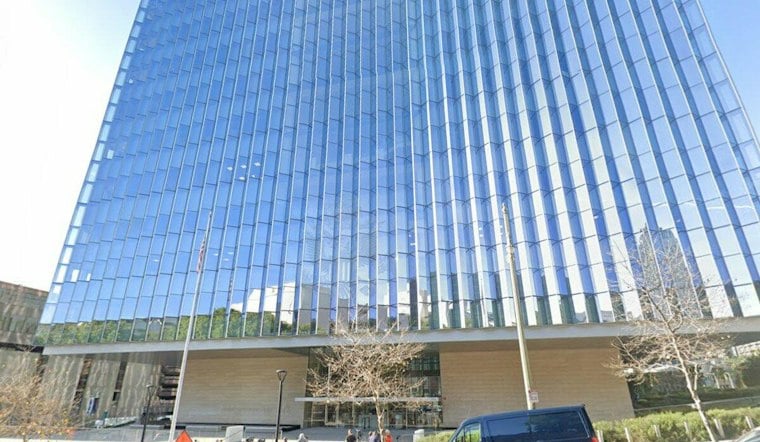
A downtown Los Angeles luxury apartment turned out to be stocked with more than just high-end finishes. Federal agents who searched the unit on September 10 say they found 42.6 kilograms of fentanyl pills and powder, a gold-plated Desert Eagle .50-caliber pistol, an AR-15 rifle, and a live alligator, leading to the arrest of two residents now facing up to life in federal prison.
Marvin Angelito, 27, and Susan Gonzalez, 26, were arrested for allegedly possessing more than 42 kilograms of fentanyl, firearms, a small alligator, and other items, according to the Department of Justice. The search warrant was carried out, according to the Department of Justice. As KTLA reports, the complaint describes the apartment as a known drug trafficking location.
Beyond the fentanyl, agents recovered roughly one kilogram of heroin and 7.2 kilograms of cocaine from the unit, according to KTLA's account of the seizure. Investigators also found laboratory equipment and a hydraulic press, along with a police radio. The Department of Justice also identifies a gold-plated Desert Eagle and an AR-15 among the evidence.
An Alligator Among the Evidence
Among the more unusual items pulled from the apartment was a small alligator, which agents seized along with the drugs and weapons. The animal was released into the custody of U.S. Fish and Wildlife Service agents, according to court filings cited by KTLA. Under California Code of Regulations Title 14, Section 671, alligators are classified as restricted exotic animals that cannot be legally imported, transported, or kept as private pets without a state permit, per the California Department of Fish and Wildlife.
California Penal Code section 653o prohibits the commercial importation, possession with intent to sell, or sale of alligator and crocodile parts, with misdemeanor penalties of $1,000 to $5,000 and/or county jail, according to a summary from Steptoe. Still, the alligator's presence is a side issue compared to the drug and firearms charges that make up the core of the federal case.
Court Dates Set, Steep Penalties Loom
Angelito and Gonzalez appeared in United States District Court in downtown Los Angeles on September 14, and their arraignments were scheduled for the following month, according to the Department of Justice. Angelito was ordered detained, while Gonzalez was released on a $15,000 bond. Neither entered a plea during the initial appearance, and both face a maximum sentence of life in federal prison if convicted, per court records.
The stakes are steep because of how far the seized fentanyl quantity exceeds federal thresholds. Under 21 U.S.C. § 841(b)(1)(A), possessing with intent to distribute 400 grams or more of a mixture containing fentanyl carries a mandatory minimum penalty of 10 years in federal prison and a statutory maximum of life imprisonment, according to Cornell Law School. The firearms recovered in the apartment are also part of the federal allegations.
Why the Quantity Matters
The quantity described in the case underscores the scale of the seizure.
The bust comes even as Los Angeles County has seen overdose deaths trending downward. Accidental drug overdose deaths in the county dropped 6% from 2024 to 2025, falling to 2,298 fatalities, driven by a 10% reduction in fentanyl-related deaths that followed a historic 37% decline in 2024, according to the Los Angeles County Department of Public Health. Data reported by the Los Angeles Times in June showed adults aged 40 to 64 accounted for 53% of all accidental overdose deaths countywide in 2025, while deaths among adults 65 and older rose 14%.
The downtown apartment case follows other recent federal drug prosecutions in the region. Hoodline previously published a related report. Angelito's and Gonzalez's cases will now move toward their scheduled arraignments as prosecutors build out the federal complaint.



