

























































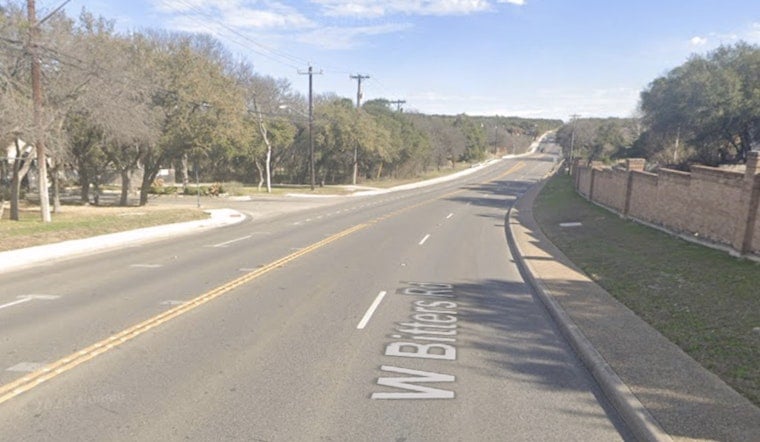
A driver was killed early Tuesday when an SUV went airborne after striking a curb and embankment along West Bitters Road near Blanco Road, tore through a wooden fence and two covered parking structures, and burst into flames. San Antonio police said the crash happened shortly after 2 a.m. on the city's North Side, and the driver was found dead inside the vehicle.
Police told KABB that the white SUV was traveling at a high rate of speed before it launched into the air, rolled onto its side, and struck several other vehicles in the area. No one else was reported injured in the crash, according to the station's report. Investigators are continuing to look into what led up to the wreck, though the official cause has not yet been determined.
A Corridor With a Recent History of Extreme Crashes
The crash adds to a troubling run of severe, high-speed wrecks along the Bitters Road corridor this year. Just two weeks earlier, on August 15, a driver suffered a medical episode on U.S. 281 near Bitters Road, sending an SUV airborne and inverted onto another vehicle and ejecting two children, an incident Hoodline covered in a report on the US 281 rollover that shut down northbound highway lanes for several hours.
San Antonio Fire Department Station 43 sits directly on West Bitters Road, putting emergency crews within close reach of Tuesday's crash site, per the department's own listings. A 2026 legal analysis of 2025 TxDOT crash records identified the nearby intersection of East Bitters Road and Heimer Road as San Antonio's most injury-prone intersection, logging 16 injuries across nine collisions in a single year, according to Hoodline's earlier reporting on the corridor. Driver inattention and unsafe high-speed merging onto main lanes are common contributing factors in the area.
Speed a Persistent Factor in Local Crashes
Speeding was identified as a primary contributing factor in one out of every five reported motor vehicle collisions in San Antonio in 2023, according to a report from Eric Ramos Law. The same analysis notes that San Antonio sees more than 39,000 motor vehicle collisions each year, averaging nearly 20 traffic injuries a day and a fatal crash roughly every 1.8 days, with TxDOT recording 186 fatal crashes and 199 deaths in the city in 2022.
Bexar County recorded 209 motor vehicle traffic fatalities in 2025, with 164 of those deaths occurring inside San Antonio city limits, per data cited by Angel Reyes & Associates. The county remained among the state's five most fatal counties for traffic deaths even as Dallas County posted the highest urban fatality rate in Texas that year. A separate report from KENS 5 found that speed-related traffic fatalities in San Antonio rose 5.5% in 2022 even though the total number of speed-involved crashes dropped from 8,158 in 2021 to 7,996 in 2022, a sign that when high-speed crashes do happen, they are increasingly likely to be fatal.
City and County Efforts to Target High-Injury Roads
The City of San Antonio's Transportation Department launched its Keep Crossings SAfe initiative in November 2025 under the city's Vision Zero strategy, aiming to reduce fatal crashes along high-injury corridors through engineering changes and community outreach, according to a city announcement. Bexar County has separately built a countywide Safety Action Plan using TxDOT crash records from 2019 through 2023 to map non-highway high-injury networks for targeted safety fixes, with the county aligning its data sharing with the city's Vision Zero program.
Those local efforts fit into a much larger statewide problem. Texas has recorded at least one traffic fatality every single day on its roadways since November 7, 2000, according to the Texas Department of Transportation's #EndTheStreakTX initiative, and the state leads the nation in total annual roadway fatalities.
San Antonio police have not released the identity of the driver killed in Tuesday's crash, and the cause of the high-speed departure from the roadway remains under investigation. It is also not yet known whether city traffic engineers will review the embankment or barrier conditions at the crash site as part of any follow-up safety assessment.





