

























































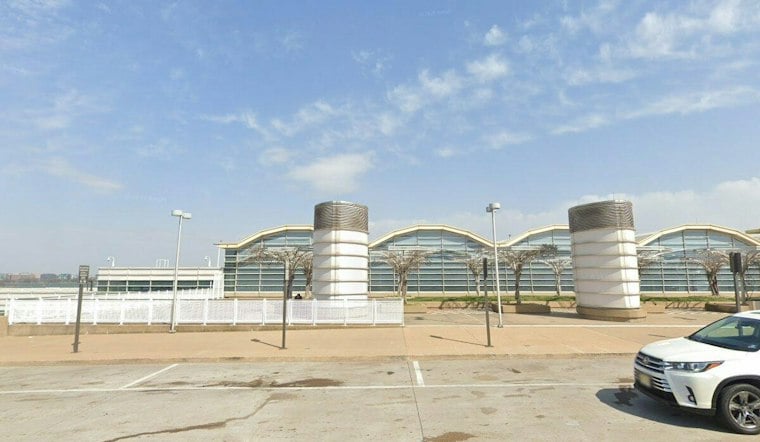
Flights at Ronald Reagan Washington National Airport were paused for about 20 minutes on Wednesday after one pilot reported seeing what appeared to be a drone near an active runway and another reported a light that might have been a drone. The reports prompted air-traffic controllers to warn pilots about unauthorized unmanned-aircraft activity, but the aircraft's type, color and operator were not identified, according to KCRA.
An American Airlines regional jet arriving from Tulsa reported seeing an object pass over the runway, while a charter pilot waiting to depart separately reported a light that might have been a drone. A controller treated the report as credible, KCRA reported. Airport operations workers searched the area but did not locate an aircraft, and the Federal Aviation Administration said local and federal authorities were notified.
Why a report can stop airport operations
The immediate response does not establish that a drone was present or that a collision occurred. It reflects the limited time available to assess a possible unmanned aircraft near arriving and departing passenger flights. In this case, the available account documents pilot observations and an operational pause, but not a recovered drone, an identified operator or independent confirmation of the object's identity.
The setting also carries unusual airspace restrictions. The Federal Aviation Administration says the National Capital Region is governed by a Special Flight Rules Area within a 30-mile radius of Reagan National that restricts flights across the greater Washington area. Unmanned-aircraft operations inside the 15-mile inner ring require specific FAA authorization.
The FAA separately describes the Flight-Restricted Zone around Reagan National as extending approximately 15 nautical miles, or about 17 statute miles. The agency says that zone has been in effect since Sept. 11, 2001. Those rules place a reported drone near the airport within a broader national-security framework, even when investigators cannot immediately determine whether the object was actually an unmanned aircraft.
Sightings are not the same as confirmed incursions
The Reagan National episode also illustrates a measurement problem in drone reporting: an observation can be operationally significant without becoming a verified encounter. The FAA says it receives more than 100 unmanned-aircraft sighting reports near airports each month from pilots, citizens and law enforcement. The agency cautions that such reports do not necessarily establish that a drone was present.
That distinction matters when interpreting both individual disruptions and broader claims about airport drone activity. A reported sighting may lead controllers to create separation or pause operations while crews investigate; an unsuccessful search may leave the central question unresolved. It cannot, by itself, show how often drones actually enter controlled airspace, whether sightings are increasing, or whether an aircraft came close to a collision.
For now, the documented outcome at Reagan National is narrow but consequential: two pilots reported possible drone activity, flights stopped briefly, and authorities were notified. The available reporting does not identify the object or establish who, if anyone, operated it. Those unanswered questions are why the airport response can be immediate even when the eventual evidence remains inconclusive.





