

























































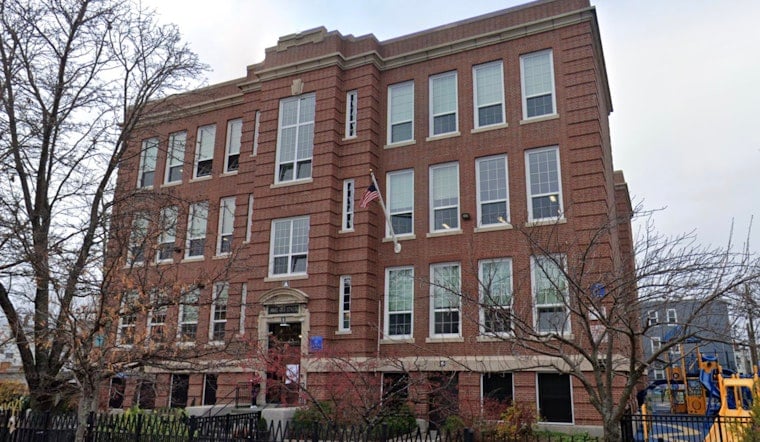
Students walking into James Otis Elementary School this fall are stepping into a building that finally has air conditioning after 120 years without it. The East Boston school, built in 1905, has completed a state-of-the-art climate control retrofit that will welcome roughly 400 students to classrooms cooled and filtered without relying on fossil fuels.
The project cost $5.7 million from the City of Boston and $1.5 million in grant money from the state, according to NBC Boston. Katherine Walsh, director of sustainability for Boston Public Schools, said healthy indoor air quality and thermal comfort directly affect children's learning and health outcomes. Walsh added that students will return with cooling for the first time this year, even as extreme heat can arrive as early as May while classes are still in session.
Paula Cerqueira-Goncalves, the retired principal of Otis School, pushed for air conditioning and better air quality at the building for years despite doubts from others. She said she urged colleagues to try installing the system anyway, and now says the climate upgrade is creating a healthier environment for her former students. According to Cerqueira-Goncalves, students are more engaged in learning and thriving in the new environment, and this September marks their first in an air-conditioned school.
A National First for Indoor Air Quality
The retrofit's technical achievement extends beyond comfort. According to ACHR News, Otis became the first school in the United States to meet and exceed the ASHRAE 241 indoor air quality standard for airborne infection control. The system uses ceiling-mounted HEPA units delivering 1,091 CFM along with energy recovery ventilators supplying 15 CFM of fresh air per occupant, a national precedent for a voluntary standard built specifically to control disease transmission risk indoors.
Notably, the new system does not rely on fossil fuels, and the upgrade was a retrofit rather than a costly teardown and remodel of the century-old structure. Otis was originally constructed in 1905 at a cost of roughly $106,991 as a two-story brick and limestone building designed to hold 600 students across 12 classrooms, per the school's own historical records. The building replaced the 19th-century Webb Primary School on the same East Boston site.
Why East Boston Needed It Most
The location matters. Otis sits near Logan Airport and Route 1A, and East Boston has the lowest tree canopy coverage in the city at just 7 percent, according to Nonprofit Quarterly. The neighborhood experiences elevated air pollution from aircraft and heavy highway traffic, contributing to higher childhood asthma rates than other parts of Boston. Community groups such as Mothers Out Front have campaigned against localized aviation and vehicular exhaust exposure in the area for years.
East Boston has also experienced warmer days in fall and spring, adding urgency to the push for cooling in a school where students previously had none. The Otis project received backing through the Massachusetts Clean Energy Center's Green School Works program, a state initiative built to fund K-12 clean energy infrastructure and building decarbonization retrofits, the agency said in August.
A Model district leaders Hope to Replicate
Boston school leaders plan to use the Otis project as a model for retrofitting other aging school buildings across the district, but the scale of the challenge is enormous. More than half of Massachusetts public school buildings were constructed before 1970, and as of 2025, 17 percent of schools statewide still lacked any form of cooling system, per the Massachusetts Clean Energy Center. Many older schools in the Commonwealth still rely primarily on opening windows for ventilation.
The backlog is especially deep within Boston Public Schools. A 2024 Boston Teachers Union resolution found that 74 of the district's 124 buildings were built before 1940, including 36 that are over a century old, and that 96 district buildings lack mechanical ventilation systems providing fresh air. As of late 2023, the district had installed roughly 4,100 window air conditioning units across classrooms as a stopgap, while only 38 buildings in the entire system had comprehensive, central HVAC systems, according to Boston Public Schools.
Mayor Michelle Wu launched a $2 billion Green New Deal for Boston Public Schools in May 2022, aiming to overhaul district facilities and decarbonize buildings that account for nearly half of all city-owned emissions, per the Sierra Club. That initial plan committed $605 million in capital funding toward major renovations and retrofits, though scaling the Otis approach to more than 100 aging BPS campuses will require far more.
The Stakes for Learning
The infrastructure gap isn't unique to Boston. A U.S. Government Accountability Office survey found that 54 percent of public school districts nationwide need to update or replace multiple building systems, with 41 percent needing HVAC repairs or replacements in at least half of their schools, according to the Massachusetts Clean Energy Center. Research from the National Bureau of Economic Research shows that without classroom air conditioning, a 1-degree Fahrenheit increase in school-year temperature reduces student learning by roughly 1 percent, with disproportionate impacts on low-income and minority students.
For now, Boston Public Schools says the goal is to keep students comfortable all year long, starting with the roughly 400 kids walking into Otis's newly filtered, cooled classrooms this month. For a school that waited 120 years for air conditioning, that first September with cool air and clean filtration marks a milestone years in the making.





