

























































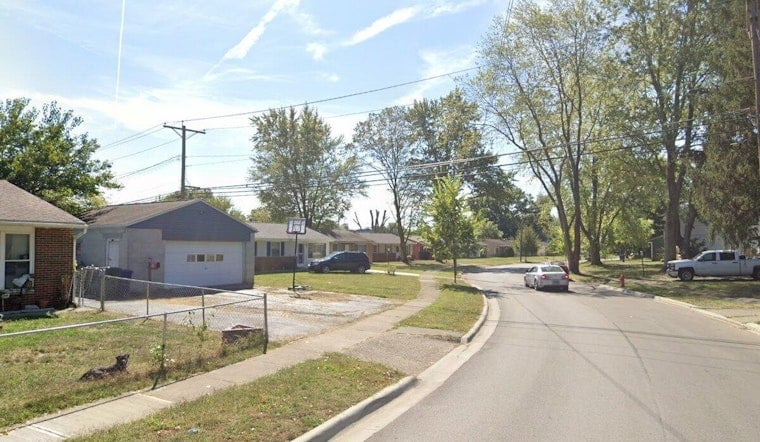
A 42-year-old motorcyclist died Sunday afternoon after swerving to avoid an unknown animal and crashing into a wooden utility pole on Columbus's East Side, according to police. Fredrick Hunter was driving his motorcycle north on Wilton Drive when he lost control, and he was pronounced dead a short time later at a local hospital.
The crash happened around 1:55 p.m. Sunday near the intersection of Wilton Drive and Dundee Avenue, a residential stretch of the East Side, according to 10TV. Hunter was transported to the hospital and pronounced dead at 2:37 p.m., per that report. Columbus police say Hunter swerved to avoid an animal whose species has not been identified before crashing his motorcycle into the pole, according to NBC4 WCMH-TV.
Columbus police have not said what type of animal entered the roadway, whether speed or lighting conditions played a role, or whether Hunter was wearing a helmet or other protective gear. It also remains unclear whether the Accident Investigation Unit has identified any secondary contributing factors in the crash. The department's Accident Investigation Unit can be reached at 614-645-4767 for anyone with information about what happened, per NBC4's reporting.
Anonymous Tips Also Being Sought
Beyond that direct police line, the station's report notes that the public can also submit anonymous tips to Central Ohio Crime Stoppers at 614-461-TIPS (8477), which offers cash rewards for information leading to arrests in central Ohio investigations. Police have not indicated that criminal charges are anticipated in this case, and the investigation remains open as detectives work to reconstruct exactly what happened on Wilton Drive.
The Columbus Division of Police's Accident Investigation Unit, which is handling the case, deploys specialized reconstructionists who map crash scenes, examine tire marks, and assess vehicle damage in fatal and serious-injury collisions, according to official police documentation. The unit also investigates hit-and-runs and vehicular homicides across the city, the same materials show.
Why Swerving Can Turn Deadly for Riders
Hunter's death fits into a troubling statistical pattern for motorcyclists statewide. Motorcycles account for only 1% of Ohio's overall deer-involved collisions, yet they represent 80% of all fatal animal crashes in the state, according to an Ohio State Highway Patrol traffic safety bulletin. Statewide, 109,507 deer-involved crashes occurred between 2019 and late October 2024, resulting in 45 fatalities across 44 fatal crashes, with roughly 95% of all deer crashes resulting only in property damage.
Safety advisories from AAA Ohio Auto Club and the Highway Patrol urge drivers and riders to brake firmly and hold their lane when an animal darts into the road, rather than swerving, according to a safety video from WTOL 11. Sudden swerving, the advisories warn, often turns a minor animal strike into a far more dangerous collision with a utility pole, tree, or ditch. Under Ohio's modified comparative negligence principles, a driver or rider who swerves to avoid a small animal and instead strikes a fixed object can still be assigned civil fault for failing to maintain control or choosing to swerve rather than brake, according to a legal analysis published by The Henry Law Firm.
Part of a Deadly Statewide Trend
Nearly half of all deer-involved crashes in Ohio, 47%, occur during October, November and December, with 22% concentrated in November alone during the fall mating season, the Highway Patrol bulletin shows. Hunter's crash came in early September, just ahead of that seasonal spike in animal activity on Ohio roads.
The crash also lands within a broader run of motorcycle fatalities across the state this riding season. Ohio recorded 230 motorcycle deaths in 2023 and 213 in 2024, with roughly 78% to 82% of the state's motorcycle crashes occurring during the peak riding season between May 1 and October 31, as Hoodline previously reported. Earlier Hoodline coverage of regional crashes has also shown that swerving to avoid animals remains a leading cause of severe single-vehicle motorcycle wrecks, a pattern echoed in cases from Waterford Township to Mexico, Missouri, where riders were killed or critically injured after similar swerves.



