

























































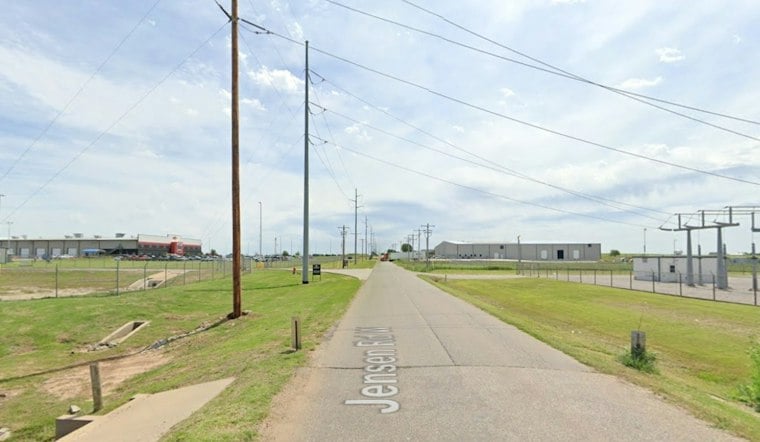
A burst fire hydrant tied to a private water line at a Bitcoin mining site outside El Reno, Oklahoma drained more than 3 million gallons from the city's water supply last month, triggering pressure drops that forced schools to cancel classes and closed the county courthouse. The City of El Reno condemned the property, owned by Athlon Blockchain Technology LLC, and served an abatement notice — but the crisis has exposed a three-year trail of regulatory failures that let the unpermitted facility keep running.
The leak drained more than 3 million gallons from El Reno's water supply. Investigators traced the source to a private fire hydrant on the Athlon property, and residents across El Reno reported pressure loss and outages as the leak spread.
Years of Violations Before the Crisis
The trouble at the site did not start last month. Municipal records show El Reno issued a formal stop-work order against Athlon in June 2023 over unpermitted electrical work and fire safety violations, and the company was given until December 2023 to secure valid permits — a deadline it ignored, per Tom's Hardware. The facility filed for building permits back in 2022 and racked up code, construction, drainage and electrical violations along the way, yet it continued operating without ever obtaining a required Certificate of Occupancy.
El Reno Interim City Manager Ken Brown has since acknowledged that the city itself dropped the ball. Brown publicly admitted that municipal officials failed to conduct follow-up enforcement or shut down operations after denying Athlon's building permits in 2023, a gap he said allowed the unapproved mine to keep running for years while residents and even city staff remained largely unaware. City of El Reno spokesperson Lyndsay Bayne said officials did not know the Bitcoin mine was operating, per the KFOR report, and resident John Zawlocki argued that Bitcoin mining needs regulation and a community-impact study before facilities like Athlon's are allowed to expand.
Who's Behind Athlon
Public corporate records reviewed by News 4 show Athlon founder Tony Jiang Shi, a Stanford University graduate based in Palo Alto, California, and Chief Strategy Officer Wolfgang Muller, who is also identified as a Stanford graduate and as being connected to a Silicon Valley startup, while the company's official El Reno headquarters is listed as a residential house that neighbors described as routinely unoccupied, with packages piling up on the porch. Shi was also listed as Athlon's CEO, and the company took its website offline after news of the leak broke. Neighbors' descriptions of the abandoned-looking address underscore the distance between the Silicon Valley executives running the operation and the Oklahoma community absorbing its consequences.
A State Law That Ties Cities' Hands
El Reno's enforcement gap collided with a broader statewide shift limiting what cities can even do about facilities like Athlon's. Oklahoma passed the Blockchain Basics Act, according to records of the vote. Gov. Kevin Stitt signed the bill into law, and it took effect in November 2024. The law, authored by Rep. Brian Hill and Sen. Bill Coleman. Related model legislation describes possible limits on local regulation of crypto mining.
The measure became law.
A National Playbook, and a Warning From Arkansas
The Satoshi Action Fund, a Bitcoin advocacy group, advocates for people who operate Bitcoin mines. The fund has promoted model legislation that has been adopted in different states. Porter has said the organization would keep advocating for pro-digital-assets policy state by state, per CoinDesk. The group has also promoted model legislation for state cryptocurrency reserves and rules allowing banks to hold customers' cryptocurrency.
Broader data-center concerns have been raised in Oklahoma. Nationally, crypto mining's energy demand can strain grids and pose extreme-weather risks, per Earthjustice.
Whether Oklahoma changes its approach remains an open question as El Reno works through the aftermath of its own water crisis — one that prompted school closures before investigators traced it back to the mine.



