

























































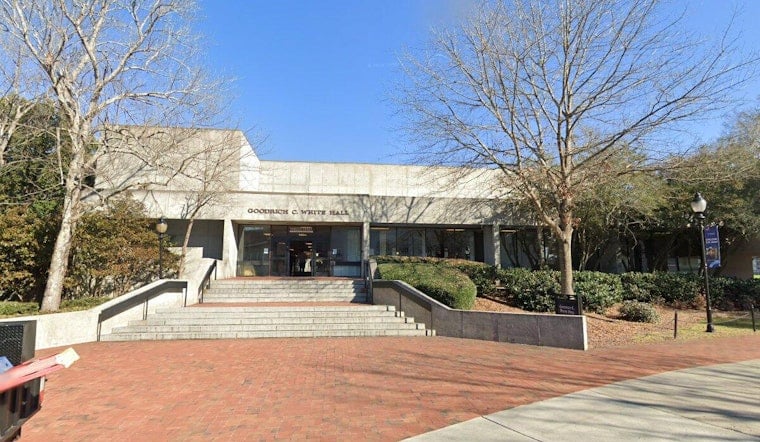
Every Wednesday night through December, Emory University is throwing open White Hall for free screenings tracing four decades of Spike Lee's filmography, from his scrappy 1986 debut to his Oscar-winning 2018 feature. The series, curated by longtime Emory film and media professor Beretta Smith-Shomade, spans more than 50 features, documentaries, shorts and music videos, and admission and parking are both free to the public.
The retrospective, titled 40 Years of Brother Spike Lee, runs from September 2 through December 9 and closes with a screening of *BlacKkKlansman*, according to ARTS ATL. As WABE reports, Smith-Shomade has taught Lee's films for about 20 years or longer, and the public screenings run alongside her Emory undergraduate course, Studies in Major Figures: Spike Lee, which brings in weekly guest scholars and actors for post-screening discussions, per UATL.
A Curator's Roots at the Atlanta University Center
Smith-Shomade's connection to Lee's work goes back to her own student days at Clark Atlanta University, where she watched Lee film *School Daze* across the Atlanta University Center campus while her friends worked as extras, according to the same UATL report. She said she hopes audiences of all ages take something away from the Cinematheque series, per WABE's interview with her.
The story is fitting given Lee's own history in the city: he earned his Bachelor of Arts in Mass Communication from Morehouse College in 1979, taking classes across the Atlanta University Center consortium at Spelman College and Clark College, where he directed his earliest student films, per NYU Tisch School of the Arts. Spike Lee's family has attended Morehouse and Spelman as well, WABE notes, and to invest further in that pipeline, Lee partnered with The Gersh Agency to launch the Spike Fellows Program, giving undergraduates across Clark Atlanta University, Morehouse College and Spelman College industry mentorship and career access.
A Rare Print and a School Daze Reunion
The September 9 screening of *School Daze* will use a rare 35mm print on loan from the UCLA Film & Television Archive, according to ARTS ATL. Actor Kyme Hersi-Sallid, who played Rachel in the 1988 film, will join Smith-Shomade for a post-screening conversation, WABE reports; Hersi-Sallid agreed to discuss her views about the film for the occasion. Smith-Shomade herself attended a screening of *School Daze* at the Fox Theatre in February, per WABE, and counts the film among her personal favorites alongside *Crooklyn* and *Girl 6*.
For viewers who have never seen Lee's work, Smith-Shomade recommends starting with *Do the Right Thing* and *4 Little Girls*, according to WABE. It has been 40 years since Lee released his breakthrough debut, *She's Gotta Have It*, which was shot in just 12 days on a micro-budget of $175,000 before opening in New York City on August 8, 1986, and going on to gross more than $8 million at the box office, per the Emory University Department of Film & Media. That film was later adapted into a 2017 Netflix series also featured in the Emory retrospective.
From Mini-DV Experiments to Academic Scholarship
The series also spotlights Lee's stylistic range, including his 2000 satire *Bamboozled*, for which he shot on Mini-DV with cinematographer Ellen Kuras to evoke the look of broadcast television, according to ARTS ATL. Kuras also served as director of photography on Lee's *4 Little Girls*. Smith-Shomade brings her own scholarly lens to the series as author of the 2022 book *Finding God in All the Black Places: Sacred Imaginings in Black Popular Culture*, which examines Black religiosity, spirituality and media, and includes scholarship on Lee's work, per Rutgers University Press.
The Emory Cinematheque is a long-running, university-funded public film program hosted each semester by Emory's Department of Film and Media, according to the university's Department of Film & Media, with past series built around historical years in cinema or faculty retirements. Lee's deep Atlanta-Brooklyn ties, as WABE puts it, make this fall's lineup a fitting one for a city that helped shape him decades before Brooklyn made him famous.





