

























































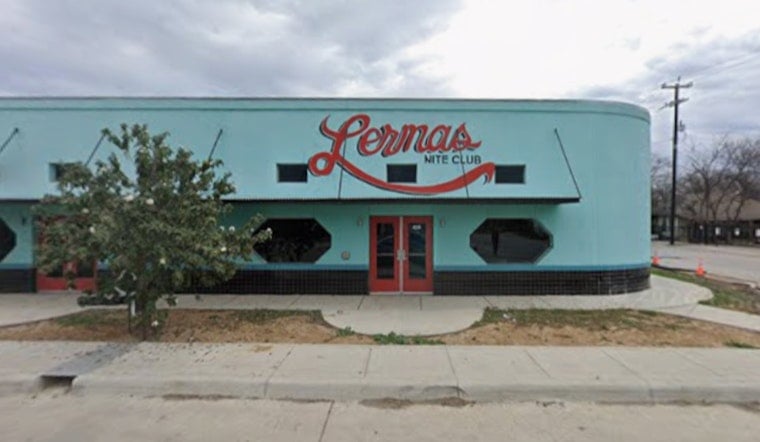
San Antonio's Esperanza Peace and Justice Center is debuting a new free performance series this weekend, pairing a university stage with a storied West Side dance hall. The two-night event runs at 7 p.m. Saturday and Sunday, September 11-12, mixing music, visual art and talks meant to foster community pride and combat the isolation of the information age.
As reported by the San Antonio Current, the first night unfolds at the University of Texas at San Antonio's Downtown Campus, 300 Augusta St., while the second night moves to Lerma's Nite Club at 1612 N. Zarzamora St. The lineup features singer-songwriter Azul Barrientos, who will provide music for what organizers call the practice of hope, alongside longtime activist Rebecca Flores, the Agarita chamber ensemble and visual artist Mauro de la Tierra. Admission is free, and more information is available at esperanza.org.
The Esperanza Peace and Justice Center has spent nearly four decades cultivating personal connections and encouraging intergenerational knowledge exchange on San Antonio's Westside, according to the Esperanza Peace and Justice Center. Founded in 1987 by Chicana activists and led by Executive Director Graciela Sánchez since 1988, the organization grew out of women organizers who created San Antonio's first Women's Day March, per the same account.
A Legal Fight That Still Shapes San Antonio Arts Funding
Esperanza's cultural programming carries legal weight that dates back nearly three decades. In 1997, San Antonio's City Council voted to defund the center over its socio-political and LGBTQ+ artistic programming, and in 2001 a federal judge ruled in the center's favor in a landmark First Amendment lawsuit against the city, according to Justia Law. That defunding vote led to the first U.S. federal court ruling specifically addressing ethnic and LGBTQ+ equity in municipal arts funding, cementing Esperanza's place in national free-speech precedent.
Sunday's venue carries its own hard-won history. Lerma's Nite Club was listed on the National Register of Historic Places in March 2011 as one of Central and South Texas's longest-running live conjunto music venues, according to the National Park Service. Housed in an Art Moderne commercial structure built around 1942, the club hosted legendary Tejano and conjunto artists for nearly 60 years before closing due to code violations in 2010, per the same agency.
How Lerma's Came Back From the Brink
The building's survival wasn't guaranteed. Community members formed the Save Lerma's Coalition and Esperanza purchased the threatened structure for $25,000 plus back taxes, according to Preservation Texas. A $2.2 million community-driven rehabilitation project led by the Esperanza Peace and Justice Center followed, and Lerma's officially reopened as a restored cultural center and music venue, the organization notes.
Rebecca Flores brings her own decades of grassroots organizing to the series lineup. As Director of the United Farm Workers in Texas from 1975 to 2005, Flores led legislative campaigns that established state field sanitation rules, pesticide right-to-know laws, minimum wage protections, and the ban of the short-handled hoe, according to UTSA Digital Collections. Flores grew up in a migrant farmworker family in Atascosa County before being appointed state UFW director by César Chávez, per the same collection.
Chamber Music Meets Muralism on the Same Bill
The Agarita chamber ensemble, also featured in the series, was founded in March 2018 by four San Antonio musicians — pianist Daniel Anastasio, violist Marisa Bushman, cellist Ignacio Gallego and violinist Sarah Silver-Manzke — as a nonprofit dedicated to presenting 100% free, multidisciplinary classical concerts outside traditional concert halls, according to the San Antonio Express-News. In 2020, the group created Humble Hall, a mobile trailer stage that lets Agarita deliver free outdoor performances across all 10 San Antonio City Council districts, a platform originally built during the pandemic to safely bring live music to outdoor neighborhood spaces.
Visual artist Mauro de la Tierra rounds out the featured collaborators. De la Tierra previously co-created Sacrificios, a 2024 Bexar County-funded public mural at Mission County Park honoring the 53 migrants who lost their lives in a 2022 human smuggling tragedy, working alongside lead artist Adrian De La Cruz and artist Andrea V. Rivas, as Hoodline previously reported.
Part of a Broader West Side Strategy
The series arrives as Esperanza continues work well beyond the stage. The center established a Community Land Trust to buy West Side homes and combat housing displacement, part of a broader anti-displacement effort Hoodline detailed in its housing land trust coverage earlier this year. Texas law requires municipal land trust designation to unlock specific tax exemptions aimed at keeping housing affordable, according to that same reporting.
For a $0 ticket price, organizers are betting that pairing farmworker history, chamber music and muralism under one roof can pull San Antonio's Westside neighbors together against isolation and displacement alike. Full details on both nights are available at esperanza.org, and the center can be reached directly at 210-228-0201.





