

























































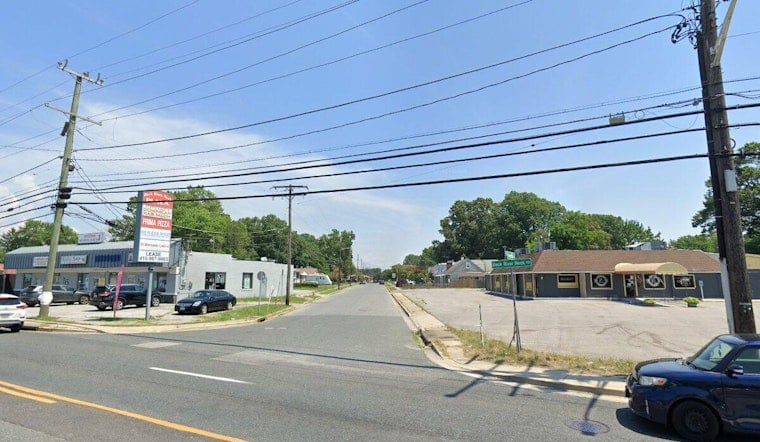
Water has been bubbling up through the pavement on the 1600 block of Frenchs Avenue in Essex since at least February, and neighbors say it has flowed all day, every day, for seven months straight. The leak turned the street into an ice rink during a cold snap last winter, and residents say complaint after complaint has gone unanswered.
Mark Lusby, who lives near the leak, told WBFF that freezing temperatures caused the water to freeze over and turn the street into an ice rink, forcing people who parked on the block to walk across the ice just to get their children out of cars. He said the standing leak has also produced a stinky smell throughout the year. Lusby has kept more than 40 pages of emails, phone calls and responses documenting his attempts to get the city to respond.
Two separate 311 complaints, one filed in February and another in June, were both closed the same day they were submitted, per the station's report. Lusby said a city worker did come out and assess the leak in person, and that the worker told him it would be fixed within a week. But according to Lusby, the leak was never actually fixed, and it kept flowing after both the February and June complaints were closed.
A Familiar Same-Day Closure Pattern
The rapid closures are not unique to Essex. Baltimore Mayor Brandon Scott announced a “311 Reimagined” overhaul in May 2025 after city officials acknowledged a long-standing system defect in which 311 complaints were automatically marked closed as soon as an inspection was assigned, even before any repair work began, according to Baltimore Brew. The city promised changes to keep tickets open while work is in progress, but residents in Essex say their complaints closed the same day they were filed months later. According to the Baltimore City Department of Public Works, its interactive map tracks active water-main repair activity in Baltimore City and Baltimore County, including confirmed main breaks. WBAL-TV reported that, as of noon Friday on Nov 21, 2025, Department of Public Works officials said there were 18 active water-main breaks across the system.
Lusby estimated that hundreds of thousands of gallons of water may be flowing into a nearby creek as a result of the unresolved leak. He said he fears the water will still be flowing when temperatures drop again this winter, raising the same ice hazard he described from earlier this year.
Why a City Department Handles a County Street
The leak sits inside Baltimore County, but it falls to Baltimore City's Department of Public Works to fix it. Baltimore City's DPW operates the regional water system serving Baltimore City and Baltimore County, according to the Baltimore County government. That arrangement means Baltimore City's water-system operations include repairs in the county.
Dissatisfaction with that setup has already reached Annapolis. The Maryland General Assembly passed House Bill 1509 in April 2024 to create the Baltimore Regional Water Governance Model Workgroup, tasked with evaluating alternatives to the city's sole management of the regional water grid following widespread public frustration over billing errors and repair delays, per the Maryland General Assembly. The legislation specifically barred the workgroup from recommending any privatized water management structure.
A System Built on Aging, Leaky Pipes
The Essex leak fits a broader pattern DPW has struggled to contain. A department audit found that 35.1 percent of all treated water released from city treatment plants was lost before ever reaching customers in 2015, Baltimore Brew reported in 2018. DPW has set a goal of inspecting 10 miles of water main annually as it addresses aging infrastructure, including cast-iron pipes that are vulnerable to corrosion and age-related breaks.
Similar breakdowns have played out elsewhere in Baltimore County in recent months. Twin water main breaks in Edgemere left residents without running water for days and flooded streets with brown runoff in June, as Hoodline reported at the time. Two months later, a water main break in Pikesville prompted concerns about a sinkhole and underground water damage, Hoodline previously reported.
DPW's Finances Add Pressure
The maintenance backlog comes as Baltimore City's water finances face pressure. S&P Global has downgraded Baltimore water and wastewater debt, according to S&P Global. The city has scheduled a 10 percent increase followed by 9 percent increases in July 2025 and July 2026, according to S&P Global. Baltimore's water-enterprise debt is another part of the city's water-finance picture.
DPW said it received 16 service requests about the leak, with the first submitted on Jan. 7, 2026. The department said it investigated the reports, deployed a Leak Detection Unit and conducted another investigation on Sept. 1, 2026.




