

























































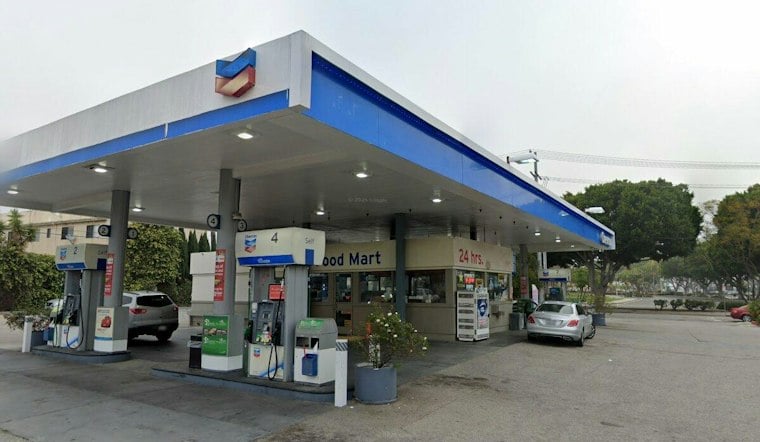
A new EVgo fast-charging site at 3029 S. Robertson Blvd. in Los Angeles’ Mid-City area, near Interstate 10, combines 20 connectors with support for both current and older charging standards. EVgo describes it as Los Angeles’ largest public fast-charging station for vehicles that are not Teslas, according to InsideEVs.
The site has 10 stalls and 20 connectors: five stalls rated for as much as 350 kilowatts, three rated at 200 kW and two rated at 100 kW. Eighteen connectors use CCS, while the other two support CHAdeMO, with each of those ports capable of up to 100 kW, according to InsideEVs.
A remaining option for older EVs
The CHAdeMO ports preserve a charging option for vehicles that predate the newer CCS and NACS standards. CHAdeMO is used by the two previous generations of the Nissan LEAF and by some Japanese plug-in hybrids, including the Mitsubishi Outlander PHEV. InsideEVs reported that the CHAdeMO Association does not recommend third-party CCS-to-CHAdeMO adapters because their safety cannot be validated; such adapters can also be costly. Native CHAdeMO access therefore remains relevant to owners of older vehicles that lack CCS or NACS compatibility.
The project took months to reach commissioning
The charging hardware was reportedly installed behind construction fencing for months before the site began operating. The American EV Jobs Alliance said EVgo attributed the delay to the overlapping permitting and utility-connection requirements involving Los Angeles city and county agencies and power providers.
How to read charging-network counts
Connector totals do not necessarily equal charger totals. According to the California Energy Commission, a charger may have one or multiple connectors, so the 10-stall, 20-connector configuration at this site should not be compared with other locations without checking how each count is defined. The commission says its charger counts are updated semi-annually using voluntary surveys, grant-recipient reports and listings from the federal Alternative Fuels Data Center and PlugShare. That methodology provides a way to track the public charging network, but the supplied information does not establish how Los Angeles County’s network has changed over time or identify its largest gaps.
The site now adds high-power charging capacity to a central Los Angeles corridor while preserving service for vehicles using an older connector standard. Its exact customer demand and pricing are not established by the supplied reports.


