

























































A former University of Michigan linebacker has sued CBS Broadcasting, alleging a September 2025 news report falsely painted him as a locker-room rat who lied to NCAA investigators about a Wolverines coach — a claim he says triggered death threats and thousands of hateful messages aimed at him and his family.
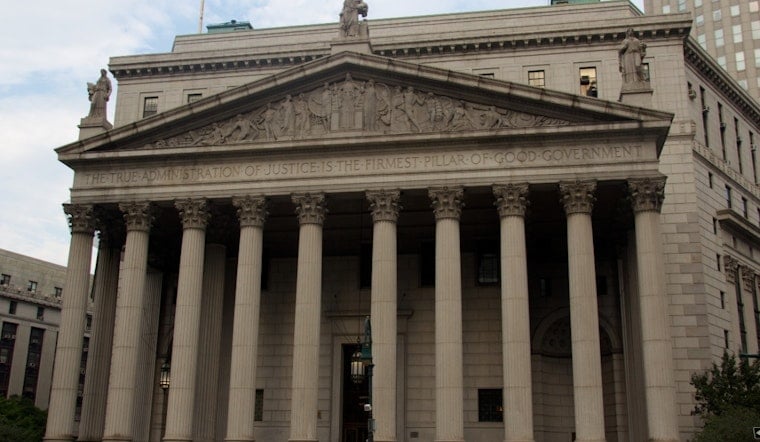
Joey Velazquez filed his defamation lawsuit in Manhattan Supreme Court on August 28, 2026, according to the New York Post, which first reported the filing. Court records reviewed by PacerMonitor show Velazquez had already brought a federal suit against the network in the U.S. District Court for the Northern District of Ohio the day before, on August 27, 2026, revealing a multi-venue legal strategy spanning both federal and state courts.
At the center of the case is a September 2025 broadcast in which CBS News Detroit cited private investigator information alleging an unnamed student-athlete had recorded a phone call with former Michigan staffer Connor Stalions without his consent and then gave false statements to NCAA investigators about ex-linebackers coach Chris Partridge. The station's report never named Velazquez, but Michigan fans quickly deduced his identity online, per the Post's account of the suit.
How Fans Connected the Dots
Velazquez's path made him an easy target for speculation. A Columbus native who originally committed to Ohio State for baseball, he instead spent time at Michigan playing both baseball and football before returning home to Ohio State as a walk-on linebacker in February 2024, a move detailed by 247Sports. He played for Michigan's football program in 2021 and 2022 before moving on to Ohio State for the 2024 and 2025 seasons.
According to the Post's report on his complaint, Velazquez denies ever telling investigators that Partridge instructed players not to cooperate with the NCAA probe. He claims the CBS report's implication that he lied to the NCAA caused professional teams to lose interest in him.
NCAA Findings Undercut the Report's Core Claim
The timing of the lawsuit follows the NCAA Division I Committee on Infractions' final decision, issued August 15, 2025, which imposed four years of probation and financial penalties on Michigan's football program expected to exceed $20 million — with the university itself reportedly paying out more than $30 million in penalties, according to the Post. The NCAA also handed Stalions an eight-year show-cause order, per the NCAA, after finding he had used filmed hand signals and allegedly sent people to scout rival coaches' signals during games — a scheme that first surfaced during a 2023 NCAA investigation into Michigan's program.
Crucially for Velazquez's case, that same infractions decision cleared Partridge of Level I sign-stealing violations, finding his only infraction was a single impermissible text message and concluding he never ordered players to mislead investigators, as CBS News reported at the time. The NCAA also did not determine that Velazquez himself had lied to investigators, according to the Post's characterization of the court filing. Partridge was fired amid the scandal despite that finding, and Stalions has publicly denied all accusations against him.
A Parallel Lawsuit From the Coach at the Center of It All
Partridge's own legal fight adds another layer to the dispute. He filed a federal wrongful termination lawsuit against the University of Michigan, Athletic Director Warde Manuel, and the Board of Regents in March 2026, claiming he was made a scapegoat during the sign-stealing probe — a case Hoodline previously covered. In that complaint, Partridge alleged Big Ten Commissioner Tony Petitti pressured Michigan into firing him based on uncorroborated claims about a conversation he'd had with a player — one he insists was simply advice to retain legal counsel, not an attempt at interference.
A later amended filing in July 2026 went further, alleging that Michigan administrators had uncovered sign-stealing evidence on former assistant coach Matthew Weiss's computer as early as January 2023 but concealed it from the NCAA ahead of that season's championship run. Weiss was separately indicted in 2025 on federal computer crime charges, according to CBS News' reporting on the litigation.
Death Threats and a Ticking Legal Clock
Velazquez alleges in his lawsuit that CBS's allegedly false reporting led to his family being stalked by Michigan fans and receiving death threats, along with roughly 5,000 hateful messages in the aftermath of the report, per the Post's account of the filing. He claims the network's coverage falsely painted him as a cheating rat rather than accurately describing his limited role in the saga — during his five years at Michigan from 2019 to 2023, he appeared in 21 games, recording seven tackles and one fumble recovery, according to 247Sports.
The NCAA said on 10 October 2024 that a pilot study of online abuse had flagged abusive behavior, unmasked several perpetrators and led to law-enforcement referrals. A study commissioned by the NCAA found that sports-betting-related abuse was still one of the most common forms of online harassment, ESPN reported on 7 October 2025.
Timing looms large over the case. Velazquez's Manhattan filing came just under a year after CBS's September 2025 broadcast. A separate legal question likely to shape the case is whether CBS will argue Velazquez became a limited-purpose public figure through his high-profile dual-sport career and cross-rivalry transfer, which would raise his burden of proof to the actual-malice standard.
A New York court dismissed the actual-malice theory in Baranov v. World-Wide Anti-Doping Agency, saying the plaintiff's complaint failed to plead actual malice, according to New York Courts.
CBS Broadcasting has not yet publicly responded to the lawsuit's allegations. The case adds to a growing pile of litigation stemming from Michigan's sign-stealing scandal, which has already drawn in Partridge, Stalions, Weiss, and now a former walk-on whose brief football career became collateral damage in one of college sports' biggest scandals.




