

























































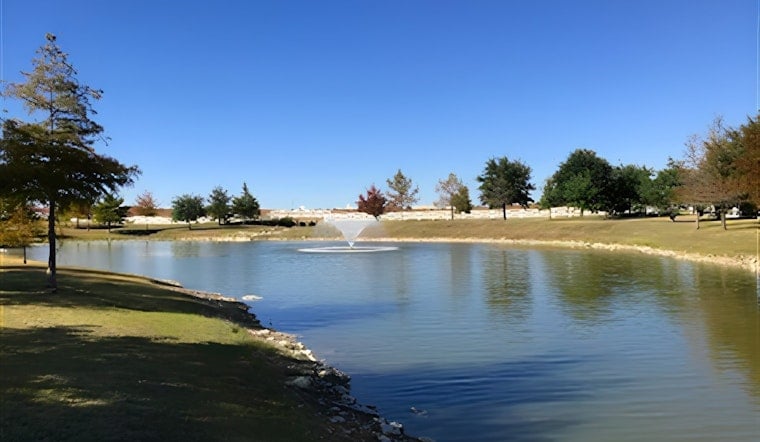
More than 20 residents packed a public input meeting on August 24 to tell Fort Worth parks officials what they do not want at the future Chapel Hill Park: skate ramps, competitive sports courts, or big event lawns. What they do want is something closer to what is already there — unimproved, largely natural land that backs up against the newly built Eagle Mountain High School in far north Fort Worth.
The 68-acre park, still without a completed design, sits immediately south of the high school in Councilmember Macy Hill's District 7, according to the Fort Worth Report. Kimley-Horn consultants presented residents with six large posters showing potential amenities, and attendees marked their preferences with three green stickers for features they liked and three red stickers for ones they opposed, per the same report. The exercise made clear a consistent theme: residents favored trails, disc golf, horseshoes, bocce ball and croquet over skate-oriented facilities, and they pushed back against themed or heavily programmed gathering spaces such as large picnic or event-style areas.
Neighbors Want Nature, Not a Sports Complex
Resident Kay Carroll told the crowd that residents cannot stop the area's growth but can decide how to respond to it, emphasizing the importance of preserving the area's natural habitat and history. Carroll noted the park's development has been part of the city's master plan for two decades. Fellow resident Patrick Carroll suggested walking trails, shaded areas, native prairie, and nature education opportunities for the high school students next door, while meeting attendees also voiced support for butterfly and pollinator areas that could double as educational opportunities for children.
The push for native habitat is not happening in a vacuum. According to the Native Prairies Association of Texas, the Fort Worth Prairie is one of North America's rarest ecosystems, shrunk from an original 1.3 million acres to scattered remnants under pressure from urban development. That backdrop helps explain why residents want features like inclusive, nature-oriented play usable by different ages and abilities rather than themed playgrounds, and why they preferred flexible outdoor recreation and exercise space over heavily programmed sports facilities.
Traffic, Safety and a School Next Door
Blaise Grissom, project manager for the Fort Worth Park & Recreation Department, said connecting surrounding neighborhoods to the park with sidewalks is a goal, and noted that Bonds Ranch Road already has sidewalks planned. Residents raised concerns about loss of open land, increased traffic, and construction problems tied to the thousands of new homes planned for the area, and they asked whether sidewalks could link nearby neighborhoods to the park itself.
Because it is a public park, Grissom said, it cannot be restricted to particular users — a point that fed into resident worries about a park sitting directly next to a high school. Some meeting attendees questioned whether the site could become a gathering place for inappropriate activity. Jonathan Campbell, a landscape consultant for Kimley-Horn, said regular activity can provide built-in security by putting more eyes on the park, while Grissom added that park hours and reporting mechanisms can also help address problems.
Restrooms, a Possible Community Center and Funding Realities
Design options under review include two small ADA-accessible restrooms with changing tables, potentially fitted with timed locks to secure them once the park closes for the night. Campbell said all potential park features remain under consideration at this stage. A community center idea also came up, but Campbell said that would likely require bond revenue or general-fund money rather than the funding source now behind the park.
That funding source is developer park fees, not general-fund tax dollars or municipal bonds — Chapel Hill Park has no general-fund allocation and is not included in the city's 2026 bond program. Fort Worth's Neighborhood and Community Park Dedication Policy requires developers building new residential projects to dedicate land or pay fees that fund neighborhood park acquisition and construction within designated planning districts, a mechanism formalized by Fort Worth city records. Grissom said construction could be phased as those fees accumulate, and initial construction is likely three to five years away. State grants could also help fund future improvements, and Fort Worth currently has money set aside for the master-planning process itself.
What Happens Next
Cynthia Jimenez recommended pickleball courts during the input session, one of several individual suggestions layered atop the broader themes. Fort Worth plans to hold a second public meeting in the coming months, and the Park & Recreation Department will host further information-sharing sessions, according to Grissom. An online survey and comments portal will remain open throughout the planning process, and residents who missed the meeting can still submit written comments or complete that survey.
The debate over how much of Chapel Hill Park should stay wild fits into a much larger regional squeeze. The city's growth planning projections published in March 2026 anticipate Fort Worth gaining more than 270,000 residents over 24 years, prompting the Open Space Conservation Program to target 10,000 acres of protected green space under the Good Natured Greenspace Initiative. The Park & Recreation Department already maintains 311 parks totaling 13,464 acres alongside 16 Open Space Conservation Program sites covering 707 acres citywide, and the city has recently put money behind that mission — Candy's Dirt reported Fort Worth paid $2.65 million for 16 acres near the Tandy Hills Natural Area in March 2026, setting aside five acres for conservation to block dense residential development on native prairie. The same reporting cited Trust for Public Land data showing Fort Worth lost roughly 50 acres of natural open space per week to development in 2022, as the city's population passed one million residents.
Fort Worth will next present a preliminary Chapel Hill Park concept based on the community input gathered at the August meeting. For now, the site remains what it has been for two decades of master planning: 68 acres of unimproved, largely natural land next to a fast-growing high school, waiting to see how much of its wildness survives the city's growth.





