

























































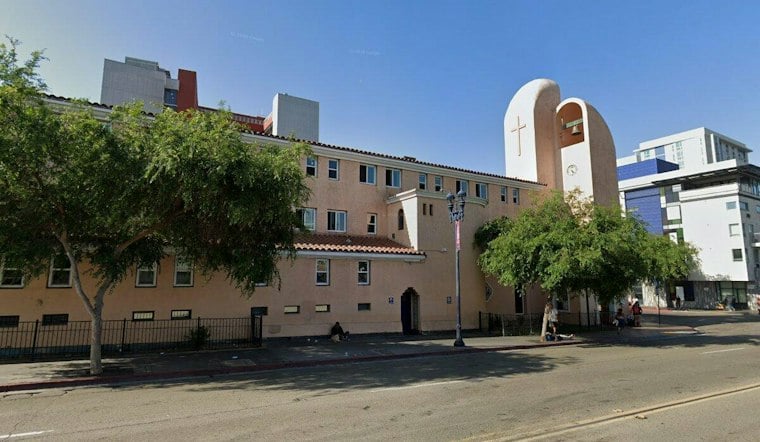
Father Joe's Villages has begun leasing newly renovated single-room apartments at its downtown San Diego campus to people transitioning out of homelessness. The rooms rent for $842 a month, and tenants began moving in this week, with additional arrivals expected through early November.
The apartments are single-occupancy units, commonly known as SROs, according to KPBS. Each room comes furnished with a bed, microwave, refrigerator and wardrobe, while residents share bathrooms, a kitchen and a lounge area down the hall. The station reports that Father Joe's Villages spent the last few months renovating and furnishing the units using donated funds, after previously using the space for a shelter program.
Some tenants are coming directly from shelters, while others are leaving street homelessness, according to the station's reporting. Residents can also use services on the campus, including meals, a health clinic and a job center. Jim Vargas, president and CEO of Father Joe's Villages, said the rent was set with the population served in mind, KPBS reported.
A Fraction of Market Rent, But a Shrinking Housing Type
At $842 a month, the units cost a fraction of what an average San Diego studio runs, per the station's account. SRO units generally range from 80 to 140 square feet.
Where the rooms fit in San Diego's housing system
The $842 rooms are part of a larger affordable-housing portfolio: Father Joe's Villages says it owns and operates more than 400 apartment units with affordable rents for people living on low incomes. The information available for this opening identifies the intended residents as people transitioning from homelessness; it does not specify the number of rooms being opened or provide additional lease terms beyond the monthly rent. The campus services described above are available alongside the housing. The rooms also sit within a broader network of homelessness-response programs. The San Diego Housing Commission says 11 permanent supportive-housing programs provide rental assistance for more than 275 units, while fiscal-year 2024 Homekey awards supported projects creating 236 affordable housing units with supportive services for people experiencing homelessness. The County of San Diego lists the 2026 area median income at $130,900, underscoring the gap between the region's overall income benchmark and the low-income residents targeted by these rooms.
Rooms like these were once far more common in San Diego. The city had 110 SRO buildings left by 2002, a number that had fallen to just 35 by 2023, according to UC San Diego data cited in the earlier KPBS report.
A National Pattern, Not Just a Local One
The decline is not unique to San Diego. SRO units made up about 10% of all rental units in some major American cities by 1950, according to a Pew issue brief. Pew estimates that if the supply of SRO-like units had kept pace with overall housing growth since 1960, the country would have roughly 2.5 million more of them today. Nationwide homelessness hit an all-time high in 2023 and was surpassed again in 2024, the same analysis found.
The opening adds a small number of low-cost rooms to a San Diego housing system where SRO buildings have declined for decades. As tenants continue moving in through early November, the downtown campus will house people transitioning from shelters or street homelessness in furnished rooms with access to the organization's other services.




