

























































A federal appeals court has shut down the Ute Tribe's years-long bid to reclaim as much as 2 million acres of land in eastern Utah, ruling that the disputed territory was already ceded generations ago. The tribe had sought up to $1 billion in compensation or the return of the land itself, arguing it was never properly paid for mineral, water, and grazing rights it says were promised long ago.
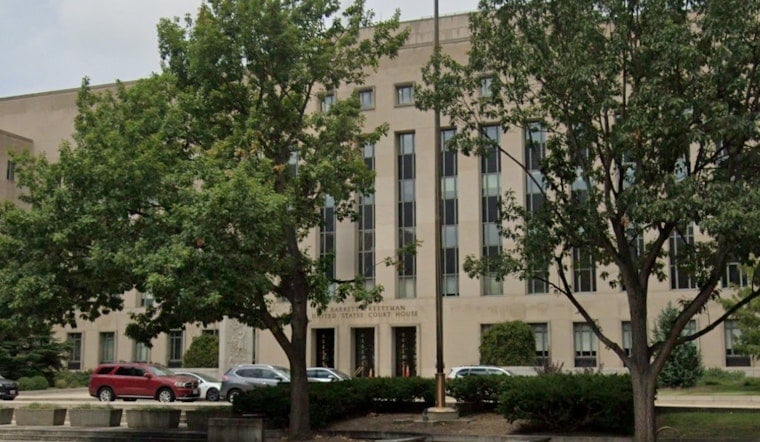
The unanimous decision came from the D.C. Circuit Court of Appeals, with Chief Judge Sri Srinivasan, Circuit Judge Gregory Katsas and Senior Circuit Judge Judith W. Rogers on the panel, according to FindLaw. The case, Ute Indian Tribe of the Uintah and Ouray Indian Reservation v. United States, sought to overturn federal control of public domain lands in the region, but the panel declined to overturn a lower court's rejection of the tribe's arguments, as Fox 13 Salt Lake City first reported.
Writing for the court, Judge Katsas said the tribe's various counterarguments are unpersuasive, according to the same Fox 13 report. The tribe has accused the U.S. Department of the Interior of theft, alleging the Uncompahgre band of the Utes was ousted from lands in eastern Utah and portions of Colorado in the late 1800s and never compensated for rights it says it was promised.
How a 19th-Century Removal Became a Modern Legal Fight
The legal question at the heart of the case traces back to Section 3 of the Indian Reorganization Act of 1934, which allows the Secretary of the Interior to restore surplus public domain lands to tribal ownership — but only for lands in which a tribe holds compensable title, according to Courthouse News. In rejecting the tribe's claim, Katsas pointed to the Act of 1880 and a 1971 U.S. Supreme Court precedent, United States v. Southern Ute Tribe, which found that the Utes' compensable land rights were limited to their original reservation in Colorado rather than lands they later occupied in Utah, per the same outlet.
That 1880 Act forcibly relocated the Uncompahgre Utes from Colorado to Utah, and an 1882 Executive Order subsequently established the historic Uncompahgre Reservation there. But Congress opened unallotted lands within that reservation to non-Indian entry and mining in 1897, effectively stripping exclusive tribal control over those areas, according to documents cited by Courthouse News.
The appellate ruling affirms a February 2025 decision by U.S. District Judge Carl J. Nichols, who held that the federal government did not hold the disputed public domain lands in trust for the tribe, in a case docketed as No. 1:18-cv-00546. That litigation traces back to a March 2018 decision by then-Deputy Secretary of the Interior David Bernhardt, who denied the tribe's formal request to restore 1.5 million acres of Uncompahgre Reservation land based on an Interior Solicitor opinion.
Utah's Stake in the Uintah Basin Fight
The State of Utah intervened in the lawsuit in March 2018, despite the Ute Tribe's objections, to protect state trust lands managed by the Utah School and Institutional Trust Lands Administration, along with state regulatory and mineral authority within the historic reservation boundary, according to Holland & Hart LLP. Those trust lands generate revenue that directly funds Utah's public schools. Then-Attorney General Sean Reyes said Utah intervened to protect state interests, per Fox 13's report, and the Utah State Legislature watched the case closely given the political sensitivities surrounding tribal relations.
Attorney General Derek Brown, who took office in January 2025 after succeeding Reyes, has continued the office's longstanding practice of intervening in federal cases touching tribal reservation boundaries and public land claims. Following the ruling, Brown's office said it appreciated the court's consideration and looked forward to working with the Ute Tribe, according to Fox 13's report. Attorneys representing the Ute Tribe did not return an email seeking comment, per the same report.
A Fraction of a Much Larger Land Ownership Picture
The dispute unfolds against a backdrop of overwhelming federal land ownership in Utah. As of November 2025 testimony before the U.S. Senate Committee on Energy and Natural Resources, the federal government controls approximately 37.4 million acres, or 68%, of Utah's total landmass, with 22.8 million acres managed by the Bureau of Land Management alone. That level of federal control has regularly fueled jurisdictional disputes between the state and tribal or federal entities.
The Ute Indian Tribe of the Uintah and Ouray Reservation is a sovereign, federally recognized nation made up of the Uintah, White River and Uncompahgre bands, headquartered in the Uintah Basin across five counties in northeastern Utah, where cattle raising and oil and gas extraction remain primary economic activities, according to an amicus brief filed with the Supreme Court of the United States. While this ruling forecloses the tribe's path to restoring land under Section 3 of the Indian Reorganization Act, broader questions over tribal sovereignty, water rights and cooperative land management in eastern Utah remain unresolved friction points among the tribe, the state and federal agencies.





