

























































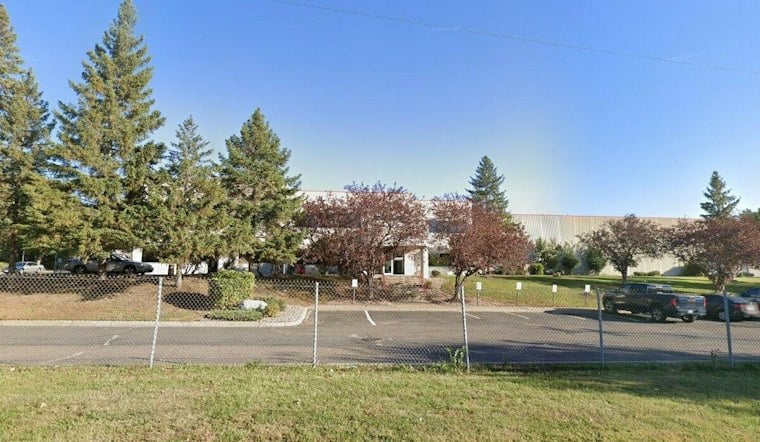
Federal prosecutors have sued a North Minneapolis wholesale distribution company and its owner, seeking a court order to halt operations after inspectors found live and dead rodents, birds, and contaminated packaging throughout a warehouse that supplies baby formula, over-the-counter medicine, and pet food to stores across the Midwest.
The U.S. Department of Justice, acting on behalf of the FDA, filed the federal lawsuit against Gold Star Distribution Inc. and its owner, Bassam Abu Samrah, seeking a permanent injunction that would bar the company from receiving, storing, or distributing food, drugs, devices, and cosmetics until it comes into full compliance with federal law, according to FOX 9 Minneapolis-St. Paul. The complaint was filed September 11 in the U.S. District Court for the District of Minnesota under case number 0:26-cv-03976, assigned to District Judge Laura M. Provinzino and Magistrate Judge Elizabeth Cowan Wright, according to Justia Dockets. Prosecutors named Abu Samrah personally as a co-defendant alongside the corporation under 21 U.S.C. § 332, per PacerMonitor.
Inspectors Tallied Dozens of Rodents and Birds Inside the Facility
Gold Star's warehouse handles both FDA-regulated goods, which make up roughly 75% of its products, and non-regulated items like automotive chemicals and cleaning supplies, according to the same FOX 9 report. FDA investigators inspected the facility from November 17 through December 18, 2025, and documented nine live rodents and 17 dead rodents, along with eight live birds and one dead bird, the station reports.
Investigators also found rodent droppings, urine stains, gnaw holes, and nesting materials scattered throughout the warehouse, per the same account. The inspection turned up bird droppings on packaged tea bottles, five live worms, leaking and overflowing trash near outgoing shipments, and gaps in dock doors, holes in the south wall, and two ceiling leaks. Floor troughs were filled with debris, dirt buildup, and cardboard, and trash had accumulated outside the facility near the dock doors, the report notes. FDA laboratory analysis confirmed rodent urine, droppings, hairs, and gnaw holes embedded in product packaging.
A Warning Dating Back to 2018
The warehouse sits at 1000 N. Humboldt Avenue North in North Minneapolis, according to a U.S. Food and Drug Administration warning letter. That letter, issued in October 2018, cited Section 402(a)(4) of the Federal Food, Drug, and Cosmetic Act, under which goods are legally considered adulterated if they are held under insanitary conditions where they may become contaminated with filth or rendered injurious to health.
The FDA and the Minnesota Department of Agriculture have documented persistent pest problems at the facility dating back to 2012, per the FOX 9 report. State agriculture regulators issued three separate warning letters against Gold Star between 2018 and 2025 and imposed two monetary penalties over that same span, the station notes. Gold Star's wholesale license was revoked in November 2025, and the state entered into a two-year license limitation agreement with the company while also ordering it to stop distributing drugs without a pharmacy license.
Recall Hit Ethnic Markets Across Four States
Gold Star issued a voluntary recall in December 2025 covering a 44-page list of FDA-regulated products shipped to retail stores across Minnesota, Indiana, and Illinois, according to Top Class Actions. The FDA classified the recall as a Class II action in January, meaning exposure to the affected inventory posed a risk of temporary or medically reversible adverse health consequences, per a Christensen Group supply chain risk report. That same report notes that public health risk assessments tied to rodent and bird infestations in food warehouses flag the danger of transmitting bacterial pathogens, including Salmonella and Leptospira, through airborne particulates or direct contact with animal waste.
The recall list, per the FOX 9 report, included Enfamil and Enfamil Gentlease infant formulas, Meow Mix and Friskies cat food, Tylenol, Advil, and DayQuil, Axe body sprays and liquid hand soap, and basmati rice, pregnancy tests, and sanitary pads. The affected inventory was recalled following the inspection findings.
Company Says It Made Fixes, FDA Says They Fell Short
Gold Star responded to the FDA's inspection findings on January 8, January 30, and February 13 of this year, per the FOX 9 report. The company said it implemented procedures to seal dock and entry doors, designated separate areas for non-food product storage, hired a third-party expert to review warehouse storage controls and develop employee training, trained staff to monitor spills and leaks, and cleaned and sanitized the refuse area. The defendants also said they planned to renovate the facility, or relocate if renovation proved inadequate.
But according to the complaint, the FDA said the company's responses fell short. The agency stated that Gold Star had not conducted a root cause analysis addressing the persistent infestations, had not provided an adequate pest control plan with monitoring procedures, and had not outlined specific actions to prevent future infestations. The FDA also said in the complaint that Gold Star continues to hold contaminated FDA-regulated products at its facility, and noted the company had no temperature or humidity monitoring in place and had not completed temperature mapping studies for its drug-storage areas. The federal government is also seeking reimbursement of the United States' investigation costs as part of the lawsuit.
A National Precedent for Warehouse Pest Cases
Federal enforcement against warehouse pest infestations has produced steep penalties elsewhere in the country. Dollar Tree agreed to pay a record $41.6 million criminal penalty in 2024 after FDA inspectors found thousands of rodents at a Family Dollar distribution center in Arkansas, according to the U.S. Food and Drug Administration. That case stands as the largest penalty of its kind tied to warehouse pest violations, underscoring how seriously federal regulators have treated similar contamination findings at wholesale distribution facilities.





