

























































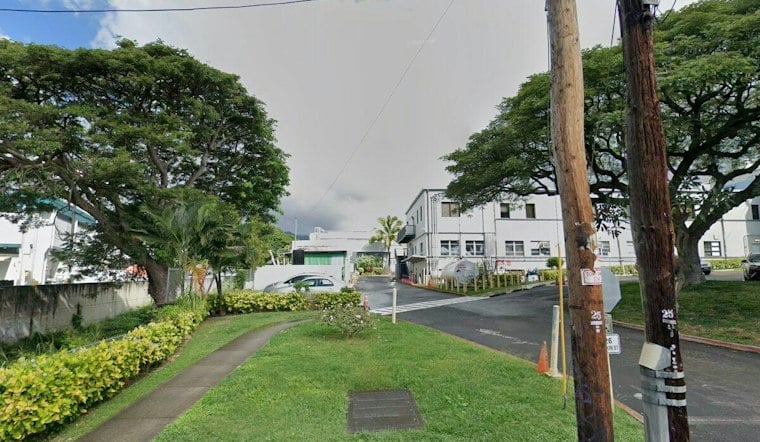
FEMA has approved nearly $7.6 million in disaster recovery and hazard mitigation funding for Hawaii, with the largest chunk going toward a 700-kilowatt emergency backup generator system at a Honolulu hospital and more than $1.1 million earmarked for Maui's water utility to address lingering damage from the 2023 wildfires.
The Maui County Department of Water Supply will receive over $1.1 million for emergency protective measures tied to the August 2023 fires, according to the Honolulu Star-Advertiser. That blaze destroyed 2,207 structures and caused an estimated $5.5 billion in damages, making it the deadliest U.S. wildfire in more than a century, as Hoodline previously reported. The fires also knocked out water pressure across Lahaina and Upper Kula, letting toxic contaminants infiltrate municipal pipelines and triggering restoration work expected to take two to three years, according to Honolulu Civil Beat.
Hospital Generator Tops the List
The single biggest award in the package is more than $4.6 million to install an emergency power system at REHAB Hospital of the Pacific, the station's report notes. The system includes the 700-kilowatt backup generator itself. REHAB is Hawaii's only acute-care inpatient rehabilitation hospital, treating stroke, brain injury, spinal cord, and orthopedic trauma patients, per KHNL / HI Now.
Beyond the hospital and water utility grants, the overall package includes more than $1.3 million in public assistance grants for Hawaii and the Commonwealth of the Northern Mariana Islands. Those funds cover emergency protective measures, infrastructure repairs, and restoration of public facilities, reimbursing state and local governments and other eligible organizations for disaster-related costs, per the same account. Separately, FEMA awarded more than $6.8 million through the Hazard Mitigation Grant Program for projects spanning both Hawaii and Nevada.
A Statewide Look at Transportation Risk
Roughly $1 million of the mitigation money will fund a Hawaii Transportation Network Vulnerable Analysis, which will use geographic information system technology and open-source tools to assess how exposed critical transportation infrastructure is to hurricanes, floods, landslides, and tsunamis. Hazard Mitigation Grant Program projects broadly aim to reduce the risk of future disaster damage, and per FEMA, the program supports acquiring properties in hazard-prone areas, improving drainage and flood protection, strengthening building codes, constructing safe rooms, and upgrading utilities and infrastructure.
These awards fit a broader pattern of federal mitigation dollars flowing toward Hawaii's most disaster-exposed systems. In April 2026, FEMA approved more than $4.6 million in Hazard Mitigation Grant Program funds for the state's electrical grid, including $3.8 million to upgrade Energy Management System platforms serving Maui and Hawaii and $800,000 for a Distribution Digital Twin model designed to catch power quality problems that can spark wildfires. FEMA's Hazard Mitigation Grant Program supports mitigation projects; the Stafford Act is cited in connection with the program.
Disasters Keep Stacking Up
The latest FEMA awards arrive as part of ongoing disaster recovery and mitigation funding for communities hit by hurricanes, severe storms, wildfires, and other natural disasters, and Hawaii's list keeps growing. On September 2–3, a Major Disaster Declaration was announced for Hawaii County.
On September 9, Governor Josh Green requested presidential major disaster declarations related to Hurricane Lowell in Kauai and Maui and statewide declarations related to Hurricane Lala and Tropical Storm Moke, Civil Beat reported. That request lands on top of an earlier request tied to March 2026 Kona Low storms, which remained under federal review after flooding and landslides swept Honolulu, Hawaii, and Maui counties and state officials estimated total losses could exceed $1 billion, according to the Office of the Governor of Hawaiʻi — a crunch that had already pushed the state to stand up an interim Disaster Case Management Program, as Hoodline reported this spring.
That stacking of disasters creates real fiscal pressure for county governments, a concern reflected in Civil Beat's reporting on the state's budget strains. The Hawaii Emergency Management Agency works with FEMA on disaster response, and the state has a Major Disaster Fund to support local response in the meantime.





