

























































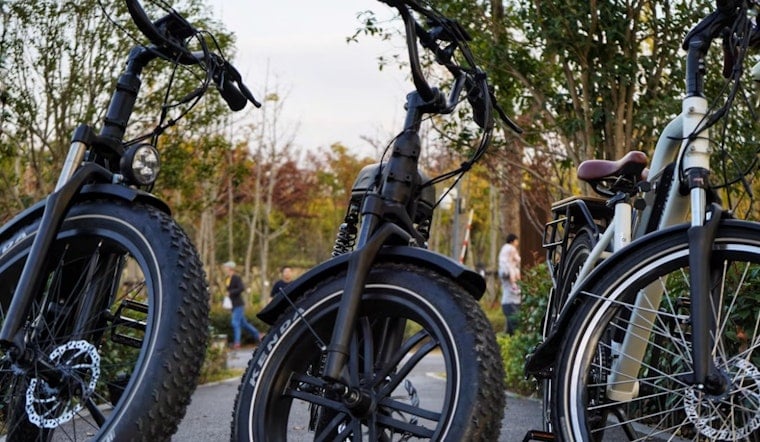
Fenton has officially outlawed e-bikes on downtown sidewalks, rolling out a new set of rules after city leaders said some riders were putting families at risk with reckless, high-speed riding. The regulations, formalized under Ordinance 7-30, ban sidewalk riding outright, require riders to yield to pedestrians, mandate headlights at night, and set fines of up to $500 for violators.
The Fenton City Council approved the ordinance unanimously on a second reading in late May, following its initial reading on May 11, according to the WNEM report. City records show the measure, Ordinance No. 730, passed 6-0 during a regular meeting at Fenton City Hall, giving the city its first dedicated framework for regulating bicycles, scooters, and mopeds within municipal limits, according to citizenportal.ai.
Downtown Walkability Under Pressure
Fenton's downtown is known for its walkability and its outdoor eating venues, features that city leaders say make sidewalk conflicts with fast-moving e-bikes especially dangerous. The station's report notes that Fenton police say they focused on education over tickets during the summer, warning riders who ignored pedestrian crossings or raced through sidewalks. That grace period is ending: police will now issue tickets instead of warnings for violations of the new ordinance.
Fenton formed an e-bike safety committee last fall to study the growing problem, and the group partnered with both Fenton police and Cycle Fit as it built out its recommendations, per the same account. Committee member Tracy Bottecelli said the group had noticed several e-bike accidents across Michigan communities, and reviewed ordinances already on the books in Coldwater, South Lyon, Kalamazoo, and Traverse City before drafting Fenton's own rules.
Riders Clocked Near 40 MPH on Sidewalks
Bottecelli described one incident in which young riders traveled at roughly 40 miles per hour on a sidewalk, a speed she cited as a driving force behind the crackdown. She said the city wants families to be able to enjoy downtown without discouraging e-bikes or scooters altogether, but wants the rules paired with common courtesy to keep streets safe. The new ordinance also bans underage riders from operating pedal-less peg bikes, which fall outside the legal definition of an e-bike, and the rules are being codified this fall after the city sends them directly to families.
Repeat violations, or crashes that cause injury, can escalate a citation into a misdemeanor under the ordinance, on top of fines that can reach $500. City leaders framed the tiered penalties as a way to target the small number of riders creating hazards without discouraging the broader e-bike and scooter use that has become common downtown, which they described as a genuine hotspot for the vehicles.
How Michigan Law Splits Bikes From Motorized Vehicles
Fenton's local sidewalk ban exists because state law otherwise treats compliant e-bikes much like traditional bicycles. Under the Michigan Vehicle Code, a legal e-bike must have working pedals and a motor of 750 watts or less, and falls into one of three classes: Class 1 and Class 2 are capped at 20 mph, while Class 3 tops out at 28 mph, according to the League of Michigan Bicyclists. State law allows compliant e-bikes on public roadways without requiring a driver's license, registration, or auto insurance, but Michigan Compiled Laws Section 257.660c explicitly gives municipalities like Fenton the authority to restrict or ban them from sidewalks and downtown zones, per Velosurance.
State law also sets youth-specific limits: riders under 14 cannot legally operate a Class 3 e-bike, and all riders and passengers under 18 on Class 3 e-bikes must wear federal CPSC-standard bicycle helmets, per the Michigan Legislature. Motorized two-wheelers that exceed 750 watts, lack functional pedals, or provide assistance above 28 mph do not qualify as e-bikes at all under state law — they are classified as mopeds or motorcycles requiring licensing, registration, and plates, according to Velotric, which noted a surge in aftermarket conversion kits capable of pushing bicycles to 40 mph.
Part of a Wider Michigan Crackdown
Fenton's move fits a broader pattern taking shape across Michigan this year. In February, neighboring Oakland County community South Lyon updated its own ordinance to ban e-bikes from downtown sidewalks, cap trail speeds at 15 mph, and outlaw non-compliant electric motorcycles, following complaints about riders speeding near pedestrians, according to WHMI 93.5. In June, Dearborn Heights went further, banning e-bikes from city parks, playgrounds, and public properties after a series of summer collisions involving children under 13, and adding registration requirements and impoundment fees for non-compliant riders.
On Mackinac Island, restrictions run even further: e-bikes are barred from all public roadways and pathways unless a rider has a documented mobility disability, and even then only Class 1 pedal-assist models are permitted, a policy Hoodline covered in its earlier look at the island's crackdown. The pattern extends beyond city halls into emergency rooms: Corewell Health's William Beaumont University Hospital in Royal Oak treated 22 e-bike-related injury cases between January and mid-June, 16 of them children, according to the same WDIV ClickOnDetroit report on Dearborn Heights' ordinance. Michigan State Police also updated statewide crash-reporting protocols in mid-2026 to track e-bike collisions separately from traditional bicycle and motor vehicle crashes, a shift the Detroit News attributed to officers previously struggling to categorize modified or high-speed e-bikes on standard accident forms.




