

























































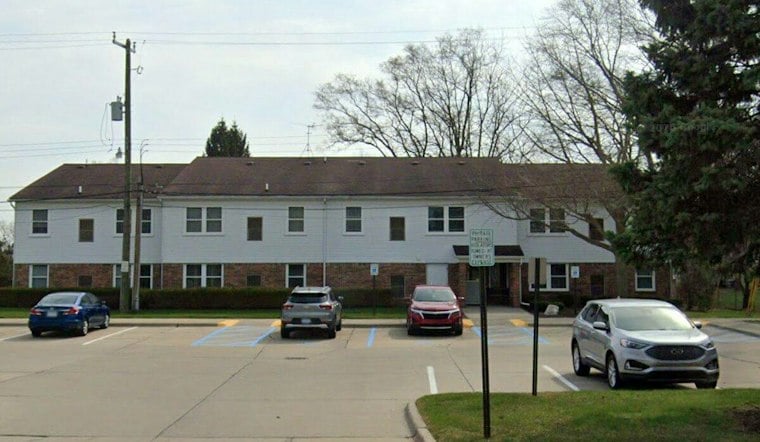
Fourteen senior citizens who call the Renshaw Senior Apartments home are waiting to find out whether Clawson voters will let the city sell the building out from under them. On Nov. 3, residents of the small Oakland County city will decide a ballot question that would authorize the Clawson City Council to sell or otherwise dispose of the city-owned complex at 121 Renshaw Ave.
The vote caps years of behind-the-scenes debate, according to the Detroit Free Press, which reports the Clawson City Council voted 5-2 to put the sale proposal, known as Proposal 26-1, on the ballot. Mayor Sue Moffitt was one of the two votes against placing the measure before voters. As the Free Press reported, Moffitt said senior services that would be funded by a sale have not been identified, and she said she is concerned about the lack of a plan for residents if the property is sold.
Clawson owns and operates the 15-apartment Renshaw property, which includes 14 one-bedroom units and a single studio apartment. The Free Press reports the studio has sat vacant since January, while the building maintains a waiting list despite having no income requirement — applicants need only be at least 60 years old and able to live independently, per the same account. One-bedroom units rent for $495 a month, generating more than $83,000 annually, while the vacant studio would rent for $465 a month if filled.
A Longtime Resident Who Doesn't Want to Leave
Joanne McCauley, 85, has lived in Clawson for 66 years and waited five years to get into Renshaw. She moved in 13 years ago after being widowed at 48, and the Free Press reports she intends to remain in her home. McCauley's daughter, 65-year-old Theresa Williams, lives next door — she sold her own Clawson home after her husband died, lived with her mother for a year, and moved into the adjacent apartment about a year and a half ago. Williams told the paper she is retired and lives on Social Security.
Doug Blank, a 79-year-old Air Force veteran, has resided at Renshaw since 2019 and values the building's safety, security and individual-unit thermostats, according to the Free Press. He said residents could be voted out of their home and that empathy is needed, adding that he and his friends do not want to lose it. Separately, clickondetroit.com reported that residents have raised questions about whether the city would help pay for moving costs or help them find another place with comparable rent if the building is sold.
The City's Case for Selling
City officials have pointed to the cost of maintaining a 1980s building that predates the Americans with Disabilities Act, which became law in 1990. Renshaw was constructed around 1980 as a two-story building without an elevator and is exempt from ADA elevator standards because it predates the law, the Free Press reports — a point consistent with federal guidance noting that elevators are not generally required under the 2004 ADAAG residential-facilities standards unless needed to provide an accessible route to public-use and common-use areas, according to the U.S. Department of Justice's ADA guidance.
Clawson official Joe Rheker estimated installing an elevator would cost more than $100,000 and said the City Council has discussed the issue for years because of potential lawsuit concerns, per the Free Press. He said Clawson remains exposed to potential litigation over Renshaw, even though the city has faced no lawsuit over the building during its 45-year existence, and said that if voters reject the sale, the city must manage that risk and invest substantially to improve compliance. The property carries an estimated value of about $1.5 million, and Rheker put the total public assets tied to Renshaw — building and fund balance combined — at roughly $2 million.
Rheker compared that $2 million in public assets serving just 14 residents with the potential to benefit Clawson's broader senior population, which the Free Press reports numbers 2,183. He said sale proceeds could support senior services, though he also said a study is needed before specific repairs or services can be determined. Renshaw currently holds a fund balance of $470,575.21, built from rent collected over several years, which may be used for building maintenance and improvements, according to the Free Press.
What the Ballot Measure Actually Says
Proposal 26-1 asks voters to authorize the City Council to sell or dispose of Renshaw and directs proceeds toward senior services in Clawson, requiring approval by a majority of voters for any sale to proceed. A separate document in the Oakland County 2026 general-election proposal list states that if approved, proceeds from any sale would be directed toward the sustainment and improvement of senior services in Clawson, though that language carries lower confidence than the council's own account of the measure.
Moffitt has proposed an alternative: not leasing to new tenants and allowing current residents to stay until they move on naturally, the Free Press reports. The city has said Renshaw is neither a Section 8 development nor managed by a city housing commission, and according to clickondetroit.com, the city is evaluating whether continued ownership or a potential sale best serves long-term community needs while managing maintenance costs and capital obligations. Questions remain about what, if any, relocation or financial assistance would be available to residents if the sale goes through, per that outlet's reporting.
A group called Save Renshaw has organized to make sure voters understand what they are deciding, according to clickondetroit.com, which quoted member Jamie Gills-Takenouchi. Clawson's senior center, meanwhile, is housed in the Hunter Community Center, a former elementary school dating from the 1950s that the Free Press reports needs major repairs of its own — underscoring the broader strain facing the city's aging infrastructure as the Nov. 3 vote approaches.





