

























































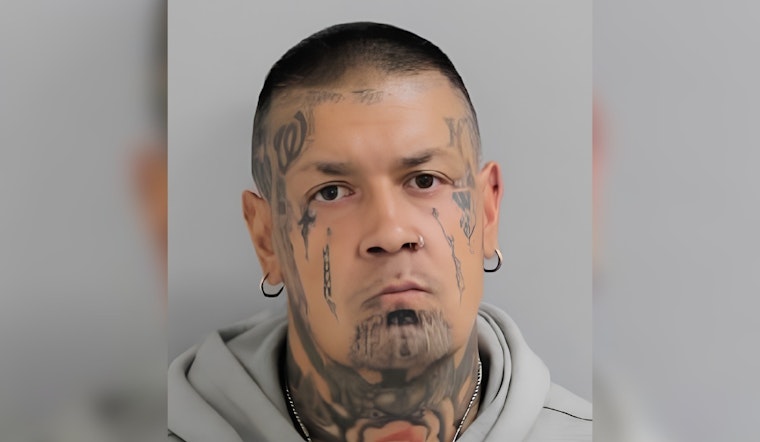
Denver Police issued a public alert Wednesday identifying Christopher Allen Chavez as a court-designated sexually violent predator now living as a transient in the 1100 block of Park Avenue West, in the heart of the Five Points neighborhood. Chavez will reside in Five Points, according to the department's post, which was shared to warn residents in the immediate area near downtown's cluster of emergency shelters and social service providers.
The notice, posted to the Denver Police Department's Facebook page, states that Colorado law requires police departments to publicly share information about individuals determined to be sexually violent predators. That designation is not applied to every registered sex offender — under Colorado Revised Statute § 18-3-414.5, it follows a specialized risk assessment evaluating an offender's likelihood of reoffending, according to Justia Law. Because that designation signals a higher assessed risk, state statutes 16-13-901 through 16-13-905 mandate active community notification for SVPs specifically, while standard sex offender registration only requires passive reporting, per the same statutory framework.
A Familiar Address Near Downtown Shelters
The 1100 block of Park Avenue West has become a recurring registration point for transient sex offenders in Denver, largely because of its proximity to major emergency shelters and social service providers near Broadway, according to a Medium report on the pattern. That context helps explain why Chavez, like other transient registrants before him, lists an address in this specific Five Points corridor rather than a fixed residence.
This marks the second such alert in Five Points in less than two months. Hoodline reported in July that Denver Police issued a similar notice for another SVP on 29th Street, Anthony James Bryant, who was also registered as transient at the time. The back-to-back notices reflect a broader pattern this year of Denver Police issuing neighborhood alerts for court-designated predators across the city, from Cheesman Park to Globeville to Green Valley Ranch.
Why Police Can't Simply Relocate Him
A common question following alerts like this one is why authorities don't simply direct where an unhoused sexually violent predator can or cannot stay. Under federal and state law, police departments and municipal governments have no legal authority to dictate where an unhoused sex offender resides or to bar him from public areas, unless specific court-ordered probation or parole conditions apply, according to guidance cited by the City of Fort Collins. Registrants who have completed their court sentences retain constitutional freedom of movement, according to the same guidance notes.
Once designated, SVPs face lifetime registration requirements under Colorado Revised Statutes § 16-22-108, with no statutory path to petition a court for early removal from the registry. They must re-register with local law enforcement every 90 days for life. Failing to comply with that quarterly requirement is a separate class 6 felony for SVPs, carrying a potential sentence of one to one-and-a-half years in state prison, according to the Colorado Legal Group.
How Denver Tracks Registrants In The Community
The City and County of Denver oversees registered sex offenders living in the community through what it calls the Containment Approach, a multidisciplinary model that combines supervision officers, polygraph examiners, and specialized treatment providers. Registrants under this model must waive confidentiality so the supervision team can continuously share compliance information, according to the city's own description of the framework.
Denver Police share information about sexually violent predators through YouTube and other social media outlets, a practice the department adopted around 2015 to reach broader local audiences, per past reporting from Westword. The department's Wednesday post makes clear that its social media accounts are not monitored around the clock and cannot be used to request police services, file reports or tips, or initiate an investigation. Residents with an emergency are urged to call or text 911; non-emergency concerns can go to Denver Police's line at 720-913-2000, and questions about the sex offender registry can be directed to the department's Sex Offender Registration and Compliance Unit at 720-913-6511.
State Law Bars Vigilante Response
Colorado's community notification bulletins explicitly state that vigilantism, harassment, or threats against an SVP, their associates, or law enforcement personnel are illegal and subject to criminal prosecution. That anti-vigilante language exists specifically to prevent fear from pushing registrants into hiding, where they would fall out of the monitoring system entirely, according to legal guidance referenced in past Colorado notification bulletins. Officials frame that legal restriction as part of balancing public safety information with the state's broader containment strategy for registered offenders.





