

























































A one-woman operation based near Ocala, Florida has quietly reshaped how the Thoroughbred industry cares for orphaned foals, and its founder just received one of the sport's most respected honors for it. Bronwyn Watts, who runs Cold Spring Nurse Mares out of Citra, Florida, has tended to nearly 500 orphaned foals over the past eight years using mares whose milk production is triggered by hormones rather than pregnancy, according to a report from the Kansas City Star.
The path that led Watts there began far from a horse farm. In autumn 2017, per the same report, Watts purchased a one-way plane ticket from Atlanta to Belize after fleeing an abusive relationship, with no plan and, in her own words, not in a good place mentally. She spent time in a Workaways program across Central and South America, an arrangement that provides room and board in exchange for a set number of work hours, working as a groom and as a nanny for the children of Olympic event riders.
An Overheard Conversation Changes Everything
Watts grew up on a horse farm in Floyd, Virginia, and it was that background that put her in the right place at the right moment. While in Santiago, Chile, she overheard a conversation about nurse mares that stuck with her, and after returning to the United States she established Cold Spring Nurse Mares LLC in fall 2018. The company's mission, as described in the Kansas City Star's report, was to provide hormonally induced nurse mares to orphaned foals rather than relying on the traditional method of breeding mares specifically to trigger lactation.
That traditional model, historically standard across commercial nurse mare operations, produced surplus foals that were frequently orphaned or culled once their mothers were needed for a client's foal, an ethical problem that animal rescues have long worked to address, according to Tomten Farm and Sanctuary. Hormonally induced lactation instead uses a sequential protocol of steroid hormones followed by dopamine D2 receptor antagonists such as domperidone to raise prolactin levels in mares that are not pregnant at all, per research published on ResearchGate. Watts has said her determination to pursue the approach was motivated by claims that the science already worked for women.
Building A Herd Of Retirees, Not Broodmares
Watts, now 41, selects high-quality, easy-to-handle, good-tempered mares and puts them through a strict veterinary vetting process before they join the program, the Kansas City Star reports. Many of the mares she works with are between 25 and 27 years old, well past the age of roughly 20 at which mares typically age out of the broodmare phase, and clients donate animals that have reached that stage of their careers. Cold Spring Nurse Mares keeps 40 to 50 mares ready for duty at any time, and for mares unable to assist orphaned foals, the operation still provides a forever home.
That no re-breeding, no reselling policy extends to the nonprofit arm of the operation, ColdSpring Mares Inc., a registered 501(c)(3) also based in Citra, which accepts horses exclusively through permanent donation and retains legal ownership of every mare to guarantee lifetime care, according to the organization's website. Watts operates the whole enterprise as a one-woman team, the Kansas City Star notes, with support from backers including John Greathouse, Jamie McDiarmid, and David O'Farrell. The operation received official nonprofit status in 2025 and funds its work through lease fees and other funding, though Watts has said the costs remain enormous and she will not take shortcuts.
A Gentle Bonding Method And A Widening Footprint
The pairing process itself is notably low-stress. Cold Spring Nurse Mares uses a quiet, non-coercive bonding protocol that involves no sedation, restraints, or blindfolds, and successfully pairs foals with mares in under an hour in 90% to 99% of cases, according to accounts shared in an Ironside Stables post. Mares typically remain with orphaned foals for five to six months until weaning. Watts has said the program maintains a 98 percent lactation success rate.
The operation runs seasonally in both Ocala, Florida, and Lexington, Kentucky, and places nurse mares across a wider multi-state region that includes South Carolina and the Mid-Atlantic, according to a 2022 profile from Harness Racing Update. Before founding the operation, Watts spent more than 15 years working as a professional groom in Three-Day Eventing starting in 2004, including seven turns grooming at the Land Rover Kentucky Three-Day Event for elite riders such as Laine Ashker and Jonathan Holling.
Industry Recognition At The Kentucky Castle
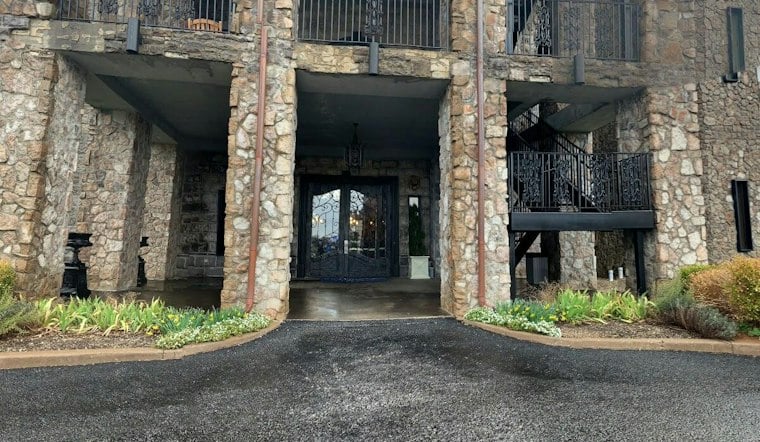
That history came full circle earlier this month when Watts received the Dr. J. David Richardson Industry Service Award, presented by the Thoroughbred Owners and Breeders Association on September 10 at The Kentucky Castle in Versailles, Kentucky. The award is named for the late equine surgeon and racing leader Dr. J. David Richardson, who died in 2021, according to True Nicks. Watts received a standing ovation after her acceptance, the Kansas City Star reported, and she has said the honor showcased both Cold Spring's mission and its ongoing need for funding.
Watts' award came at the 41st TOBA National Awards ceremony, where the industry's other top honors went to Godolphin, named National Owner and Breeder of the Year, and Puca, named National Broodmare of the Year, per the Florida Thoroughbred Breeders' and Owners' Association. Carrie Brogden, founder of Machmer Hall Sales, praised the innovation directly, saying hormonally induced nurse mares are amazing and that Watts was at the cutting edge of the practice. Brogden added that farms using the hormone-induced approach should be commended for solving what she called a massive problem within the breeding industry.



