

























































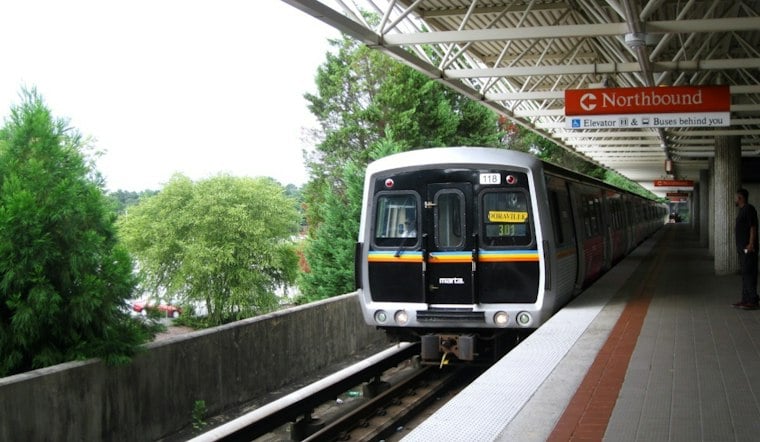
A former MARTA train-station cleaner received a $620,000 overtime payment on an April 2026 paycheck that the transit agency says the employee never actually earned. MARTA has not recovered the money, and the agency has now filed a civil suit to get it back.
MARTA confirmed the erroneous payment and told Atlanta News First that it identified the error in July 2026, months after the paycheck went out. The agency has called the overpayment a clerical error and says it worked directly with the employee in an attempt to recover the funds before turning to litigation. The employee involved in the mistake is no longer with MARTA, according to the same report.
Charles Bridgers, an Atlanta employment-law attorney, told the outlet he had never heard of a case involving that much money in a single payroll mistake. He said the employee retaining the payment could face a criminal charge of theft by taking. Under Georgia law, theft by taking involving property valued at $25,000 or more can carry a sentence of up to 20 years in prison, according to Brett Willis Law — a threshold the $620,000 payout clears by more than 20 times over. Whether any criminal law enforcement agency has opened an investigation remains unclear.
What MARTA Is Trying to Recover
MARTA hopes to resolve the civil case quickly and could obtain a judgment for the full $620,000, per the Atlanta News First report. If it wins, the agency says it would pursue collections against the money itself or comparable assets. To illustrate the scale of the loss, the outlet noted the sum could fund nearly 15 station cleaners for a year, cover the base salaries of 10 MARTA police officers, buy one new bus, or pay for roughly 250,000 bus or rail trips.
In response to the error, MARTA says it is retraining staff and strengthening its internal processes to prevent a repeat. The agency describes its mission as providing safe, reliable transit connecting the region.
An Automated System Meant to Catch Errors
MARTA's payroll process is built around automated software rather than manual calculations. The transit authority's timekeeping framework uses Oracle Time and Labor for non-represented employees, alongside feeds from Trapeze and Teledriver for unionized transit staff, with daily automated exception reports designed to flag errors, according to a 2020 MARTOC management audit. How a payment of that size cleared those automated controls has not been publicly explained.
The overpayment surfaced against a backdrop of internal scrutiny that predates it. MARTA's internal Audit Committee discussed internal-audit activity and audit planning in May 2026, according to a MARTA Audit Committee summary. Separately, a November 2024 state management audit conducted for the Metropolitan Atlanta Rapid Transit Overview Committee had already flagged the absence of a central policy repository at MARTA and recommended better data integration across the agency's administrative software systems.
A Month of Overtime Overruns
The $620,000 payment landed during a month when MARTA's overtime spending was already running well over budget agency-wide. MARTA financial reports for April 2026 show overtime expenses came in $12.1 million over budget that month, driven by high employee absenteeism and special-event coverage, per a MARTA board finance summary. That broader overrun sat within the agency's $1.55 billion operating and capital budget for the fiscal year.
The payroll error also comes amid a period of leadership turnover and heightened financial oversight at the agency. MARTA's Board of Directors permanently appointed Jonathan Hunt, previously the agency's chief legal counsel, as General Manager and CEO in August 2026, amid leadership turmoil at the agency. That same month, MARTA agreed to pay the City of Atlanta $52 million to settle a multi-year audit dispute, after city auditors had alleged the transit authority overcharged $70 million for enhanced bus service tied to the More MARTA sales tax program, which funds transit capital projects across the city — a settlement Hoodline previously covered.
Georgia's Notice Rules for Suits Against Public Agencies
Civil claims against Georgia municipal entities generally come with procedural strings attached. State law under O.C.G.A. § 36-33-5 requires formal written ante litem notice within six months of an incident before certain civil monetary claims against public authorities can proceed in court, according to The Champion Firm. That framework underscores the dual track MARTA is now navigating: civil recovery efforts moving through the courts while the unreturned $620,000 leaves open the possibility of felony theft exposure for the departed employee under Georgia law.
MARTA is a public transit agency serving the Atlanta region. For now, the agency says its focus is retraining staff, tightening its processes, and pursuing the civil suit — while key questions, including exactly how the error slipped through automated payroll checks and whether criminal charges will follow, remain unanswered.





