

























































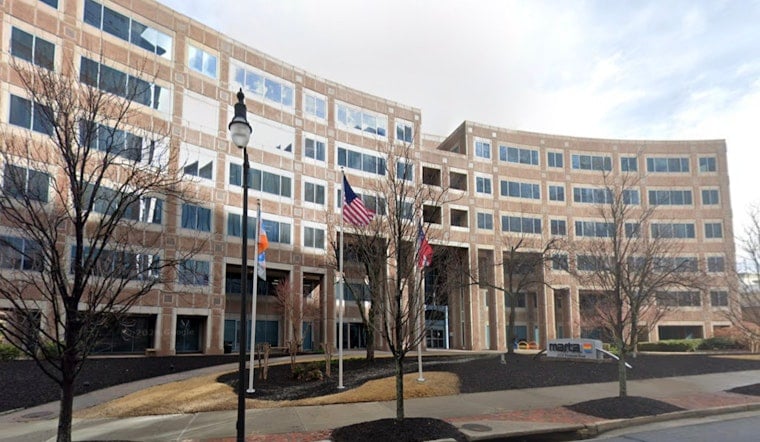
MARTA's board of directors voted Thursday to pay the City of Atlanta $52 million, closing out a bitter, years-long fight over how much the transit agency owed the city for enhanced bus service. The dispute traces back to accounting disagreements that began during the COVID-19 pandemic in 2020, when service cuts scrambled the formulas used to divide costs between the two governments.
The settlement, first reported by The Atlanta Journal-Constitution, resolves one of the more consequential financial standoffs to hit the More MARTA program, the $2.7 billion expansion effort funded by the half-penny sales tax Atlanta voters approved in 2016. City auditors had calculated that MARTA owed Atlanta $70 million, while MARTA and its own auditors argued the true figure was closer to $865,000. The gap between those two numbers, more than $69 million, fueled a standoff that dragged on for years and touched everything from construction permits to a whistleblower's career.
How a Pandemic Formula Turned Into a $70 Million Fight
The root of the disagreement was technical but consequential. An independent operational performance audit by Mauldin & Jenkins found that between fiscal years 2017 and 2022, MARTA had been shifting funds earmarked for capital expansion out of the City of Atlanta Reserve account and into MARTA's own Unified Reserve whenever bus service costs ran over budget. Atlanta's City Council had ordered that audit in March 2023 amid growing concern over how sales tax dollars were being spent.
MARTA pushed back hard on the audit's math. The agency brought in KPMG to review Atlanta's methodology, and in March 2025 testimony before Georgia's MARTOC legislative committee, KPMG representatives argued that Mauldin & Jenkins had applied an incorrect threshold methodology to pandemic-era service reductions. Using what KPMG called a proportional methodology instead, the firm calculated MARTA's actual overcharge at just $865,630, a figure MARTA officials cited throughout the dispute as the fair number owed.
Permits, Politics, and a Whistleblower Lawsuit
The financial disagreement spilled directly into MARTA's construction plans. Internal meeting minutes from December 2024 show Atlanta Chief Operating Officer LaChandra Burks confirmed to MARTA executives that city construction permits for the $230 million Five Points Station renovation were explicitly tied to resolving the audit dispute, according to the AJC's reporting. MARTA accused Mayor Andre Dickens of holding up those permits to pressure the agency into accepting the city's terms, even as Dickens publicly insisted the city was not delaying station work.
The feud also had a human cost inside MARTA's own ranks. Former MARTA Deputy General Manager Josh Rowan filed a Georgia Whistleblower Act lawsuit in Fulton County Superior Court in January 2024, alleging he was fired without cause after uncovering a $6 million accounting discrepancy and inflated consultant fees tied to More MARTA projects. Rowan had been hired in 2022 to speed up capital project delivery before his dismissal during a meeting with the agency's CEO. That lawsuit has since been settled.
Leadership turmoil accompanied the financial fight. MARTA's board chair publicly declared she had lost confidence in then-General Manager and CEO Collie Greenwood, and the agency later appointed Jonathan Hunt as interim general manager and CEO. Hunt was promoted to the permanent post two weeks before the settlement's approval, per the AJC. State Representative Deborah Silcox, who chairs the legislative Metropolitan Atlanta Rapid Transit Overview Committee, formally requested an independent review of the city's audit in August 2024 after MARTA claimed its formal responses had been left out of the final report.
A Decade of Delays Behind the Numbers
The dollar dispute unfolded against a backdrop of broader disappointment with More MARTA's pace. The program originally listed 70 proposed expansion projects when voters approved the sales tax in 2016, a list later trimmed to 17 priority projects adopted by the MARTA Board in 2018, according to WABE. Nearly a decade after that vote, the program still had not delivered a single completed capital expansion project, a gap that has stoked frustration among city council members and residents alike.
That frustration boiled over in July, when the Atlanta City Council unanimously approved a resolution sponsored by Councilmember Thomas Worthy authorizing Mayor Dickens to renegotiate the Intergovernmental Agreement with MARTA. The measure demands council oversight and financial guardrails going forward, with council members seeking a formal legal role in future project sequencing decisions, WABE reported. Atlanta had first proposed a settlement to end the dispute in spring 2025, and the city later formed an ad hoc committee led by Jacob Teague in 2025 to help work out terms.
State lawmakers have already moved to shore up MARTA's finances separately from the city dispute. In April, Georgia passed House Bill 297, creating the Georgia Transportation Efficiency Authority and locking in MARTA's 1% sales tax through June 30, 2067, as Hoodline previously reported on the tax lock-in. Physical progress on More MARTA projects has also inched forward; the program's first Bus Rapid Transit route, the Rapid A-Line connecting Downtown Atlanta to Summerhill along Mitchell Street, launched in April after unmapped utilities, old trolley tracks, and an abandoned garage delayed construction underground, as Hoodline detailed in coverage of the Mitchell Street bus lane.
With the audit dispute now resolved, MARTA has nearly doubled the amount of money Atlanta pays for enhanced bus service, per the AJC's reporting, a change that reflects the underlying cost disagreements the settlement was meant to fix. Whether the $52 million payment and the council's push for a renegotiated intergovernmental agreement can finally get stalled projects like the Beltline moving remains an open question for a program still searching for its first completed expansion after ten years.





