

























































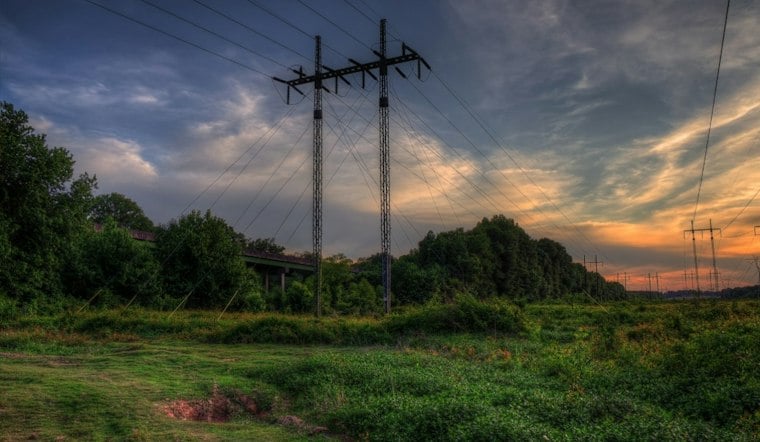
Some homes in North High Shoals are losing power so often that residents have stopped counting on their fingers alone. One resident described outages hitting seven or eight times in a single month, and Mayor Stephen Goad says the problem has even knocked out power and internet at town hall, disrupting the business of running the small Oconee County community.
A Pattern Residents Say They Cannot Ignore
The complaints, detailed in reporting from Grady Newsource, describe a town grappling with an electricity provider many residents feel is falling short. One resident put it simply: “Sometimes it is seven, eight times in a month.” For a town government that relies on steady power and internet access to function, the stakes go beyond inconvenience. “Sometimes it affects government business of North High Shoals because, you know, the internet’s out and the power’s out,” Goad said, according to the outlet.
Frustration has built to the point where residents have flooded Goad’s office with complaints through multiple channels — he said people have reached out via town hall council meetings, phone calls, emails, and have been notified via community members on Facebook when outages strike. One resident, Joy Sizemore, said her husband sent emails directly to Georgia Power about the outages and never received a reply. She has since asked that a Georgia Power representative attend a town council meeting to address residents directly, though the outlet reports no such representative has yet shown up.
Town Hall Has Little Direct Power Over the Power Company
North High Shoals, located in Oconee County, Georgia, is served primarily by Walton EMC and Georgia Power, with Georgia Power standing as the largest electricity supplier in the city by megawatt hours sold, per findenergy.com. But the town itself has few levers to pull. Per Grady Newsource, the town’s ability to directly address the outages is limited because Georgia Power is responsible for operating its utility system. Goad has described his role as serving as a voice and advocate for residents even though the town government cannot force the utility’s hand.
Not every experience with the company has been negative. Nancy Clark, who lives in nearby Good Hope, said she received help from a Georgia Power representative during a previous outage. Goad has also speculated that vehicle wrecks hitting poles could account for some outages, though that remains his own supposition rather than a confirmed cause, the outlet reports.
Why Some Neighbors Stay Lit While Others Go Dark
Perhaps the most striking complaint from residents is the inconsistency between neighbors on different utilities. According to residents, households using Georgia Power experience frequent power outages that neighbors with Walton EMC do not. Clark said she eventually moved her house specifically to receive Walton EMC service instead. Residents describe scenarios where one home loses power while a home next door keeps it, and some say they have gone hours without electricity while people just a mile away stayed fully powered.
Available outage data offers some context, though it does not settle residents’ month-to-month frustrations. Findenergy.com reports that North High Shoals consumers are faced with 1.17 power outages each year, with outages lasting around 125.23 minutes on average — compared to a national average of 1.44 outages at 123.49 minutes each. Separately, poweroutage.us showed no outages in Oconee County in its current snapshot. Those figures reflect broader county and annual trends rather than a verified count of the specific monthly disruptions residents describe.
Georgia Power Points to Tree-Trimming and Grid Upgrades
In a letter dated September 24, Georgia Power told residents: “Although reliability has improved, we recognize that outages remain a concern for many in the community,” according to Grady Newsource. The company said its reliability work includes targeted vegetation management, equipment upgrades and the use of advanced technologies, framing the effort as an ongoing commitment to improving service in the area. Georgia Power has said it is completing extensive vegetation management work across a large portion of the affected circuit between this fall and the coming year, though the exact locations or customer count covered by that work were not detailed.
The company’s broader vegetation-management materials describe tree overgrowth as one of its central concerns statewide. Vegetation is a major cause of electrical outages across the state, Georgia Power says, particularly during storms, ice events and high winds. Separately, the company states that vegetation management is crucial to limiting outages and quickly restoring service, and that it prunes trees away from power lines on a planned cycle to reduce outages caused by downed trees or limbs, according to georgiapower.com.
Georgia Power has also pointed to its company-wide Grid Investment Program as evidence of broader reliability efforts. Since the program began in 2020, the company says it has upgraded 364 circuits and substations, installed 5,500 advanced devices, replaced or enhanced 39,000 poles and installed 500 miles of underground cable, and it reports that areas with completed projects have seen up to a 50 percent improvement in interruption-frequency and interruption-duration metrics, per a Georgia Power press release. Whether North High Shoals is slated to benefit from that specific program was not addressed in the materials reviewed.
For now, residents are left waiting to see whether the fall vegetation work translates into fewer dark nights. Goad has continued pressing the issue on residents’ behalf, even as the town’s formal authority over its own power supply remains limited by the simple fact that Georgia Power runs the lines.





