

























































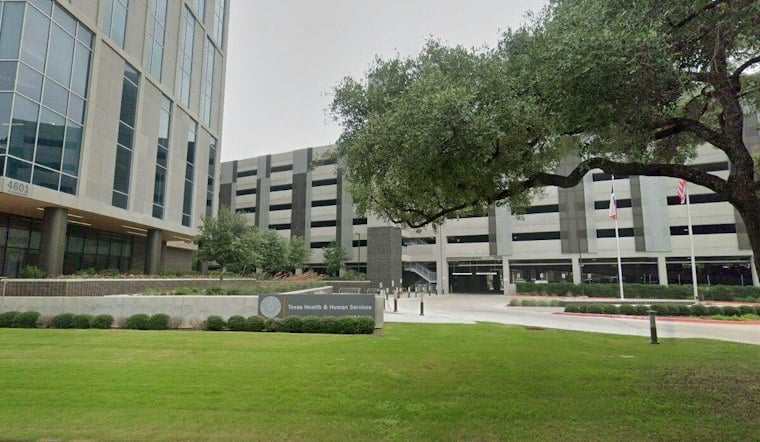
The Texas Health and Human Services Commission has awarded more than $4 million to the North Texas Maternal Health Accelerator. Officials say the funding will help the program serve more families and support data tracking with the state agency; the reported award description does not specify the funding period.
The accelerator’s work includes in-home support for families. Bessie Bronstein developed high blood pressure during pregnancy and was admitted to a Texas hospital before an emergency cesarean section. Her son, Bernie, was born 10 weeks early on February 23, weighing 2½ pounds, and spent roughly his first three months in the NICU. Bronstein went home a few days after giving birth but stayed an extra five days in the hospital after her surgery; Bernie came home about three months later. Her story was first reported by NBC 5 Dallas-Fort Worth. After Bronstein returned home, the accelerator contacted her and provided support, which the program says it offers regardless of whether a family has a specific identified problem.
A Coalition Born From Fort Worth's Health Crisis
The accelerator's roots trace back four years, to when Fort Worth Mayor Mattie Parker created the coalition behind it in response to alarming local statistics. Tarrant County has long struggled with high maternal mortality numbers, and the 76104 ZIP code — which sits near Fort Worth's medical district in historically Black neighborhoods — has been cited as having the second-highest maternal death rate in the nation. A separate UT Southwestern study found that same ZIP code has the lowest life expectancy in Texas, at 67 years, according to CBS News, while Tarrant County Public Health data cited by WFAA put the area's infant mortality rate at 19 deaths per 1,000 live births, more than triple the national average.
Community Impact reports that Tarrant County holds the second-highest maternal mortality rate for Black women in Texas, at 48.3 deaths per 100,000 live births, reflecting a disparity in which Black women nationally and in Texas are two to three times more likely to die from pregnancy-related causes than white women. The accelerator is now led by TCU's Burnett School of Medicine and UT Southwestern Medical Center, and includes MHMR of Tarrant County alongside other community partners across Tarrant and Dallas counties. Susan Garnett, CEO of MHMR of Tarrant County, and Dr. Shena Dillon, an associate professor at the TCU School of Medicine, are among those involved in the effort.
What The Program Actually Does
The accelerator connects pregnant and postpartum women with health and support services, providing medical check-ups, iron supplements, and health screenings while helping families overcome barriers like transportation to appointments. Women can access the program at any point during pregnancy or postpartum, and it includes the Help Me Grow app, which connects mothers with services and referrals. Healthcare providers involved in the effort look for complications like high blood pressure and pre-eclampsia, conditions that can lead to early delivery and longer hospital stays — precisely what Bronstein experienced.
The $4 million state grant builds on a much larger foundation. The accelerator's iron initiative launched in spring 2025, building on coalition roots that trace to 2022 and nearly $25 million in philanthropic commitments from 11 regional organizations, including the Episcopal Health Foundation as a philanthropic partner, according to the Burnett School of Medicine at TCU. That funding aims to reduce severe obstetric complications across North Texas by more than 20% over three years. Five health systems are committed partners in the coalition, and Parkland Health is a co-investigator. The coalition also includes more than 50 community partner organizations, a scale the region's health leaders describe as unprecedented for an area that delivers more infants annually than 30 U.S. states combined.
Targeting The Region's Top Complication
Blood transfusions are the most common severe obstetric complication in the Dallas-Fort Worth region, occurring in roughly 3% of deliveries—nearly double the national average. The initiative had distributed more than 27,000 prenatal iron supplements as of June 2026.
What the Iron Research Shows
According to UT Southwestern Medical Center, research found about a one-third decrease in blood transfusions among patients whose health care providers gave them prenatal iron supplements, compared with patients who were only advised to take the pills. That finding supports the potential value of providing supplements directly, but the reported comparison alone does not establish that the regional rate change was caused by the distribution program.
Federal data from the U.S. Department of Health and Human Services shows that 4% of pregnant women in Texas experience severe obstetric complications annually, a rate that exceeds the national range of 2.5% to 3.0%, with uninsured mothers and those on Medicaid facing higher risks, per The Lab Report Dallas. In August, Texas Health Resources announced a maternal continuity-of-care initiative supported by the accelerator, with a September 10 kickoff. Pregnant women and mothers with babies under a year old in Tarrant and Dallas counties can self-refer for care navigation and health services, as KERA News reported. An earlier soft launch relying on internal hospital referrals had already generated 152 patient enrollments before the public option opened.
A Transparency Fight
The delayed report, per News From The States, will mark the first official state review to include maternal death data collected since Texas enacted its near-total abortion ban in 2021. For families like Bronstein's, the accelerator's on-the-ground work continues regardless of when that report lands — a program built, its backers say, to catch mothers and babies before a crisis becomes a tragedy.





