

























































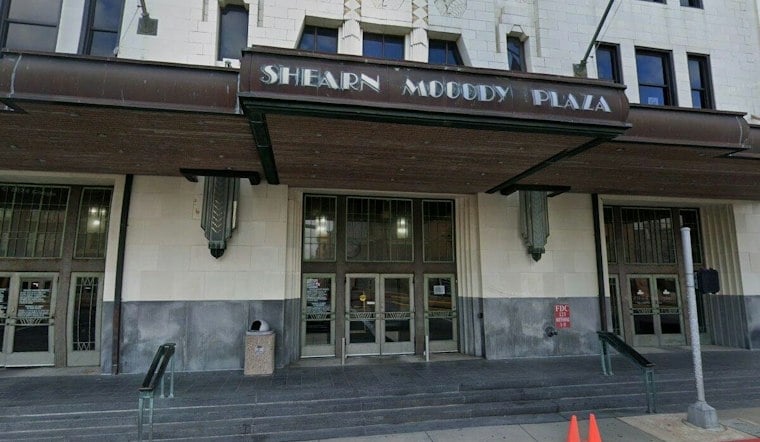
Nearly 120 years ago, a quiet port city on the Texas Gulf Coast became an unlikely gateway for thousands of Jewish immigrants fleeing violence in Russia and eastern Europe. Starting Nov. 7, the Bryan Museum in Galveston will tell that story in a new exhibition called “Port of Promise: Jewish Pioneers of Texas,” tracing Jewish life in the state from the early 1800s through the early 20th century.
A Forgotten Migration Gets Its Due
The exhibit centers on what's known as the Galveston Movement, or the Galveston Plan, which operated from 1907 to 1914 and funneled roughly 10,000 Jewish immigrants through the city's port, according to tshaonline.org. As reported by CultureMap Houston, the pogroms driving that exodus were sparked in part by conspiracy theories that Jewish leaders had assassinated Tsar Alexander II, and once in Texas, many of those immigrants spread out as pioneers and entrepreneurs who helped build communities across the state.
Galveston wasn't a random landing spot. The Jewish Immigrants' Information Bureau directed the movement specifically to keep new arrivals away from crowded Atlantic Coast cities, hoping to head off a feared surge of anti-Semitism that could have led to tighter immigration restrictions, per the same tshaonline.org account. The port also offered practical advantages: it sat closer to job opportunities out west, was linked to Bremen through the Lloyds Shipping Company, and was seen as unlikely to tempt large numbers of immigrants into settling there permanently rather than moving on.
The First Arrivals and a Rabbi's Role
The first refugees of the movement landed on the steamship Cassel in early July 1907 — 54 men and two women, according to the tshaonline.org entry. Rabbi Henry Cohen of Temple B'nai Israel became a key figure in helping direct those arrivals to new homes farther inland, the same source notes. CultureMap Houston adds that Galveston was already one of the largest immigration hubs in the country during the 1800s, handling around 200,000 immigrants between 1845 and 1948 from Europe, Latin America and South America.
The numbers tell a story of momentum that never quite found its footing. About 900 immigrants passed through Galveston before the end of 1907, but only 106 arrived the following year, per tshaonline.org. Arrivals then climbed back up — 773 in 1909, roughly 2,500 by 1910, and about 1,400 in 1911 — before the movement was worn down by infighting among organizers, poor economic conditions and restrictive immigration authorities. Washington Jewish Week reports that declining economic conditions and a surge in nativism and xenophobia ultimately brought the movement to an end by 1914.
Where Immigrants Ended Up, and Why
Even after landing in Texas, most participants didn't stay put. Research cited by ScienceDirect found that roughly 85 to 90 percent of prime-age male participants eventually moved east of the Mississippi River, typically settling in large Northeastern and Midwestern cities. That same research found religious and country-of-origin enclaves pulled harder on where people ultimately settled than economic conditions did. Author Rachel Cockerell described Galveston's role simply, telling Texas Standard, “Galveston was really like a springboard to the rest of America.”
Immigration attorney and historian Charles C. Foster, according to CultureMap Houston, said Jewish migration to the Northeast had sparked anti-immigrant backlash there, and that Jewish community leaders responded by directing migrants toward Texas instead. Foster said the Galveston Plan's impact “cannot be overstated,” and that its participants overcame significant obstacles to become successful and philanthropic Texans, per the outlet's report.
What Visitors Will See at the Bryan Museum
The exhibition was developed with support from Rice University's Joan and Stanford Alexander South Texas Jewish Archives, according to Jewish Herald-Voice. Melissa Williams Murphy, executive director of the Bryan Museum, has said immigrants have shaped Texas and that their contributions deserve to be preserved for future generations, CultureMap Houston reports.
Admission to “Port of Promise” is included with general museum tickets, according to CultureMap Houston. The Bryan Museum, founded in 2015 by Mary Jon and J.P. Bryan, also offers educational resources and traveling exhibitions.
Public Programs and Exhibition Closing Date
Three special public programs will accompany the exhibit's run, according to CultureMap Houston: a panel talk with Foster on the Galveston Plan, a presentation by Robert Sakowitz on his family's Texas luxury department stores, and a lecture by Dr. Nancy Katz on Jewish Texas before and after the Galveston Plan. CultureMap Houston reports that the programs require separate tickets booked in advance through the museum's website.
CultureMap Houston states the show runs through Jan. 21, 2027, giving Texans months to explore a migration story that quietly reshaped communities across the state long after the ships stopped arriving in Galveston.



