

























































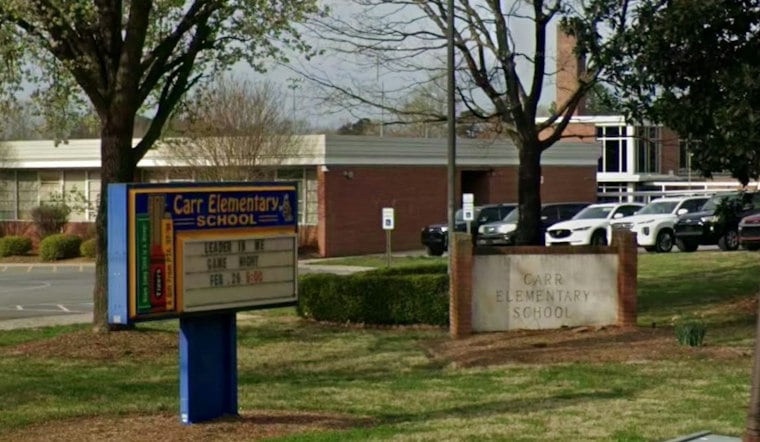
An $11 million aquatics center a decade in the making is set to open in Dallas, North Carolina, in October, giving Gaston County its first dedicated competitive swimming facility and ending years of local teams having to travel out of county just to host a meet. The 34,000-square-foot Gaston Aquatics complex sits on West Carpenter Street near Gaston College, behind Ingles Market and next to Carr Elementary School, and includes a 50-meter competition pool, a warm-water therapy pool, a weight room, and seating for about 980 spectators.
Construction was still underway as of late August, according to the Charlotte Observer. The project traces back to 2006, when the nonprofit was first incorporated as Gaston Aquatics Center, Inc. to address a community need, according to the organization's own history page. It launched its formal $10 million capital-development campaign in April 2022. The overall development process spanned roughly a decade, per the Observer's reporting.
Site selection took shape in May 2021, when Gaston Aquatics board members presented plans to the Gaston College Board of Trustees to secure a land lease near campus, according to meeting minutes from the Gaston College Board of Trustees. The minutes also mention possible training for students in exceptional-children programs. Gaston College later expanded its health science program through a $60 million state budget allocation in 2023.
A Permanent Home for the Gaston Gators
For years, the local Gaston Gators swim team had to rent pool facilities outside the county in Huntersville to host its annual Great Pumpkin and A-May-Zing meets. That workaround is estimated to have cost the local economy between $556,200 and $2.2 million in lost revenue over six years, according to Gaston Aquatics, which estimates $120 to $240 in food spending per swimmer's family per weekend and $180 to $260 for two nights of lodging for families needing a hotel. With the new center, the Gators will finally have a permanent home pool in Gaston County, and Gaston County residents will get priority access through day passes and annual memberships.
The facility's 50-meter Olympic-distance pool will be the county's only dedicated competitive aquatic center, and the nearest comparable indoor 50-meter pool to the west sits at Appalachian State University in Boone, per the same organization's account. That scarcity means the center could eventually host major regional competitions, and it will let competitive swimmers post qualifying times without leaving the area, according to the Observer.
Beyond Competition: Therapy, Safety Training and Public Access
Gaston Aquatics is designed to do more than host swim meets. Its warm-water programming pool features zero-depth entry, making it the only in-ground aquatic therapy facility in Gaston County built for physical rehabilitation and adaptive instruction, the organization notes. The center will also offer swim lesson programs for children and adults, adaptive aquatic instruction, and training for first responders, dive teams, and marine enforcement personnel, per the Observer's reporting.
Unintentional drowning is a serious public health issue: more than 4,000 such deaths occur annually in the United States, according to the Centers for Disease Control and Prevention. In North Carolina, unintentional drowning remains a public-health concern, according to the North Carolina Department of Health and Human Services.
Opening Requirements and Project Costs
Before opening to the public, the center will need to meet applicable safety requirements for public pools.
The center's $11 million price tag underscores the scale of the project.
Gaston Aquatics is expected to open in October, per the Observer, and beyond its athletic and public safety functions, the center will include space for community events. Questions remain about long-term operational sustainability, member pricing structures, and whether regional hotel and dining revenue will match the initial economic impact estimates tied to the project.





