

























































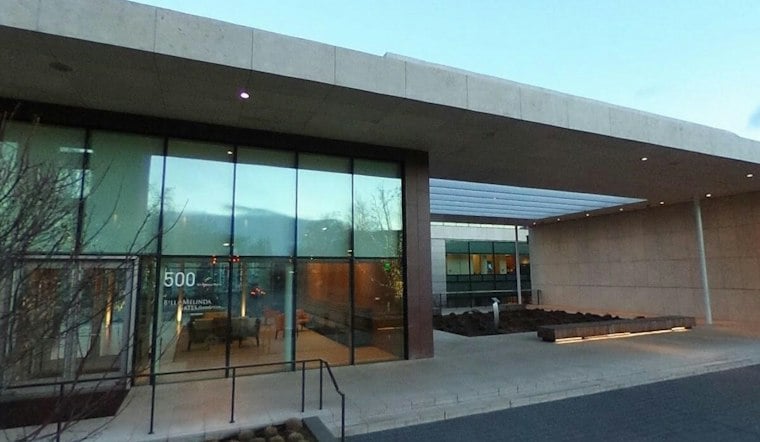
The Gates Foundation is pouring $1 billion into artificial intelligence tools meant to reach the world's poorest communities, warning that without deliberate action the technology could widen the very inequities it hopes to close. The pledge, unveiled in the foundation's annual Goalkeepers report, arrives as global child mortality is projected to rise for the first time this century.
According to Voice of Alexandria, the foundation plans to spread the AI donation over the next two years, directing it toward healthcare, education and agriculture in low- and middle-income countries. Bill Gates, the foundation's chair, wrote that artificial intelligence “will either be the greatest equalizer or the worst source of injustice,” and warned that technology companies and world leaders must act now to ensure the tools combat social inequities rather than deepen them, per the same report. Gates Foundation CEO Mark Suzman spoke about the effort during the Clinton Global Initiative on September 24, 2025, in New York, according to the outlet.
The Goalkeepers report, which tracks progress on United Nations development goals meant to improve quality of life by 2030, projected that 2025 would mark the first year this century with an increase in child deaths — a grim reversal that Gates Foundation modeling had already flagged. IHME, the Seattle-based Institute for Health Metrics and Evaluation that supplied the epidemiological data behind that projection, estimated deaths of children under five would climb from 4.6 million in 2024 to 4.8 million in 2025, according to The BMJ. That reversal follows five decades of progress, since under-5 mortality had declined by 51% globally between 2000 and 2024. Hoodline previously reported that the same institute received a record $540.2 million, 10-year grant from the Gates Foundation to expand its disease-tracking coverage from 925 to nearly 5,000 locations worldwide.
Aid Cuts Collide With a Widening Global Divide
The push for AI-driven health and education tools comes as traditional government aid has collapsed. The United States cut international aid, per Voice of Alexandria, and the Trump administration disrupted a global AIDS relief program, contributing to a funding gap that a recent U.N. report says is widening between rich and poor nations, the outlet reports. Global development assistance for health fell by 26.9% in 2025, dropping from roughly $49 billion to about $36 billion following the freeze and the dissolution of USAID, according to KFF, a collapse that led to the freezing or shutdown of more than 1,700 HIV treatment sites worldwide.
The strain extends beyond HIV programs. The World Health Organization reported in October 2025 that international donor funding for the Global Fund's 2024–2026 grant cycle was cut by $1.4 billion, or 11%, severely impairing national tuberculosis, malaria and HIV responses in low-income countries — a blow made sharper by the fact that the U.S. government had historically provided roughly half of all international donor funding for global tuberculosis programs. Suzman said the foundation will continue pressing Congress and the Trump administration to lead on foreign assistance, Voice of Alexandria reports.
Tech Partners Line Up Behind the Pledge
The foundation is leaning on Silicon Valley partners to build out the initiative. OpenAI committed $50 million alongside the Gates Foundation to train health workers in Rwandan clinics, with plans to expand the pilot to other African countries, while Anthropic is working with the foundation to accelerate vaccine development and improve its chatbot's dataset of local crops, according to the outlet's reporting. Microsoft's AI for Good Lab and Google.org helped launch an open funding call for projects strengthening frameworks for thousands of underrepresented African languages.
That language gap is not abstract. In primary AI training datasets like Common Crawl, English content accounts for nearly 44% of total scraped web text, while major global languages like Arabic make up less than 1% and thousands of African languages are barely represented at all, per a June 2025 analysis, a skew that leaves large language models defaulting to Western assumptions and underperforming in non-English medical or educational settings. To address that, the Gates Foundation announced about $100 million to build datasets in the languages spoken by underserved communities, insisting AI must perform well in all local languages, not just English and, to some extent, Mandarin.
Where the Rest of the $1 Billion Goes
Roughly $400 million is earmarked for healthcare tools, including one designed to double-check clinicians' reports for overlooked symptoms. Another $400 million is going toward education, funding a tool that helps teachers rework lesson plans around the concepts their classes understand least. The remaining roughly $100 million is aimed at agriculture, including an app that gives small farmers real-time advice on weather patterns, pest control and fertilizer use — part of a broader plan to use AI to inform farming practices worldwide.
Gates has pledged that all of the foundation's work will take full advantage of artificial intelligence going forward, and Voice of Alexandria notes that the announced totals represent a tiny proportion of the billions technology companies spend on commercial AI products. Gates, whose fortune is estimated at more than $100 billion, has committed to donate 99% of his remaining wealth to the foundation and has acknowledged his own financial ties to the technology industry. He attended a dinner with President Donald Trump in Washington on September 4, 2025, according to the outlet's reporting.
Governments Warned Not to Cede Control
Not everyone at the foundation is framing AI purely as a force for good. The same reporting notes that artificial intelligence empowers people to carry out fraud, disinformation, surveillance, cyberattacks and bioterrorism, and some AI companies have urged the industry to slow its fast-moving development. Still, the Gates Foundation is focusing its own spending on democratizing AI's benefits rather than primarily funding safeguards against those risks, the outlet reports.
The debate is set to spill into global diplomacy. The United Nations General Assembly will hold high-level meetings next week in New York, where Secretary-General António Guterres has said artificial intelligence cannot be governed by a handful of countries or companies. That governance push follows the UN's first Global Dialogue on AI Governance, convened in Geneva in July 2026, which established an international scientific panel under the UN Global Digital Compact intended to prevent an “AI divide” and guarantee developing nations equal access to emerging technology, according to the United Nations. Richard Gowan said U.N. processes move considerably less rapidly than artificial intelligence itself, per Voice of Alexandria's reporting.
The Gates Foundation, one of the world's largest global health funders, is deploying this AI push alongside an already massive spending commitment. The foundation's governing board endorsed a record $9 billion annual payout budget in January 2026, completing a four-year strategy ahead of the foundation's planned closure on December 31, 2045, according to Charity Journal. Gates pledged in 2025 to spend an additional $200 billion over the foundation's final 20 years. The AI initiative also builds on a prior domestic effort: in July 2025, Gates joined billionaires Charles Koch, Steve Ballmer, Scott Cook and John Overdeck to pledge more than $1 billion launching NextLadder Ventures, an AI-focused fund for U.S. economic mobility built in partnership with Anthropic, as reported by the Times of India — with NextLadder targeting lower-income Americans while the Goalkeepers commitment targets developing nations. The foundation had also tested smaller-scale versions of this idea before, awarding nearly 50 grants of up to $100,000 each in August 2023 to researchers in low- and middle-income countries testing large language models in regional health and agriculture, including MinoHealth AI Labs in Ghana for radiology and Access Afya in Kenya for clinic triage, according to Biopharma APAC.
Whether private philanthropy at this scale can offset the retreat of government aid remains an open question. As global online content increasingly reflects AI's growing footprint — a Pew Research Center analysis found that 10% of English-language web pages as of July 2026 showed significant signs of AI authorship, evaluating nearly half a million pages published over five years — the disparity in whose languages and contexts get captured by that content looms large over the Gates Foundation's bet that AI can serve as an equalizer rather than another dividing line.





