

























































Tim Blackmore, a 42-year-old US Marine Corps veteran who spent the past year living in a shelter on Manhattan's Lower East Side, is set to run his first marathon Sunday with a specific number in mind: under three hours. Twenty-two-year-old Dwayne Ferguson, who has been sleeping on a couch at his girlfriend's family home because the house is full, is also running his first marathon — his goal, simply, is to finish.
Both men's stories were detailed by CNN, which reported that Blackmore turned to alcohol and cocaine after his mother died in 2023. He entered a detox program and in 2025 moved into a shelter that supports people in recovery, according to the outlet's reporting. It was there that he joined Back on My Feet, a running and community nonprofit that partners with shelters to support people experiencing homelessness.
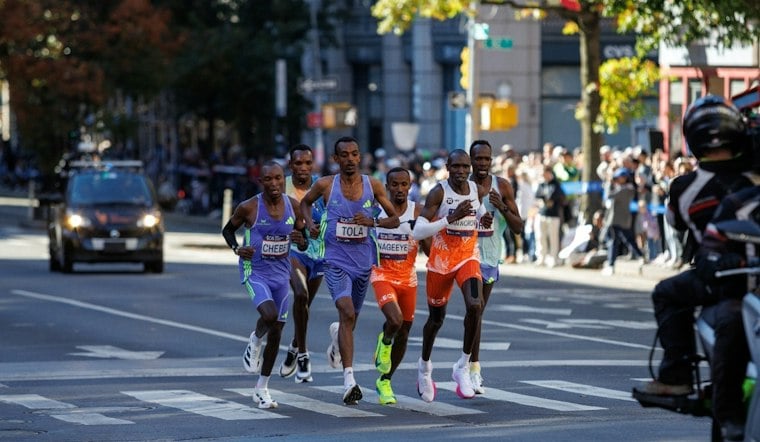
Within months of joining the program, Blackmore completed a half marathon, and Back on My Feet later sponsored his entry into this year's New York City Marathon. The race itself draws nearly 60,000 runners through the city's five boroughs before finishing in Central Park. Blackmore now runs about three times a week to support both his mental health and his training, and the organization has recognized him as one of its strongest and most dedicated members.
From Detox to Dedication
“If it wasn't for running,” Blackmore told the outlet, “I probably wouldn't be sober.” He's maintaining that sobriety while working construction and preparing to move into his own apartment in December — and he's already looking past Sunday's finish line toward an ultramarathon. His twin brother, Daniel Blackmore, volunteers with Back on My Feet as well.
Blackmore isn't the only Back on My Feet runner toeing the start line this weekend. Nine other runners affiliated with the organization are also participating, four of whom are currently experiencing homelessness, while others among the group are alumni who have since secured housing and employment, per the same CNN report. A similar scene played out in a past year's race, when PIX11 profiled Andres Vega, who said he struggled with alcohol from age 16 to 29 and was encouraged to join Back on My Feet while in rehab; Vega credited those runs with helping him stay sober and was, at the time, one of nine Back on My Feet runners tackling the 26.2-mile course.
A Different Path to the Same Starting Line
Ferguson's route to Sunday's race ran through Next PAGE, a trauma-informed creative writing program for youth in detention and reentry. Its founder, Emily Palmer, encouraged him to enter the marathon and connected him with Harlem Run, a running group whose leader, Jesse Liriano, sponsored Ferguson's race registration. Harlem Run also helped him secure a shoe sponsor.
Ferguson has earned his GED and hopes to attend college, and he's currently interning with a program that feeds children and families in need while saving money to rent a room of his own. He told CNN that running reduces his stress and helps him sleep and think more clearly, and he hopes his friends and family will be proud of him when he crosses the finish line. Both he and Blackmore plan to keep running after Sunday's race.
What the Research Says About Running and Recovery
The benefits Blackmore and Ferguson describe echo findings from researchers who study physical activity among people experiencing homelessness. Jo Dawes, a physiotherapist and principal research fellow in primary care and population health at University College London who coauthored a 2024 systematic review on the subject, has said exercise matters to people without stable housing just as much as it does to anyone else. That review, cited by CNN, found physical activity can support health and well-being, foster social connections and help participants build a sense of achievement.
Dr. Amy J. Kemter, a San Antonio-based therapist and social worker who coauthored a 2022 study of a pilot running program for people experiencing homelessness and substance use disorder, has said running can help erase the stigma attached to homelessness and can help participants build confidence, build social connections and recognize their own strength. In interviews conducted for that pilot study, published by Taylor & Francis Online, participants reported perceived improvements in resilience, goal-setting, emotional state, coping skills and social connectedness. A separate study of 217 people in recovery from substance use disorders, published by ScienceDirect, found that recovery capital mediated the relationship between physical activity and hope, with participants averaging 3.24 days a week of at least 20 minutes of activity.
None of that research claims running alone causes sobriety or recovery — the findings describe perceived benefits and associations rather than proof of cause and effect. But for runners like Blackmore and Ferguson, the discipline of training has become part of a broader push toward stability. Back on My Feet's model, as PIX11 has reported, goes beyond group runs to include workshops, personalized support and one-on-one mentoring — the same kind of scaffolding Blackmore leaned on after his half marathon, and the kind Harlem Run offered Ferguson through sponsorship and gear.
Blackmore is aiming to finish in under three hours Sunday. Ferguson just wants to cross the line. Both will be running among the sea of nearly 60,000 entrants moving through the five boroughs toward Central Park — a finish line that, for each of them, marks the start of something rather than the end.




