

























































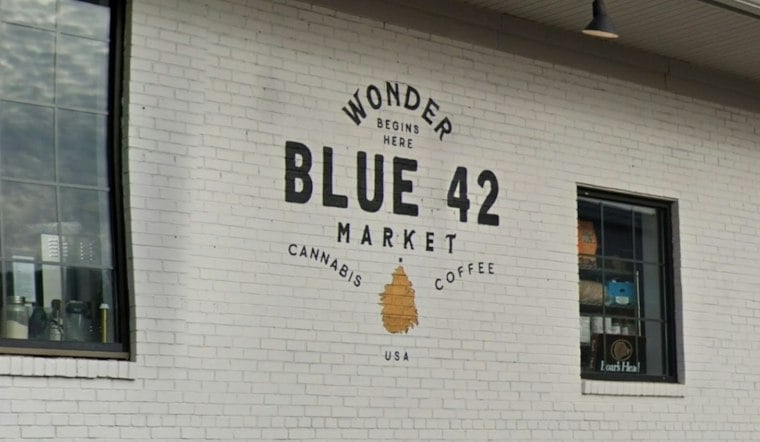
A licensed hemp farm in Dahlonega has won a major round in its fight against the state over crop damage the farm alleges was caused by a 2021 drug raid, after the Georgia Supreme Court ruled that police cannot claim blanket immunity for property they destroy during law enforcement operations. The decision, unanimous among participating justices, revives Blue 42 Organics' lawsuit against the Georgia Department of Public Safety, which the farm says allegedly caused more than $37,000 in damage when helicopters and a fixed-wing aircraft flew low over its fields during a Governor's Drug Suppression Task Force operation.
Blue 42 Organics is a licensed hemp-growing farm in Dahlonega, and according to WSB-TV, the Georgia Department of Public Safety flew helicopters over the property during the 2021 raid, allegedly destroying two rows of the farm's crops. Before the operation, the farm was licensed by both the Georgia Department of Agriculture and the U.S. Department of Agriculture, and had logged the exact GPS coordinates of its fields with regulators, according to The Current. The same outlet reports that the farm attributed the crop destruction specifically to the intense rotor wash and propeller wash of three police helicopters and a fixed-wing aircraft flying at low altitude.
A $37,000 Claim Rooted in a 2021 Raid
Blue 42 Organics sued after the task force operation allegedly caused more than $37,000 in damage, per the station's report. Beyond the ruined crops, the farm alleged in its complaint that the low-altitude flights harassed cattle grazing on the Dahlonega property, creating distress for the livestock and jeopardizing the farm's ability to renew its land grazing leases, according to The Georgia Virtue.
The farm's legal path ran through Article I, Section III, Paragraph I(a) of the Georgia Constitution, the same Georgia Virtue report explains, a provision that waives sovereign immunity when the government damages private property for a public purpose without going through formal eminent domain proceedings. That inverse condemnation claim is what ultimately reached the state's highest court after lower courts had sided with the state.
Supreme Court Reverses a 2025 Appeals Court Ruling
The September ruling reverses a June 17, 2025 decision from the Georgia Court of Appeals, which had affirmed a trial court's dismissal by holding that property damage resulting from police power was categorically exempt from state compensation requirements, according to court records cited by the same outlet. Georgia Supreme Court Chief Justice Nels S. Peterson authored the opinion, joined by all participating justices, emphasizing that allowing blanket immunity would render the state's constitutional property protections empty, per those records.
The high court did not throw out immunity for police entirely. Instead, it clarified that government immunity for property damage under police powers is now restricted to two narrow categories: the abatement of public nuisances and the destruction of property during urgent necessities, such as containing a spreading fire, the same source reports.
Hemp Industry Weighs In
The National Hemp Association filed an amicus curiae brief with the state Supreme Court in support of Blue 42 Organics, arguing that federal and state hemp legalization statutes would be rendered meaningless if law enforcement could destroy registered crops during aerial surveys without liability, according to The Current. Industrial hemp became federally legal under the Agriculture Improvement Act of 2018, which led the Georgia General Assembly to pass state legislation permitting licensed commercial cultivation under regulated conditions, the outlet notes.
The ruling does not resolve the underlying dispute. The Supreme Court's decision did not award monetary damages or determine final liability, but instead remanded the lawsuit back to the trial court for further proceedings where the state may still raise other legal defenses, according to The Marijuana Herald. Blue 42 Organics may now seek relief in that lower court, but whether it ultimately recovers the roughly $37,000 it says it lost remains an open question as the case resumes.





