

























































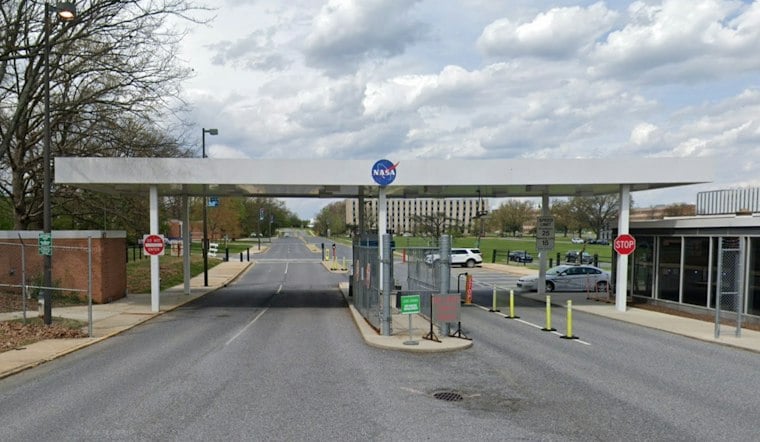
Engineers at NASA's Goddard Space Flight Center in Greenbelt, Maryland say they were rushed out of their laboratories so quickly that some packed up equipment they were told to treat as if they would never see again. One NASA engineer put it bluntly: they were told to pack as if they would never build another propulsion system again. The fallout, according to workers who spoke on condition of anonymity, includes lost hardware, delayed missions, and a radio communications lab that lost almost all of its equipment, including a $6 million antenna chamber.
The relocations, detailed in reporting by Houston Public Media, moved scientists out of more than 80 facilities at Goddard, with NASA management shifting personnel out of laboratories multiple times since November 2025 and as recently as August 2026. Propulsion engineers told the outlet they lost access to higher-quality and more precise tools during one move, and ended up testing the Nancy Grace Roman Space Telescope's fuel with less sensitive equipment than they'd originally planned to use.
Goddard, established in 1959 as NASA's first space flight complex, hosts the largest concentration of scientists and engineers in the country dedicated to space and Earth science, according to NASA. The center manages assets including Hubble Space Telescope operations and satellite communication networks, which makes the scale of the disruption notable. Nasa management has said, per internal documents cited by Houston Public Media, that relocating scientists was intended to reduce costs and eliminate waste and redundancies, and the agency has said the moves would avoid tens of millions of dollars in deferred maintenance.
A Telescope Launch Overshadowed by Lost Equipment
NASA launched the Nancy Grace Roman Space Telescope from Kennedy Space Center in Florida in late August 2026, following 15 years of preparation and a $4 billion investment. The telescope is intended to collect more information than any previous instrument about the expansion of the universe and hidden planets in the galaxy. But according to Houston Public Media's reporting, NASA had asked a radio communication lab to test Roman's antenna before launch — the same lab that lost its $6 million antenna chamber and almost all of its other equipment during the relocations.
A separate satellite project, GRITSS, launched in July 2026 to help track changes to Earth's water levels and landmasses from space, but the project's team was unable to test its radio communications with Earth before launch because the radio communications lab had been moved out of its previous Goddard space in November 2025. Engineers said they were prevented from recovering materials from the relocated lab. Jack Kiraly said the relocations add substantial risk to an already risky endeavor, according to the same report.
Venus Mission and Roman Telescope Feel the Squeeze
The DAVINCI spacecraft, a Goddard-managed mission being built to explore Venus, experienced a delay in August 2026 after its team lacked a workspace at Goddard to continue its work; its laboratory and clean room had both been moved out of another Goddard building back in November 2025. DAVINCI is designed to drop an instrumented probe into Venus's atmosphere to sample noble gases and capture high-resolution imagery of the Alpha Regio highlands, and per NASA, it would be the first U.S.-led mission to enter the Venusian atmosphere in more than four decades, with launch targeted for the late 2020s or early 2030s.
Nasa officials acknowledged an increased risk that property was not properly accounted for during the relocations, the outlet reported. Still, NASA's Office of Inspector General reported in June 2026 that the relocations would not affect the agency's anticipated missions and had not harmed ongoing projects — a conclusion that stands in contrast with the accounts from engineers describing delays and lost testing capability.
Surplus Sales Raise Export-Control Questions
Nasa disposal rules were not always followed during the relocations, and Houston Public Media found that some equipment was auctioned, donated, or discarded. Goddard posted more than 300 items on the GSA auction site over six months, with an original cost of around $5.4 million; about one-third of those items were classified as restricted. One aspheric test blank that NASA had originally purchased for more than $250,000 received a final bid of just $300 before its sale closed in May 2026.
Federal rules under the International Traffic in Arms Regulations and Export Administration Regulations govern how restricted surplus government property can be disposed of, according to the Online Aviation Library. The available information does not establish what certifications or eligibility requirements applied to bidders on restricted items.
Separately, NASA donated hundreds of thousands of dollars' worth of radio communications equipment to Capitol Technology University without informing the scientists who had used it. The private STEM school, founded in 1927 in Laurel, Maryland — about five miles from Goddard — is installing the equipment in a campus laboratory primarily for student use and now owns it, according to Capitol Technology University.
Workforce Losses Compound the Strain
Goddard lost about one-third of its employees in 2025, amid broader NASA-wide staffing effects documented by the Government Accountability Office. That finding tracks with a broader GAO report showing NASA lost roughly 4,000 civil service employees across the agency in 2025 — a 22% workforce reduction that hurt operations across 25 of the agency's 36 largest major projects, according to Space Explored.
Barbara Thompson, who worked at NASA for 30 years, quit the agency in June 2026. Nearly 60% of Goddard engineers surveyed by NASA in 2026 said they planned to leave soon. Congressional scrutiny has followed: members of Congress requested a formal NASA Inspector General investigation into Goddard's management in November 2025 after emergency center closures during a government shutdown appeared to arbitrarily displace critical mission hardware.
NASA also eliminated the Joint Agency Satellite Division and changed its role in acquiring satellites for NOAA. The turmoil comes against a backdrop of a dispute over NASA's budget, including the White House's fiscal year 2026 proposal.
Goddard also faces deferred facility-maintenance costs. In September 2026, the U.S. House passed a continuing resolution extending federal government funding through December 11, 2026, while temporarily pausing proposed Office of Management and Budget changes to federal research grant rules — a reprieve advocacy groups had pushed for as they warned the earlier proposed cuts threatened up to half of NASA's operating space science fleet.





