

























































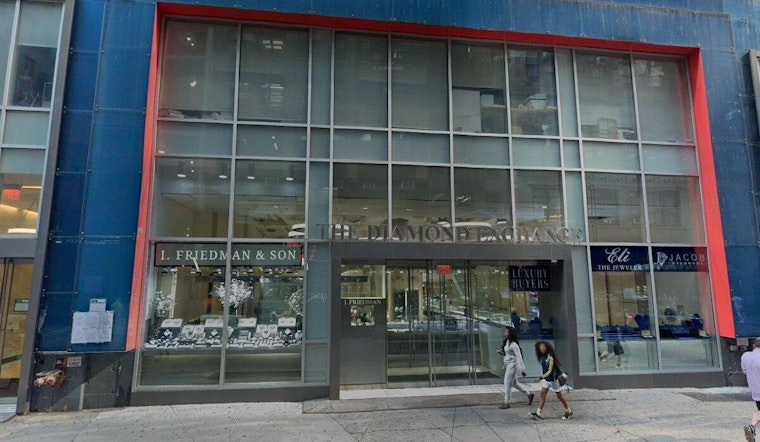
Kamran Hekmati, the 71-year-old Great Neck Estates jeweler who spent more than a year locked inside Iran's notorious Evin Prison, is finally out of his cell — but he still can't come home. The U.S. State Department announced his release from detention, closing out a punishing chapter that began when Iranian authorities arrested him in July 2025, but the Jewish Iranian-American businessman remains barred from leaving Iran under an exit ban that continues to keep him separated from his life on Long Island.
A Bar Mitzvah Trip Becomes a Prison Sentence
Hekmati, who runs a jewelry business in Manhattan's Diamond District and immigrated to the United States from Iran roughly 14 years ago, had regularly returned to Iran for months-long vacations and family visits without incident, according to the New York Post. He was detained while visiting family in Iran in May 2025, and Tehran's Revolutionary Court ultimately sentenced him to four years in prison that July for traveling to Israel — a trip he had taken in 2012 to attend his son's bar mitzvah. His sentence was later reduced to two years after the underlying statute was amended.
Legal advocates have argued Hekmati's conviction sits in a legal gray area, since Iran's law barring travel to Israel carries a 10-year look-back window, and his 2012 trip fell 13 years before his 2025 arrest — outside that window, and before the travel ban was even enacted, per the Post's reporting. Iranian passport holders are generally barred from visiting Israel, and under Iranian law, anyone born in Iran must enter and exit the country on an Iranian passport regardless of any other citizenship they hold, since Iran does not recognize dual nationality, according to Hostage Aid Worldwide. That legal reality is why Iranian-American dual nationals like Hekmati remain vulnerable at the Iranian border even decades after emigrating.
Health Concerns Mount Behind Bars
Hekmati is battling aggressive bladder cancer, and advocates had raised growing alarm over his deteriorating health and lack of specialized treatment while he was detained, according to CBS News. He was granted a 45-day medical leave from Evin Prison in mid-2026, but Iranian authorities forced him back into custody in under 30 days — before he could even begin chemotherapy. U.S. Representative Tom Suozzi, who represents a district that includes Great Neck Estates, said Hekmati's health is currently okay but stressed that Iran must let him come home.
Suozzi called Hekmati's release from prison a wonderful first step, per the Post's reporting, though he made clear the fight isn't over while the exit ban remains in place. Evin Prison itself is known for excessive crackdowns, harsh beatings and unlawful force against prisoners. Reza Valizadeh, a 49-year-old Iranian-American journalist who has been held there since September 2024 in connection with his work for Radio Farda, has described physical pressure and mental torture inside the facility, and said detained Americans are suffering from various diseases and deprived of real medical services.
Quiet Diplomacy Behind the Prison Release
Hekmati's release on bail from Evin Prison followed quiet diplomatic mediation involving Qatari officials and Jewish communal figures, according to Belaaz News. Qatar has frequently acted as a diplomatic go-between for the U.S. and Iran in detainee negotiations, and this case appears to be no exception. His release also arrives amid a broader pattern: other Iranian-Americans held in Iran were freed earlier this year, including Dena Karari in July and Shahab Dalili in May, per RFE/RL. Several other American citizens remain trapped or imprisoned in Tehran.
The federal designations that shaped the U.S. response predate Hekmati's prison release by months. In March 2026, Secretary of State Marco Rubio officially designated Hekmati as wrongfully detained under the Robert Levinson Hostage Recovery and Hostage-Taking Accountability Act, activating specialized federal diplomatic and legal resources for his case, according to Representative Suozzi. That followed a February 2026 move by the State Department to formally designate Iran itself as a State Sponsor of Wrongful Detention, a status that allows the U.S. government to impose targeted sanctions and consider restrictions on U.S. passport use in the country.
A Long Island Village Official Still Waiting to Come Home
Before his detention, Hekmati served on the Zoning Board of Appeals for the Village of Great Neck Estates, a Long Island community home to a prominent Persian Jewish diaspora, according to Hostage Aid Worldwide. The State Department has called for Iran to lift the exit ban so he can finally return to that life. The U.S. State Department did not immediately respond to a request for comment from the New York Post.
The State Department maintains a Level 4: Do Not Travel advisory for Iran, warning of risks including arbitrary arrest, kidnapping and wrongful detention of U.S. citizens, according to the Foundation for Defense of Democracies. The advisory underscores a stark reality for dual nationals: the U.S. government cannot offer emergency consular services once someone is inside Iranian territory. For Hekmati's family and neighbors in Great Neck Estates, his release from Evin Prison marks real progress — but until Iran lifts the exit ban, he remains, in effect, a prisoner of the country itself.





