

























































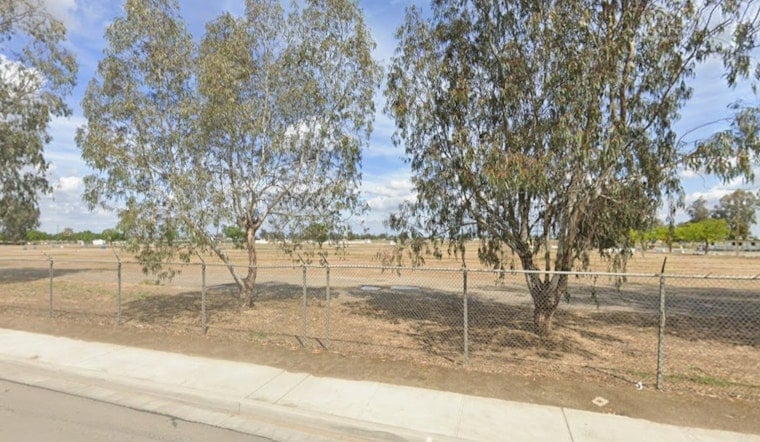
A community meeting in Hanford, California drew about 100 residents opposing a possible data center at the local fairgrounds, and for 57-year-old retired teacher Lucy Gomez, the fight has become personal. She says she felt terrified, like residents were being used as guinea pigs. Her hometown, sitting inside California's 22nd congressional district, has become an unlikely epicenter of a fight now shaping a competitive midterm race.
The proposal comes from Global Stack USA, a company that has envisioned operating 70 sites by 2030 and plans to install small-scale data centers, helipads, and parking garages at fairgrounds around California, according to the Los Angeles Times. Dan Kang, chief executive of Global Stack USA, has pushed the plan even though the company has not made a formal proposal yet. Fair officials allowed Global Stack to evaluate sites in Kings and Tulare counties, and Dena Rizzardo, chief executive of the Kings County Fair Board, has confirmed the board would have final say over any proposal.
Corporate filings show Global Stack LLC was incorporated in Santa Ana in March 2026 with no prior construction history, proposing 100-year leases across California fairgrounds to install 8-to-10 megawatt Sovereign Edge Data Centers pairing $20 million in emergency infrastructure with more than $6 billion in data initiatives, according to The Business Journal. Global Stack has prompted opposition to its small-scale proposals at fairgrounds in Kings, Tulare, and Ventura counties. The company says its edge computing centers, which are typically smaller than traditional data centers, would require lower utility use and no municipal water connection.
A Pattern of Pushback Across Fairgrounds
The Hanford meeting is not an isolated flashpoint. City officials in Calistoga rejected Global Stack's fairground pitch in July, while fair boards in Solano and Tulare counties tabled proposed agreements following hours of public opposition over noise, grid capacity, and transparency, according to Napa Valley Patch. The California Department of Food and Agriculture, which oversees state-owned fairgrounds through local District Agricultural Associations, confirmed it introduced Global Stack executives to fairground leadership across the state, though individual fair boards retain final say over lease contracts.
That structure has left residents frustrated. Local and county officials lack jurisdiction over fairgrounds because they are state property, meaning community members must rely on state agency oversight or fair board votes rather than city councils to stop projects. Darian Orduno, 25, attended the Hanford meeting opposing the possible data center and said she was concerned about whether her baby would be able to grow up in Hanford or whether her family would need to relocate.
A Race Turned Referendum on AI Infrastructure
Hanford's mayor, Mark Kairis, said data-center concerns have become a national, state, and local issue all at once. That tension is playing out directly in the district's midterm race, where Randy Villegas, the Democratic nominee in California's 22nd Congressional District, is attempting to unseat Republican Rep. David Valadao and has called for a data-center moratorium of at least one year. Valadao has said data centers are important to the economy and national security, but has also said data-center construction requires a responsible approach that includes local input and ratepayer protections.
Polling suggests the issue cuts across party lines. In a late-August Economist/YouGov poll, majorities of both Trump 2024 voters and Republicans said they believed a new data center would increase their electrical bills or that they would oppose one built where they live. Democrats opposing data centers have generally framed the issue as a matter of affordability, while Democrats broadly agree data centers should be regulated in some form.
Camille Crittenden, executive director of the Center for Information Technology Research in the Interest of Society, said the public may see data centers as a physical manifestation of AI advancement — a rare instance in which an abstract technology becomes a concrete, visible neighbor. National figures are also weighing in: Vice President JD Vance has acknowledged negative polling on data centers even as he has framed the facilities as a question of American industrial dominance, while President Trump has said communities should reject data centers only if they want to be backward and poor.
State Lawmakers Respond With New Cost Rules
Data centers house the computer systems powering artificial intelligence and the internet, and they require intense cooling that often demands high water and power use, which can affect both the environment and consumer utility costs. Hanford residents are concerned that a fairgrounds data center could worsen air quality and strain local water supplies. California already has the third-most data centers of any state, with 54 facilities in development as of April, according to Pew Research Center, part of a national wave of more than 1,500 data centers in development that tech companies have proposed in nearly every state.
State lawmakers responded to that surge by passing legislation on August 31 that regulates data-center energy use and imposes other requirements, according to the Los Angeles Times. As Hoodline previously reported, Senate Bill 886 and Assembly Bill 2383 direct the California Public Utilities Commission to establish dedicated tariffs forcing large data-center operators to pay upfront for grid transmission upgrades and zero-carbon power rather than shifting those costs onto residential ratepayers. Companion legislation, Senate Bill 887, eliminates categorical environmental review exemptions under the California Environmental Quality Act for data centers, while Assembly Bill 1577 mandates monthly electricity and water-use reporting to state regulators.
The push for those bills built on a March 2026 policy report from the Little Hoover Commission, the state's independent oversight agency, which advised leaders to require data-center developers to cover all grid integration costs to avoid undermining California's utility affordability targets. California Independent System Operator planning projections indicate surging data-center demand in PG&E's territory alone could require up to $1.8 billion in transmission upgrades, with statewide data-center energy consumption expected to climb from roughly 2% of peak demand to 9% by 2040.
Bans Spread as Backlash Crosses Party Lines
The backlash has already produced outright prohibitions elsewhere in the state. Monterey Park became the first U.S. city to permanently ban data centers by popular vote in June, joined by a municipal ban in Coachella and freezes in cities including Patterson, which Hoodline reported has extended its own moratorium nearly a year over water and power fears. Data-center concerns are fueling a nationwide backlash from both the left and right, with Republican Ohio Gov. candidates warned in a GOP senatorial campaign memo that the issue could decide the Ohio Senate race between Jon Husted and Sherrod Brown.
Governors in other states have already acted. New York Gov. Kathy Hochul put a temporary moratorium on new data centers, as did Texas Gov. Greg Abbott. Courtney Hawkins, a voter cited in the reporting, said AI should not be pursued without regulations and at the cost of the environment, adding that the data-center issue would absolutely affect his votes this fall. Candidates nationwide are responding to what polling shows is tanking public opinion on data centers, with data centers increasingly influencing swing voters and turnout ahead of the midterms.
The debate is not confined to California. As Hoodline has reported, Meta's expanded $14 billion data center in El Paso has become a flashpoint in the Texas governor's race amid disputes over water contracts permitting up to 2.5 million gallons of daily potable water draw — evidence that the fight over AI infrastructure's local costs is reshaping political contests well beyond the Central Valley.



